- 当前位置:首页 > >Merck Millipore > 生命科学研究
- 生命科学研究
- 产品介绍
重要规格表
品种反应性 主要应用 宿主 格式 抗体类型 R WB, IHC Rb Affinity Purified Polyclonal Antibody 描述 产品目录编号 AB9770-50UL 品牌系列 Chemicon®
商名 - Chemicon
描述 Anti-MaxiK Antibody, aa1184-1200. Alternate Names - K<sub>CA</sub>1.1, BK<sub>CA</sub>, Large conductance Ca<sup>2+</sup>-activated K<sup>+</sup> channel, BKCa, Maxi K<sup>+</sup>, KCNMA1
- K<sub>CA</sub>1.1
- BK<sub>CA</sub>
- Large conductance Ca<sup>2+</sup>-activated K<sup>+</sup> channel
- BKCa
- Maxi K<sup>+</sup>
产品信息 格式 Affinity Purified 控制 - Included free of charge with the antibody is 40 µg of control antigen (lyophilized powder). The stock solution of the antigen can be made up using 100 µL of sterile deionized water. For negative control, preincubate 1 µg of peptide with 1 µg of antibody for one hour at room temperature. Optimal concentrations must be determined by the end user.
演示 Affinity purified immunoglobulin. Lyophilized from phosphate buffered saline, pH 7.4, containing 1% BSA, and 0.025% sodium azide as a preservative. Reconstitute with 50 μL of sterile deionized water. Centrifuge antibody preparation before use (10,000 xg for 5 min). 应用 应用 This Anti-MaxiK Antibody, aa1184-1200. is validated for use in IH, IP, WB for the detection of MaxiK. 主要应用 - Western Blotting
- Immunohistochemistry
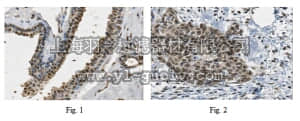
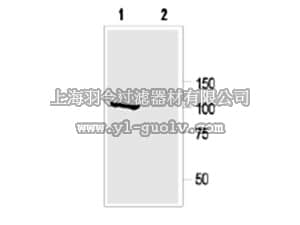
应用说明 Western blot: 1:500 using ECL on rat brain membranes.
Immunohistochemistry: On rat brain sections.
Immunoprecipitation: 4 μg using rat brain lysate.
Dilutions should be made using a carrier protein such as BSA (1-3%).
Optimal working dilutions must be determined by the end user.生物信息 免疫原品种 Purified peptide from amino acids 1184-1200 of mouse KCa1.1 . 表位 C-terminal intracellular region, STANRPNRPKSRESRDK, corresponding to amino acid residues 1184-1200. 浓缩 Please refer to the Certificate of Analysis for the lot-specific concentration. 宿主 Rabbit 特异性 Recognizes MaxiK, amino acids 1184-1200 (KCA1.1, BKCA, Large conductance Ca2+-activated K+ channel, BKCa, Maxi K+, KCNMA1). 品种反应性 Rat Species Reactivity Note The immunogen sequence is identical in human, bovine, chicken, and 16 of 17 amino acids identical in dog. 抗体类型 Polyclonal Antibody Entrez基因汇总 MaxiK channels are large conductance, voltage and calcium-sensitive potassium channels which are fundamental to the control of smooth muscle tone and neuronal excitability. MaxiK channels can be formed by 2 subunits: the pore-forming alpha subunit, which is the product of this gene, and the modulatory beta subunit. Intracellular calcium regulates the physical association between the alpha and beta subunits. Alternatively spliced transcript variants encoding different isoforms have been identified. 基因符号 - MAXIK
- KCNMA
- KCNMA1
- SLO1
- KCa1.1
纯化方法 Immunoaffinity purified UniProt编号 - Q12791
- Q08460
UniProt汇总 FUNCTION: SwissProt: Q12791 # Potassium channel activated by both membrane depolarization or increase in cytosolic Ca(2+) that mediates export of K(+). It is also activated by the concentration of cytosolic Mg(2+). Its activation dampens the excitatory events that elevate the cytosolic Ca(2+) concentration and/or depolarize the cell membrane. It therefore contributes to repolarization of the membrane potential. Plays a key role in controlling excitability in a number of systems, such as regulation of the contraction of smooth muscle, the tuning of hair cells in the cochlea, regulation of transmitter release, and innate immunity. In smooth muscles, its activation by high level of Ca(2+), caused by ryanodine receptors in the sarcoplasmic reticulum, regulates the membrane potential. In cochlea cells, its number and kinetic properties partly determine the characteristic frequency of each hair cell and thereby helps to establish a tonotopic map. Kinetics of KCNMA1 channels are determined by alternative splicing, phosphorylation status and its combination with modulating beta subunits. Highly sensitive to both iberiotoxin (IbTx) and charybdotoxin (CTX).
SIZE: 1236 amino acids; 137560 Da
SUBUNIT: Homotetramer; which constitutes the calcium-activated potassium channel. Interacts with beta subunits KCNMB1, KCNMB2, KCNMB3 and KCNMB4. Beta subunits are accessory, and modulate its activity.
SUBCELLULAR LOCATION: Membrane; Multi-pass membrane protein.
TISSUE SPECIFICITY: Widely expressed. Except in myocytes, it is almost ubiquitously expressed.
DOMAIN: SwissProt: Q12791 The S0 segment is essential for the modulation by the accessory beta subunits KCNMB1, KCNMB2, KCNMB3 and KCNMB4. & The S4 segment, which is characterized by a series of positively charged amino acids at every third position, is part of the voltage-sensor. & The pore-forming domain (also referred as P region) is imbedded into the membrane, and forms the selectivity filter of the pore. It contains the signature sequence of potassium channels that displays selectivity to potassium. & The RCK N-terminal domain mediates the homotetramerization, thereby promoting the assembly of monomers into functional potassium channel. It includes binding sites for Ca(2+) and Mg(2+) (By similarity). & The calcium bowl constitutes one of the Ca(2+) sensors and probably acts as a Ca(2+)-binding site. There are however other Ca(2+) sensors regions required for activation of the channel.
PTM: Phosphorylated (Probable). Phosphorylation by kinases such as PKA and/or PKG. In smooth muscles, phosphorylation affects its activity.
DISEASE: SwissProt: Q12791 # Defects in KCNMA1 are the cause of generalized epilepsy and paroxysmal dyskinesia (GEPD) [MIM:609446]. Epilepsy is one of the most common and debilitating neurological disorders, affecting more than 40 million people worldwide. Paroxysmal dyskinesias are another heterogeneous group of neurological disorders characterized by sudden, unpredictable, disabling attacks of involuntary movement often requiring life-long treatment. The coexistence of epilepsy and paroxysmal dyskinesia in the same individual or family is an increasingly recognized phenomenon. The basic pathophysiology underlying the coexistence of these two disorders is caused by mutations in the KCNMA1 gene.
SIMILARITY: Belongs to the potassium channel family. Calcium- activated subfamily. & Contains 1 RCK N-terminal domain.
MISCELLANEOUS: The protein was initially thought to contain two functionally distinct parts: The core channel (from the N-terminus to the S9 segment) that mediates the channel activity, and the cytoplasmic tail (from the S9 segment to the C-terminus) that mediates the calcium sensing. The situation is however more complex, since the core channel also contains binding sites for Ca(2+) and Mg(2+).产品使用声明 使用声明 - Unless otherwise stated in our catalog or other company documentation accompanying the product(s), our products are intended for research use only and are not to be used for any other purpose, which includes but is not limited to, unauthorized commercial uses, in vitro diagnostic uses, ex vivo or in vivo therapeutic uses or any type of consumption or application to humans or animals.
储存和货运信息 存储条件 Maintain lyophilized material at -20°C for up to 12 months after date of receipt. After reconstitution maintain at -20°C in undiluted aliquots for up to 6 months. Avoid repeated freeze/thaw cycles. 包装信息 数量 50 µL
上一件merck millipore产品:merck millipore,默克密理博,MAB1905-I,Anti-Laminin α1/β1 Antibody, clone AL-4
下一件merck millipore产品:merck millipore,默克密理博,573114,SMCC
相关产品
 merck millipore,默克密理博,04-571,Anti-Caspase 2 Antibody, rabbit monoclonal
 merck millipore,默克密理博,AB5407,Anti-Opsin Antibody, blue
 merck millipore,默克密理博,GF029,Brain Derived Neurotrophic Factor, recombinant
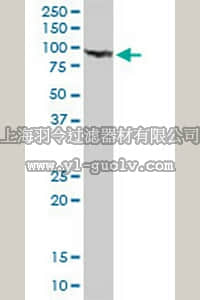 merck millipore,默克密理博,CB1043,Anti-GSN Rabbit pAb
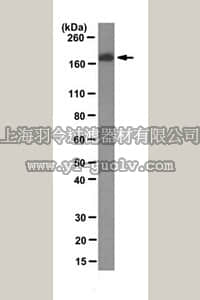 merck millipore,默克密理博,MAB1905-I,Anti-Laminin α1/β1 Antibody, clone AL-4
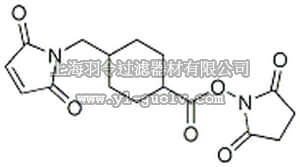 merck millipore,默克密理博,573114,SMCC
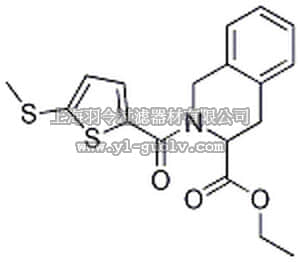 merck millipore,默克密理博,554718,REV-ERBα Antagonist, SR8278 - Calbiochem
 merck millipore,默克密理博,69734,λDE3 Lysogenization Kit - Novagen
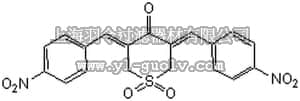 merck millipore,默克密理博,662125,Ubiquitin Isopeptidase Inhibitor I, G5 - CAS 108477-18-5 - Calbiochem