


- 当前位置:首页 > >Merck Millipore > 生命科学研究
- 生命科学研究
-
-
merck millipore,默克密理博,05-1064,Anti-Phospho-Stat1 (Tyr701) Antibody, clone 5C9.2
产品名称:Anti-Phospho-Stat1 (Tyr701) Antibody, clone 5C9.2
产品型号:05-1064
Anti-Phospho-Stat1 (Tyr701) Antibody, clone 5C9.2 detects level of Phospho-Stat1 (Tyr701) & has been published & validated for use in WB.
merck millipore,默克密理博,05-1064,Anti-Phospho-Stat1 (Tyr701) Antibody, clone 5C9.2
- 产品介绍
重要规格表
品种反应性 主要应用 宿主 格式 抗体类型 R, H, M WB M Purified Monoclonal Antibody 描述 产品目录编号 05-1064 描述 Anti-Phospho-Stat1 (Tyr701) Antibody, clone 5C9.2 Alternate Names - signal transducer and activator of transcription 1
- Transcription factor ISGF-3 components p91/p84
背景信息 STATs (Signal-Transducing Activators of Transcription) are the principle substrates of JAK kinases, and mediators of cytokine signaling. STAT proteins have SH2 domains, and once phosphorylated by JAK kinases, STATs dimerize in a head-to-tail fashion, through their SH2 domains. STAT1 is a critical mediator of IFN signaling, STAT4 is specific to IL-12, STAT6 is activated primarily by IL-4 and IL-13, while STAT5 A and B appear to be most important to the function of growth hormone and prolactin. STAT3 is involved in multiple signaling pathways, and mice deficient in it are not viable. In addition to tyrosine phosphorylation, many STAT proteins are targets of Ser/Thr kinases, and those phosphorylation events potentiate STAT-induced transcription. The phosphorylation state of STATs can be monitored by phosphorylation state-specific antibodies. 产品信息 格式 Purified 控制 - EGF treated and untreated A431 cell lysates, PDGF treated and untreated NIH/3T3 cell lysates, pervanadate treated and untreated PC12 cell lysates.
演示 Purified mouse monoclonal IgG1κ in buffer containing PBS and 0.05% sodium azide. 应用 应用 Anti-Phospho-Stat1 (Tyr701) Antibody, clone 5C9.2 detects level of Phospho-Stat1 (Tyr701) & has been published & validated for use in WB. 主要应用 - Western Blotting
生物信息 免疫原品种 KLH-conjugated linear peptide corresponding to the region around phosphorylated tyrosine 701. 表位 Phosphorylated Tyr701 克隆 5C9.2 浓缩 Please refer to the Certificate of Analysis for the lot-specific concentration. 宿主 Mouse 特异性 This antibody recognizes phosphorylated STAT1 at tyrosine 701. 同种型 IgG1κ 品种反应性 RatHumanMouse Species Reactivity Note Tested on human, mouse and rat. 抗体类型 Monoclonal Antibody Entrez基因编号 - NP_009330
Entrez基因汇总 The protein encoded by this gene is a member of the STAT protein family. In response to cytokines and growth factors, STAT family members are phosphorylated by the receptor associated kinases, and then form homo- or heterodimers that translocate to the cell nucleus where they act as transcription activators. This protein can be activated by various ligands including interferon-alpha, interferon-gamma, EGF, PDGF and IL6. This protein mediates the expression of a variety of genes, which is thought to be important for cell viability in response to different cell stimuli and pathogens. Two alternatively spliced transcript variants encoding distinct isoforms have been described. [provided by RefSeq] 基因符号 - STAT-1
- ISGF-3
修改 - Phosphorylation
纯化方法 Protein G purfied UniProt编号 - P42224
UniProt汇总 Function: Signal transducer and activator of transcription that mediates signaling by interferons (IFNs). Following type I IFN (IFN-alpha and IFN-beta) binding to cell surface receptors, Jak kinases (TYK2 and JAK1) are activated, leading to tyrosine phosphorylation of STAT1 and STAT2. The phosphorylated STATs dimerize, associate with ISGF3G/IRF-9 to form a complex termed ISGF3 transcription factor, that enters the nucleus. ISGF3 binds to the IFN stimulated response element (ISRE) to activate the transcription of interferon stimulated genes, which drive the cell in an antiviral state. In response to type II IFN (IFN-gamma), STAT1 is tyrosine- and serine-phosphorylated. It then forms a homodimer termed IFN-gamma-activated factor (GAF), migrates into the nucleus and binds to the IFN gamma activated sequence (GAS) to drive the expression of the target genes, inducing a cellular antiviral state.
Subunit structure: Isoform alpha homodimerizes upon IFN-gamma induced phosphorylation. Heterodimer with STAT2 upon IFN-alpha/beta induced phosphorylation. Interacts with NMI. Interacts with Sendai virus C', C, Y1 and Y2 proteins, Nipah virus P, V and W proteins, and rabies virus phosphoprotein preventing activation of ISRE and GAS promoter By similarity. Interaction with HCV core protein results in STAT1 degradation.
Subcellular location: Cytoplasm. Nucleus. Note= Translocated into the nucleus upon activation by IFN-alpha/beta.
Post-translational modification: Phosphorylated on tyrosine residues in response to IFN-alpha, IFN-gamma, PDGF and EGF. Serine phosphorylation is also required for maximal transcriptional activity in IFN-gamma transduction (lacking in beta form). Ref.6 Ref.7 Ref.11 Ref.12
Involvement in disease: Defects in STAT1 are the cause of STAT1 deficiency [MIM:600555]. Patients generally suffer from mycobacterial or viral diseases. In the case of complete deficiency, patients can die of viral disease. Ref.15
Defects in STAT1 are a cause of mendelian susceptibility to mycobacterial disease (MSMD) [MIM:209950]; also known as familial disseminated atypical mycobacterial infection. This rare condition confers predisposition to illness caused by moderately virulent mycobacterial species, such as Bacillus Calmette-Guerin (BCG) vaccine and environmental non-tuberculous mycobacteria, and by the more virulent Mycobacterium tuberculosis. Other microorganisms rarely cause severe clinical disease in individuals with susceptibility to mycobacterial infections, with the exception of Salmonella which infects less than 50% of these individuals. The pathogenic mechanism underlying MSMD is the impairment of interferon-gamma mediated immunity whose severity determines the clinical outcome. Some patients die of overwhelming mycobacterial disease with lepromatous-like lesions in early childhood, whereas others develop, later in life, disseminated but curable infections with tuberculoid granulomas. MSMD is a genetically heterogeneous disease with autosomal recessive, autosomal dominant or X-linked inheritance. Ref.14
Sequence similarities: Belongs to the transcription factor STAT family.
Contains 1 SH2 domain.
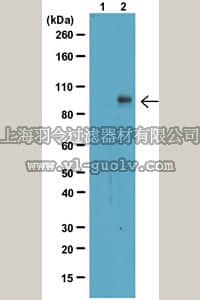
产品使用声明 质量保证 Routinely evaluated by western blot on EGF treated and untreated A431 cell lysate.
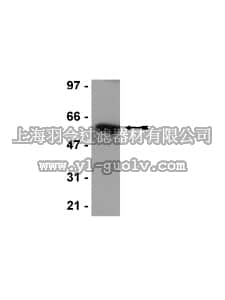
Western Blot Analysis: 0.5-2 µg/mL of this lot was used to detect STAT1 phosphorylated at Tyr701 in EGF treated and untreated A431 cell lysates.使用声明 - Unless otherwise stated in our catalog or other company documentation accompanying the product(s), our products are intended for research use only and are not to be used for any other purpose, which includes but is not limited to, unauthorized commercial uses, in vitro diagnostic uses, ex vivo or in vivo therapeutic uses or any type of consumption or application to humans or animals.
储存和货运信息 存储条件 Stable for 1 year at 2-8ºC from date of receipt. 包装信息 数量 100 µg
上一件merck millipore产品:merck millipore,默克密理博,ABT166,Anti-NEDD9 Antibody
下一件merck millipore产品:merck millipore,默克密理博,324840,EGFR/ErbB-2/ErbB-4 Inhibitor - CAS 881001-19-0 - Calbiochem
相关产品
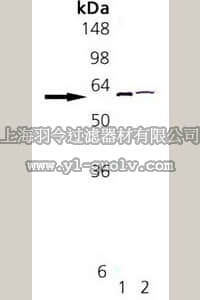 merck millipore,默克密理博,539229,Anti-Protein Disulfide Isomerase Rabbit pAb
 merck millipore,默克密理博,MAB16983,Anti-Integrin α4 Antibody, clone P1H4
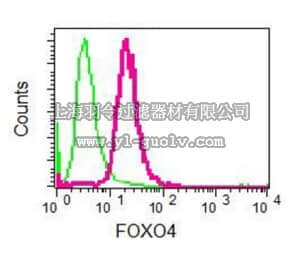 merck millipore,默克密理博,MABE539,Anti-FOX AntibodyO4, clone EPR5442, rabbit monoclonal
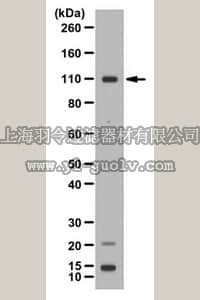 merck millipore,默克密理博,ABT166,Anti-NEDD9 Antibody
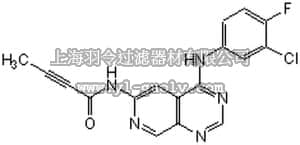 merck millipore,默克密理博,324840,EGFR/ErbB-2/ErbB-4 Inhibitor - CAS 881001-19-0 - Calbiochem
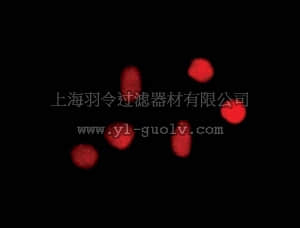 merck millipore,默克密理博,MAB3560,Anti-8-Oxoguanine Antibody, clone 483.15
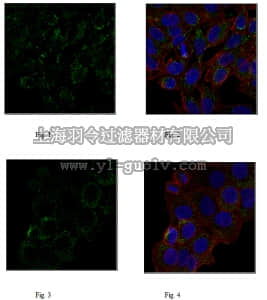 merck millipore,默克密理博,MABC272,Anti-Annexin VI Antibody, clone 4B11.1
 merck millipore,默克密理博,GF140,Vascular Endothelial Growth Factor 165, Recombinant mouse
 merck millipore,默克密理博,05-950,Anti-p54nrb/NonO Antibody, clone 78-1-C6