


- 当前位置:首页 > >Merck Millipore > 生命科学研究
- 生命科学研究
-
-
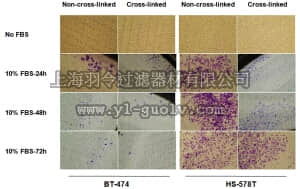
merck millipore,默克密理博,ECM1401,QCM™ High Sensitivity Non-cross-linked Collagen Invasion Assay, 24-well (8 µm), Colorimetric
产品名称:QCM™ High Sensitivity Non-cross-linked Collagen Invasion Assay, 24-well (8 µm), Colorimetric
产品型号:ECM1401
This QCM High Sensitivity Non-cross-linked Collagen Invasion Assay employs a non-cross-linked, atelo-collagen that provides a more pliable environment that permits higher levels of cell invasion to oc More>>
merck millipore,默克密理博,ECM1401,QCM™ High Sensitivity Non-cross-linked Collagen Invasion Assay, 24-well (8 µm), Colorimetric
- 产品介绍
- merck millipore,默克密理博,ECM1401,QCM™ High Sensitivity Non-cross-linked Collagen Invasion Assay, 24-well (8 µm), Colorimetric
重要规格表
描述 产品目录编号 ECM1401 品牌系列 Chemicon®
商名 - Chemicon
- QCM
描述 QCM™ High Sensitivity Non-cross-linked Collagen Invasion Assay, 24-well (8 µm), Colorimetric 概述 Also available: Cell Comb™ Scratch Assay! Get biochemical data from a scratch assay!
Introduction
Metastasis, the process by which tumor cells colonize tissues distant from the site of the primary tumor, consists of multiple phases: invasion of cells from the primary tumor into adjacent tissues, passage of the tumor cells through the vascular lining into the bloodstream (intravasation), adhesion to the endothelium at the site of implantation, traversal across the endothelium (extravasation) and proliferation at the distant site. The first step, invasion, requires that the tumor cell traverse one or more extracellular matrix elements, depending on the tumor type. Epithelial tumors must breach a basement membrane, which is a dense sheet of interwoven cross-linked type IV collagen and laminin, in order to extend into neighboring tissues. In addition, many tumors contain a reactive stroma containing fibrillar collagen, another cross-linked matrix element. Finally, the process of intravasation requires passage through the endothelial basement membrane.
The mechanisms by which premetastatic cells breach such barriers are the focus of intense study. In many solid tumors of epithelial origin, a morphological change from a cuboidal epithelial phenotype to a spindle-shaped mesenchymal phenotype (termed the epithelial-mesenchymal transition, or EMT) presages the invasion of the cells across ECM barriers. A key feature of the EMT is the increased expression of proteases, chiefly matrix metalloproteinases, which cleave the components of the ECM. However, alternative forms of cell invasion have been observed and are likely to contribute to the invasive potential of a tumor. Some invasive cells adopt an amoeboid phenotype, and migrate by rear-force propulsion and membrane blebbing; such amoeboid cells invade the ECM by squeezing through pores and appear not to require proteases. Distinctions between amoeboid and mesenchymal invasion are not clear-cut, and some tumor cells will adopt different morphologies in response to environmental conditions.
The most widely used in vitro assay to assess invasive potential of a cell type employs a chamber with a porous filter at the bottom, which is coated with a gelled layer of ECM, usually collagen or basement membrane extract. Cells are applied to the top of the gel, and a chemoattractant is provided in the well below the chamber, such that invasive cells traverse the ECM and move through the pores to the other side, where they are then quantified. EMD Millipore provides such assays, coated with either basement membrane extract (Catalogue No. ECM550, ECM554, ECM555) or collagen (Catalogue No. ECM551, ECM552, ECM556).
As our understanding of migration modes expands, more consideration is being given to the properties of the ECM employed in such in vitro models of invasion, and the extent to which they reflect the properties of the ECM of the tumor microenvironment. Basement membrane extracts contain the constituents, but lacks the covalent cross-links, of a basement membrane in vivo. Two forms of fibrillar collagen are used in invasion assays. Acid-extracted collagen, which is employed in EMD Millipore’s Collagen Invasion Assays (Catalogue No. ECM551, ECM552, ECM556), retains intermolecular covelent cross-links, whereas pepsin-solubilized collagen, also known as atelo-collagen, lacks such cross-links. It has been demonstrated that amoeboid invasion only occurs in matrix environments lacking cross-links.
EMD Millipore’s QCM™ High Sensitivity Non-cross-linked Collagen Invasion Assay utilizes the same format of matrix-coated porous filters as the existing products, but employs a non-cross-linked, atelo-collagen that provides a more pliable environment that permits higher levels of cell invasion to occur. For moderately invasive cell types, invasion can be detected at earlier time points with the High Sensitivity Collagen Invasion Assay. In less invasive cell types, the High Sensitivity Collagen Invasion Assay is able to detect invasion that is not apparent with the original QCM™ Collagen Invasion Assay.产品信息 部件 - Forceps: One each
- 24-well Cell Invasion Plate Assembly: Two 24-well plates (8 µm) with 12 non-cross-linked collagen-coated inserts per plate (24 inserts total/kit).
- Cell Stain: One 20 mL bottle.
- Extraction Buffer: One 20 mL bottle.
- Cotton Swabs: 50 each
应用 应用 This QCM High Sensitivity Non-cross-linked Collagen Invasion Assay employs a non-cross-linked, atelo-collagen that provides a more pliable environment that permits higher levels of cell invasion to occur. 应用说明 EMD Millipore’s QCM™ High Sensitivity Non-cross-linked Collagen Invasion Assay utilizes the same format of matrix-coated porous filters as the existing products, but employs a non-cross-linked, atelo-collagen that provides a more pliable environment that permits higher levels of cell invasion to occur.
For moderately invasive cell types, invasion can be detected at earlier time points with the High Sensitivity Collagen Invasion Assay. In less invasive cell types, the High Sensitivity Collagen Invasion Assay is able to detect invasion that is not apparent with the original QCM™ Collagen Invasion Assay.产品使用声明 使用声明 - Unless otherwise stated in our catalog or other company documentation accompanying the product(s), our products are intended for research use only and are not to be used for any other purpose, which includes but is not limited to, unauthorized commercial uses, in vitro diagnostic uses, ex vivo or in vivo therapeutic uses or any type of consumption or application to humans or animals.
储存和货运信息 存储条件 Store kit materials at 2-8°C for up to 4 months from date of receipt. Do not freeze. 包装信息 数量 24 wells 包装 24 wells
上一件merck millipore产品:merck millipore,默克密理博,14-721M,EGFR (T790M, L858R) Protein, active, 250 µg
下一件merck millipore产品:merck millipore,默克密理博,04-1080,Anti-TCF-4 Antibody, clone EP2033Y, rabbit monoclonal
 merck millipore,默克密理博,SF-2371,SF3B1; Human, Cyanine 3 RNA Detection Probe,SmartFlare
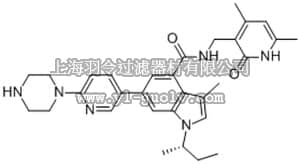 merck millipore,默克密理博,500580,Ezh2 Inhibitor III, GSK126
merck millipore,默克密理博,SF-1325,BCL2L2; Human, Cyanine 3 RNA Detection Probe,SmartFlare
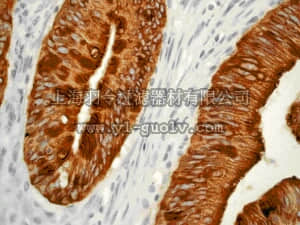 merck millipore,默克密理博,MABT150,Anti-Cytokeratin 20 Antibody, clone EPR1622Y, rabbit monoclonal
 merck millipore,默克密理博,14-721M,EGFR (T790M, L858R) Protein, active, 250 µg
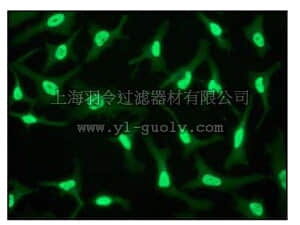 merck millipore,默克密理博,04-1080,Anti-TCF-4 Antibody, clone EP2033Y, rabbit monoclonal
merck millipore,默克密理博,IL004,Interleukin-4 Protein, Recombinant human
 merck millipore,默克密理博,MSGVN2B50,MultiScreenHTS GV,0.22 µm,不透明,非无菌
 merck millipore,默克密理博,MAB88058,Anti-p21waf1 Antibody, clone HZ52
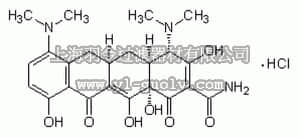 merck millipore,默克密理博,475843,Minocycline, Hydrochloride - CAS 13614-98-7 - Calbiochem