


- 当前位置:首页 > >Merck Millipore > 生命科学研究
- 生命科学研究
-
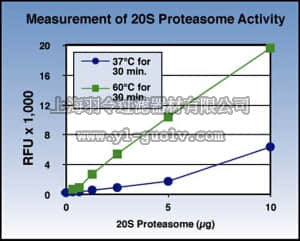
-
merck millipore,默克密理博,APT280,20S Proteasome Activity Assay
产品名称:20S Proteasome Activity Assay
产品型号:APT280
The Proteasome Activity Assay Kit provides a simple & convenient means for assaying proteasome activity that recognize the substrate LLVY.
merck millipore,默克密理博,APT280,20S Proteasome Activity Assay
- 产品介绍
重要规格表
品种反应性 主要应用 Ma ACT 描述 产品目录编号 APT280 品牌系列 Chemicon®
商名 - Chemicon
描述 20S Proteasome Activity Assay 概述 Introduction:
The ubiquitin-proteasome pathway is the major proteolytic system in the cytosol of eukaryotic cells, where it catalyzes the selective degradation of short-lived regulatory proteins and the rapid elimination of proteins with abnormal conformation (Hershko & Ciechanover 1998; Hochstrasser 1996). The critical protease in this pathway is the 26S proteasome, an ATP-dependent proteolytic complex, which is formed by the association of the barrel-shaped 20S proteasome (700-kDa) and two 19S (700-kDa) regulatory complexes (Baumeister et al. 1998; Coux et al. 1996). The 20S Proteasome, catalytic core of the proteasome complex, is responsible for the breakdown of key proteins involved with apoptosis, DNA repair, endocytosis, and cell cycle control (Coux et al. 1996; Hoffman & Rechsteiner 1996; Hochstrasser 1995). The CHEMICON Proteasome Activity Assay Kit provides a quick, efficient and sensitive system for evaluation of proteasome activity in cell lysates or inhibitor screening.
Test Principle:
Chemicon's Proteasome Activity Assay Kit provides a simple and convenient means for assaying proteasome activity that recognize the substrate LLVY (Meng et al. 1999). The assay is based on detection of the fluorophore 7-Amino-4-methylcoumarin (AMC) after cleavage from the labeled substrate LLVY-AMC. Absorption=351nm. Emission=430nm. The free AMC fluorescence can be quantified using a 380/460 nm filter set in a fluorometer.
A proteasome inhibitor, Lactacystin, is included as a test inhibitor for screening purpose. Lactacystin is a microbial natural product and the most specific and potent inhibitor of proteasomes currently known (Fenteany & Schreiber 1998).
Application:
The Proteasome Activity Assay Kit is a relatively quick method for detection of intracellular proteasome activity. Testing of purified proteasome enzyme, in vitro inhibitor screening and the study of proteasome regulation can be performed with this assay.
The CHEMICON Proteasome Activity Assay Kit is intended for research use only, not for diagnostic or therapeutic applications.产品信息 部件 - AMC Standard (Part No. 90207): One vial contains 2.2 μg AMC standard.
- 20S Proteasome Positive Control (Part No. 90205): One vial containing 20S Proteasome Positive Control in 20 mM Tris, pH 7.2 and 1 mM DTT.
- 10X Assay Buffer (Part No. 90209): One 1.5 mL vial.
- Proteasome Substrate (Suc-LLVY-AMC) (Part No. 90206): One vial contains 500 μg peptide substrate.
- Lactacystin (20S Proteasome Inhibitor) (Part No. 90208): One vial contains 9.4 μg inhibitor.
应用 应用 The Proteasome Activity Assay Kit provides a simple & convenient means for assaying proteasome activity that recognize the substrate LLVY. 主要应用 - Activity Assay
应用说明 Lysis buffer: 50 mM HEPES (pH 7.5), 5 mM EDTA, 150 mM NaCl and 1% Triton X-100. Addition of 2 mM ATP to the lysate will improve the recovery of intact 26S proteasome.
Also see: Hoffman, L. 1992 at for additional methods for isolation.
Preparation of the proteasome sample can be done by many different methods. This paper in JBC is a good reference, , however the method unfortunately requires 100,000g spins and DEAE columns but it does provide very, very clean and active proteasomes,
An easier yet more crude preparation is typically done for most studies.
The cell lysis buffer is, 50 mM HEPES (pH 7.5), 5 mM EDTA, 150 mM NaCl and 1% Triton X-100. Addition of 2 mM ATP to the lysate will improve the recovery of intact 26S proteasome. The addition of ATP is optional.
Cell Extraction
Note: This protocol has been successfully applied to several cell lines.
Users should optimize the cell extraction procedure for their own applications.
1. Collect cells in PBS by centrifugation (non-adherent cells) or scraping from culture flasks (adherent cells).
2. Wash cells twice with cold PBS.
3. Remove and discard the supernatant and collect the cell pellet. At this point the cell pellet can be frozen at -80°C and lysed at a later date.
4. Lyse the cell pellet in 0.5 mL lysis buffer for 30 minutes, on ice, with vortexing at 10-minute intervals.
*To get a rough idea you could adjust the cell concentration to around 2 x 10⁷ cells/mL. Resulting protein concentration of the cell lysate should be 2-4 mg/mL using this lysis buffer.
**The volume of cell lysis buffer depends on the cell line, the cell number in cell pellet and the amount of poly-ubiquitinated protein. For example, 1 x 10⁷ MCF-7 cells can be extracted in 0.5 mL of cell lysis buffer.
5. Transfer the lysate to microcentrifuge tubes and centrifuge at 15,000 rpm for 15 minutes at 4°C.
6. Aliquot the clear extract to clean microcentrifuge tubes. These cell lysates are ready for assay.
The cell lysate can be stored at -80°C. Avoid multiple freeze/thaw cycles. After thaw the cell lysate, Centrifuge at 15,000 rpm for 15 minutes at 4°C again since the cell lysate should be clear of any sediments or particulate matter.
Isolation of 20S core: Additional info: The crude protocol will provide 20S material, not exclusively but the 20S will be present as it is the core of the 26S particle .
Lliterature references abound for isolation of 20S proteasome from various tissues including for example, skeletal muscle. The isolation is done essentially the same way as the crude method but the spins are much higher, with the final spin being 100,000 x g for six hours, after which the pellet is resuspended and pooled. A good general reference is the following, Hayter JR et al, 2005, Mol. Cell Proteomics, PMID:15965267
.
"Purification of the 20S proteasome: The purification protocol was based upon previously published methods, adapted for purification of the complex from large or smaller quantities of tissue [see reference]. Chick skeletal muscle was mechanically homogenised using a domestic food processor in 1.5 volumes of buffer A (20mM Tris, 20mM KCl, 10mM magnesium acetate, 2mM DTT, 10% glycerol pH 7.6). The soluble protein fraction was isolated by centrifugation at 30,000g for 30min at 4°C.
The pellet was discarded and the supernatant fraction was centrifuged again at 100,000g for 6h. The supernatant fraction was again discarded and the pellet was washed carefully in fresh buffer, which was also discarded. The washed pellets were resuspended in 1ml of buffer A (per pellet), pooled and stored at -20°C in 1.5ml aliquots.生物信息 品种反应性 Mammals Entrez基因编号 - NM_148976.1
- NM_002786.2
Entrez基因汇总 The proteasome is a multicatalytic proteinase complex with a highly ordered ring-shaped 20S core structure. The core structure is composed of 4 rings of 28 non-identical subunits; 2 rings are composed of 7 alpha subunits and 2 rings are composed of 7 beta subunits. Proteasomes are distributed throughout eukaryotic cells at a high concentration and cleave peptides in an ATP/ubiquitin-dependent process in a non-lysosomal pathway. An essential function of a modified proteasome, the immunoproteasome, is the processing of class I MHC peptides. This gene encodes a member of the peptidase T1A family, that is a 20S core alpha subunit. A pseudogene has been identified on the Y chromosome. 基因符号 - EC 3.4.25.1
- PSMA1
- MGC22853
- MGC14751
- PROS30
- MGC1667
- HC2
- MGC21459
- PSC2
- MGC14542
- PROS-30
- MGC23915
- NU
- MGC14575
UniProt编号 - O14818
- P25786
- P25787
- P25788
- P28066
- P60900
UniProt汇总 FUNCTION: SwissProt: P60900 # The proteasome is a multicatalytic proteinase complex which is characterized by its ability to cleave peptides with Arg, Phe, Tyr, Leu, and Glu adjacent to the leaving group at neutral or slightly basic pH. The proteasome has an ATP-dependent proteolytic activity.
SIZE: 246 amino acids; 27399 Da
SUBUNIT: The proteasome is composed of at least 15 non identical subunits which form a highly ordered ring-shaped structure.
SUBCELLULAR LOCATION: Cytoplasm. Nucleus.
SIMILARITY: SwissProt: P60900 ## Belongs to the peptidase T1A family.产品使用声明 使用声明 - Unless otherwise stated in our catalog or other company documentation accompanying the product(s), our products are intended for research use only and are not to be used for any other purpose, which includes but is not limited to, unauthorized commercial uses, in vitro diagnostic uses, ex vivo or in vivo therapeutic uses or any type of consumption or application to humans or animals.
储存和货运信息 存储条件 Store kit materials (as provided) at -20°C up to their expiration date. 包装信息 数量 1 kit
上一件merck millipore产品:merck millipore,默克密理博,04-454,Anti-Ubiquitin (CT) Antibody, rabbit monoclonal
下一件merck millipore产品:merck millipore,默克密理博,MABE251,Anti-5-hydroxymethylcytosine (5hmC) Antibody, clone HMC 31
相关产品
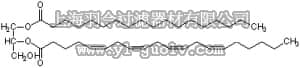 merck millipore,默克密理博,569399,1-Stearoyl-2-arachidonoyl-sn-glycerol - CAS 65914-84-3 - Calbiochem
 merck millipore,默克密理博,CBL1508F,Anti-CD44 Antibody, clone OX-50, FITC conjugated
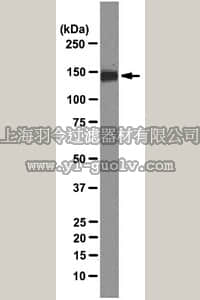 merck millipore,默克密理博,MABS25,Anti-VLDL-R Antibody, clone 6A6
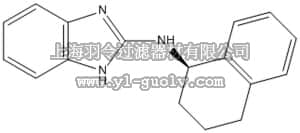 merck millipore,默克密理博,492031,NS8593 - Calbiochem
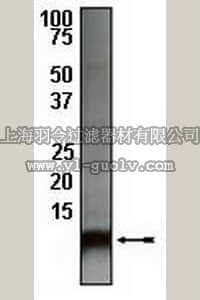 merck millipore,默克密理博,04-454,Anti-Ubiquitin (CT) Antibody, rabbit monoclonal
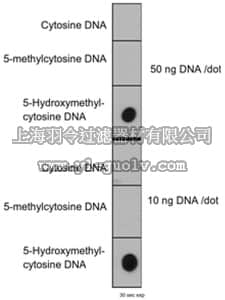 merck millipore,默克密理博,MABE251,Anti-5-hydroxymethylcytosine (5hmC) Antibody, clone HMC 31
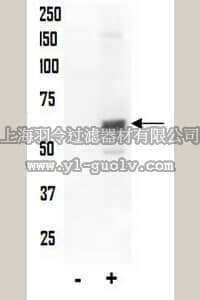 merck millipore,默克密理博,07-789,Anti-phospho-AKT (Thr34) Antibody
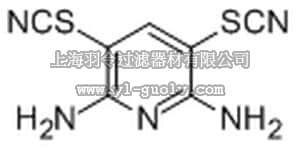 merck millipore,默克密理博,662141,DUB Inhibitor V, PR-619 - Calbiochem
 merck millipore,默克密理博,71235,pIEx™-4 DNA - Novagen
 merck millipore,默克密理博,05-1501,Anti-MAD2A Antibody, clone 17D10