


- 当前位置:首页 > >Merck Millipore > 生命科学研究
- 生命科学研究
-

-
merck millipore,默克密理博,MAB3391,Anti-Collagen Type I Antibody, clone 5D8-G9
产品名称:Anti-Collagen Type I Antibody, clone 5D8-G9
产品型号:MAB3391
This Anti-Collagen Type I Antibody, clone 5D8-G9 is validated for use in ELISA, FC, WB, IH for the detection of Collagen Type I.
merck millipore,默克密理博,MAB3391,Anti-Collagen Type I Antibody, clone 5D8-G9
- 产品介绍
重要规格表
品种反应性 主要应用 宿主 格式 抗体类型 Sh, B, Ca, H, Po IHC, ELISA, FC, WB M Purified Monoclonal Antibody 描述 产品目录编号 MAB3391 品牌系列 Chemicon®
商名 - Chemicon
描述 Anti-Collagen Type I Antibody, clone 5D8-G9 背景信息 Collagens are highly conserved throughout evolution and are characterised by an uninterrupted "Glycine X Y" triplet repeat that is a necessary part of the triple helical structure. Type I collagen (95 kDa) is found in bone, cornea, skin and tendon. Mutations in the encoding gene are associated with osteogenesis imperfecta, Ehlers Danlos syndrome, and idiopathic osteoporosis. Reciprocal translocations between chromosomes 17 and 22, where this gene and the gene for Platelet-derived growth factor beta are located, are associated with a particular type of skin tumor called dermatofibrosarcoma protuberans, resulting from unregulated expression of the growth factor. 产品信息 格式 Purified 控制 - Human kidney lysate
演示 100μg purified antibody at a concentration of 1mg/mL in 50 mM Tris Acetate, 150 mM NaCl, 0.1% Bronidox (pH 5.5).
The immunoglobulin fraction has been purified from ascites fluid by Protein A Chromatography and shown to be >95% pure by coomassie PAGE. The Collagen Type I Antibody is supplied 0.22 micron filtered.应用 应用 This Anti-Collagen Type I Antibody, clone 5D8-G9 is validated for use in ELISA, FC, WB, IH for the detection of Collagen Type I. 主要应用 - Immunohistochemistry
- ELISA
- Flow Cytometry
- Western Blotting
应用说明 ELISA: detection of native type I collagen. Capture: 2-4 μg/ml; Detection: A dilution of 10μg/mL of Collagen Type I Antibody will detect 50ng of human Collagen Type I with no reactivity with other Collagens. Higher levels of antibody may be necessary to detect lower concentrations of Collagen. Note antibody will not pair with itself.
Immunohistochemistry:unfixed frozen sections:
Cut 6 μm thick sections from frozen samples using a freezing microtome. Air-dry throughly. Rehydrate with PBS. Blocking is usually not necessary for IF studies, if using DAB, pretreatment for peroxidase is suggested and blocking 2% BSA in PBS will reduce back ground.
Dilute Collagen Type I Antibody in PBS buffer, add to the sample(s) and incubate for 60 minutes. (1:100-1:500).
Wash sections for 10 minutes in PBS, twice. Add FITC conjugated anti-mouse antibody and incubate for 60 minutes.
Wash for 10 minutes in PBS, twice.
Mount sections in glycerol/water (9:1 v/v) containing 1 mM 1,4-phenylenediamine. (for FITC stability or use Chemicon catalog numbers 5096 or 5013.
NOTE:
Preliminary studies suggest that enhanced staining of certain tissues maybe obtained by pretreatment (previous to step 2) of sections with various enzymes (eg 0.1% pepsin in 0.1M HCl, 37°C for 5 minutes).
Flow Cytometry: 1:100
Immunoblotting:1:1000 using NATIVE, non-denatured, non-reduced western blots only. Ramshaw, et.al (1988) "Electrophoretic and electroblotting of native collagens." Anal. Biochem. 168:82-87. Antibody will not work in traditional, reduced western blots.
Briefly, PAGE gels must be prepared for running native collagens.
A 3% (w/v) total acrylamide separating gel, containing 3.2% (w/w) bis-acrylamide as a proportion to a monomer as the crosslinking agent, in 10mM calcium lactate, pH 6.8 is polymerized between vertical glass plates by the addition of 0.05-0.1% TEMED and 0.05-.1% ammonium persulfate (added from a 10% stock solution). The cathode buffer (negative) buffer is 50mM Tris adjusted to pH 6.6 with lactic acid; the anode (positive) buffer is 0.1M lactic acid pH 2.5 {Friis, SJ et al, 1985 J Biochem Biophys Methods 10:301-306.}.
Prior to sample loading the gel is run for at least 90 minutes at 100V. Collagen samples are dissolved at 1mg/mL in either 0.1M lactic acid or 0.1M acetic acid containing 10% sucrose, and 5-10μg per lane is loaded. Methyl green is added as required to assist loading. Electrophoresis is 70V for 5 hours, room temperature.
Blotting uses 0.1M lactic acid pH 2.5, and 20V for 16 hours at room temperature with the collagens migrating toward the cathode.生物信息 克隆 5D8-G9 宿主 Mouse 特异性 Collagen Type I Antibody is a monoclonal IgG1 antibody which binds an epitope near the C-terminal of Type I Collagen.
Collagen Type I Antibody displays a high affinity for human, bovine and ovine Type I Collagens. There is no evidence for cross reactivity with Collagen Types III, V and VI or connective tissue protein. Antibody reacts only with native, non-denatured Collagen I同种型 IgG1 品种反应性 SheepBovineCanineHumanPig 抗体类型 Monoclonal Antibody Entrez基因编号 - NM_000088.3
Entrez基因汇总 This gene encodes the pro-alpha1 chains of type I collagen whose triple helix comprises two alpha1 chains and one alpha2 chain. Type I is a fibril-forming collagen found in most connective tissues and is abundant in bone, cornea, dermis and tendon. Mutations in this gene are associated with osteogenesis imperfecta types I-IV, Ehlers-Danlos syndrome type VIIA, Ehlers-Danlos syndrome Classical type, Caffey Disease and idiopathic osteoporosis. Reciprocal translocations between chromosomes 17 and 22, where this gene and the gene for platelet-derived growth factor beta are located, are associated with a particular type of skin tumor called dermatofibrosarcoma protuberans, resulting from unregulated expression of the growth factor. Two transcripts, resulting from the use of alternate polyadenylation signals, have been identified for this gene. [provided by R. Dalgleish] 基因符号 - OI4
- COL1A1
非反应性品种 - Kangaroo
- Chicken
- Horse
- Guinea Pig
- Mouse
- Rat
- Ground Squirrel
UniProt编号 - P02452
UniProt汇总 FUNCTION: SwissProt: P02452 # Type I collagen is a member of group I collagen (fibrillar forming collagen).
SIZE: 1464 amino acids; 138911 Da
SUBUNIT: Trimers of one alpha 2(I) and two alpha 1(I) chains. Interacts with MRC2 (By similarity).
SUBCELLULAR LOCATION: Secreted, extracellular space, extracellular matrix (By similarity).
TISSUE SPECIFICITY: Forms the fibrils of tendon, ligaments and bones. In bones the fibrils are mineralized with calcium hydroxyapatite.
PTM: Proline residues at the third position of the tripeptide repeating unit (G-X-Y) are hydroxylated in some or all of the chains. & O-linked glycan consists of a Glc-Gal disaccharide bound to the oxygen atom of a post-translationally added hydroxyl group.
DISEASE: SwissProt: P02452 # Defects in COL1A1 are the cause of Caffey disease [MIM:114000]; also known as infantile cortical hyperostosis. Caffey disease is characterized by an infantile episode of massive subperiosteal new bone formation that typically involves the diaphyses of the long bones, mandible, and clavicles. The involved bones may also appear inflamed, with painful swelling and systemic fever often accompanying the illness. The bone changes usually begin before 5 months of age and resolve before 2 years of age. & Defects in COL1A1 are a cause of Ehlers-Danlos syndrome type I (EDS-I) [MIM:130000]; also known as Ehlers-Danlos syndrome gravis. Ehlers-Danlos syndrome is a genetically and phenotypically heterogeneous connective-tissue disorder characterized by loose- jointedness and fragile, velvety, stretchable, bruisable skin that heals with peculiar 'cigarette-paper' scars. EDS-I is an autosomal dominant trait. & Defects in COL1A1 are a cause of autosomal dominant Ehlers-Danlos syndrome type VII (EDS-VII) [MIM:130060]; which includes also Ehlers-Danlos syndrome type VII-A1. EDS-VII is characterized by arthrochalasis multiplex congenita, skin hyperextensibility and bruisability. & Defects in COL1A1 are a cause of osteogenesis imperfecta type I (OI-I) [MIM:166200]. OI-I is a dominantly inherited serious newborn disease characterized by bone fragility, normal stature, little or no deformity, blue sclerae and hearing loss in 50% of families. Dentinogenesis imperfecta is rare and may distinguish a subset of OI type I (formation of dentine). & Defects in COL1A1 are a cause of osteogenesis imperfecta type II (OI-II) [MIM:166210]; also known as osteogenesis imperfecta congenita. OI-II is lethal in the perinatal period and is charaterized by calvarial mineralization, beaded ribs, compressed femurs, marked long bone deformity and platyspondyly (congenital flattening of the vertebral bodies). & Defects in COL1A1 are a cause of osteogenesis imperfecta type III (OI-III) [MIM:259420]; also called progressively deforming osteogenesis imperfecta with normal sclerae. OI-III is characterized by progressively deforming bones, usually with moderate deformity at birth, sclerae is variable in color, dentinogenesis imperfecta and hearing loss are common. The stature is very short. & Defects in COL1A1 are a cause of osteogenesis imperfecta type IV (OI-IV) [MIM:166220]. OI-IV is charaterized by normal sclerae, moderate to mild deformity and variable short stature. Dentinogenesis imperfecta is common and hearing loss occurs in some patients. & Genetic variations in COL1A1 are associated with susceptibility to involutional osteoporosis [MIM:166710]; also known as senile osteoporosis or postmenopausal osteoporosis. Osteoporosis is characterized by reduced bone mineral density, disrutption of bone microarchitecture, and the alteration of the amount and variety of non-collagenous proteins in bone. Osteoporotic bones are more at risk of fracture. & A chromosomal aberration involving COL1A1 is a cause of dermatofibrosarcoma protuberans (DFSP) [MIM:607907]. Translocation t(17;22)(q22;q13) with PDGF. DFSP is an uncommon, locally aggressive, but rarely metastasizing tumor of the deep dermis and subcutaneous tissue. It typically occurs during early or middle adult life and is most frequently located on the trunk and proximal extremities.
SIMILARITY: SwissProt: P02452 ## Belongs to the fibrillar collagen family. & Contains 1 VWFC domain.产品使用声明 使用声明 - Unless otherwise stated in our catalog or other company documentation accompanying the product(s), our products are intended for research use only and are not to be used for any other purpose, which includes but is not limited to, unauthorized commercial uses, in vitro diagnostic uses, ex vivo or in vivo therapeutic uses or any type of consumption or application to humans or animals.
储存和货运信息 存储条件 Collagen Type I Antibody is shipped, in liquid form, at ambient temperature. This material is stable for up to 6 months when stored at 2-8°C.
WARNING: The monoclonal reagent solution contains 0.1% sodium azide as a preservative. Due to potential hazards arising from the build up of this material in pipes, spent reagent should be disposed of with liberal volumes of water.包装信息 数量 100 µg
上一件merck millipore产品:merck millipore,默克密理博,MAB395-1ML,Anti-Myelin Basic Protein Antibody, a.a. 36-50, clone 14
下一件merck millipore产品:merck millipore,默克密理博,MABE126,Anti-SR protein family Antibody, clone 16H3
相关产品
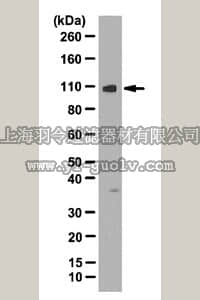 merck millipore,默克密理博,ABC35,Anti-HRS (HGS) Antibody
 merck millipore,默克密理博,14-681,Flt-4 Protein, active, 10 µg
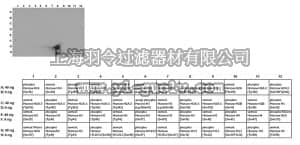 merck millipore,默克密理博,ABE152,Anti-phospho-Histone H3 (Ser31) Antibody
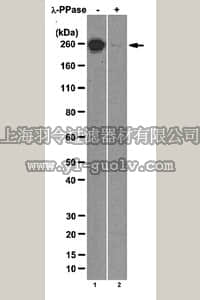
merck millipore,默克密理博,MAB395-1ML,Anti-Myelin Basic Protein Antibody, a.a. 36-50, clone 14
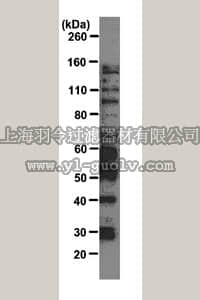 merck millipore,默克密理博,MABE126,Anti-SR protein family Antibody, clone 16H3
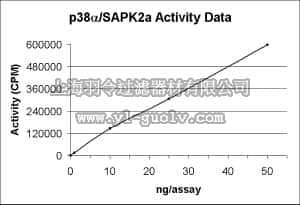 merck millipore,默克密理博,14-251,p38α/SAPK2a Protein, active, 10 µg
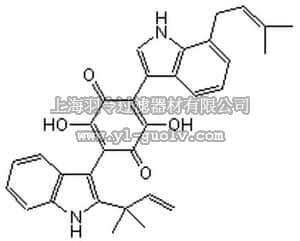 merck millipore,默克密理博,260010,Demethylasterriquinone B1 - CAS 78860-34-1 - Calbiochem
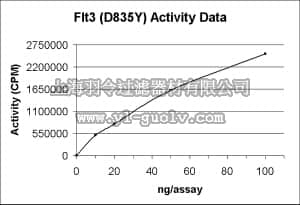 merck millipore,默克密理博,14-610,Flt-3 (D835Y) Protein, active, 10 µg
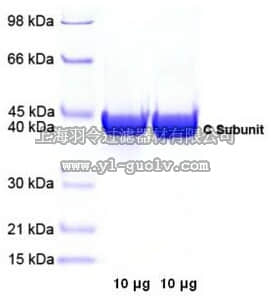 merck millipore,默克密理博,539576,PKA, Catalytic Subunit, Bovine Heart