


- 当前位置:首页 > >Merck Millipore > 生命科学研究
- 生命科学研究
-

-
merck millipore,默克密理博,APT409,CaspaTag Caspase 9 In Situ Assay Kit, Fluorescein
产品名称:CaspaTag Caspase 9 In Situ Assay Kit, Fluorescein
产品型号:APT409
The CaspaTag Caspase-9 In Situ Assay Kit, Fluorescein for flow cytometry is a fluorescent-based assay for detection of active caspase-9 in cells undergoing apoptosis.
merck millipore,默克密理博,APT409,CaspaTag Caspase 9 In Situ Assay Kit, Fluorescein
- 产品介绍
重要规格表
品种反应性 主要应用 检测方法 Ma ACT, FC Fluorescent 描述 产品目录编号 APT409 品牌系列 Chemicon®
商名 - Chemicon
- CaspaTag
描述 CaspaTag Caspase 9 In Situ Assay Kit, Fluorescein 背景信息 Apoptosis is an evolutionarily conserved form of cell suicide, which follows a specialized cellular process. The central component of this process is a cascade of proteolytic enzymes called caspases. These enzymes participate in a series of reactions that are triggered in response to pro-apoptotic signals and result in the cleavage of protein substrates, causing the disassembly of the cell1.
Caspases have been identified in organisms ranging from C. elegans to humans. The mammalian caspases play distinct roles in apoptosis and inflammation. In apoptosis, caspases are responsible for proteolytic cleavages that lead to cell disassembly (effector caspases), and are involved in upstream regulatory events (initiator caspases). An active caspase consists of two large and two small subunits that form two heterodimers, which associate in a tetramer2-4. In common with other proteases, caspases are synthesized as precursors that undergo proteolytic maturation, either autocatalytically or in a cascade by enzymes with similar specificity5.
Caspase enzymes specifically recognize a 4 or 5 amino acid sequence on the target substrate, which necessarily includes an aspartic acid residue. This residue is the target for cleavage, which occurs at the carbonyl end of the aspartic acid residue6. Caspases can be detected via immunoprecipitation, immunoblotting techniques using caspase specific antibodies, or by employing fluorochrome substrates, which become fluorescent upon cleavage by the caspase.产品信息 部件 - Hoechst Stain: 1 mL at 200 μg/mL, ready-to-use
- FLICA Reagent (FAM-LEHD-FMK): Four lyophilized vials
- 10X Wash Buffer: 60 mL
- Fixative: 6 mL
- Propidium Iodide: 1 mL at 250 μg/mL, ready-to-use
检测方法 Fluorescent 应用 应用 The CaspaTag Caspase-9 In Situ Assay Kit, Fluorescein for flow cytometry is a fluorescent-based assay for detection of active caspase-9 in cells undergoing apoptosis. 主要应用 - Activity Assay
- Flow Cytometry
应用说明 The CHEMICON® CaspaTag™ Caspase-9 In Situ Assay Kit, Fluorescein is a fluorescent-based assay for detection of active caspase-9 in cells undergoing apoptosis. The kit is for research use only. Not for use in diagnostic or therapeutic procedures.
Test Principle
CHEMICON®'s CaspaTag™ Caspase-9 In Situ Assay Kits use a novel approach to detect active caspases. The methodology is based on Fluorochrome Inhibitors of Caspases (FLICA). The inhibitors are cell permeable and non-cytotoxic. Once inside the cell, the inhibitor binds covalently to the active caspase7. This kit uses a carboxyfluorescein-labeled fluoromethyl ketone peptide inhibitor of caspase-9 (FAM-LEHD-FMK), which produces a green fluorescence. When added to a population of cells, the FAM-LEHD-FMK probe enters each cell and covalently binds to a reactive cysteine residue that resides on the large subunit of the active caspase heterodimer, thereby inhibiting further enzymatic activity. The bound labeled reagent is retained within the cell, while any unbound reagent will diffuse out of the cell and is washed away. The green fluorescent signal is a direct measure of the amount of active caspase-9 present in the cell at the time the reagent was added. Cells that contain the bound labeled reagent can be analyzed by 96-well plate-based fluorometry, fluorescence microscopy, or flow cytometry.生物信息 品种反应性 Mammals Entrez基因编号 - NM_033358.3
- NM_001080124.1
- NM_001080125.1
- NM_001228.4
- NM_033355.3
- NM_033356.3
Entrez基因汇总 This gene encodes a member of the cysteine-aspartic acid protease (caspase) family. Sequential activation of caspases plays a central role in the execution-phase of cell apoptosis. Caspases exist as inactive proenzymes composed of a prodomain, a large protease subunit, and a small protease subunit. Activation of caspases requires proteolytic processing at conserved internal aspartic residues to generate a heterodimeric enzyme consisting of the large and small subunits. This protein is involved in the programmed cell death induced by Fas and various apoptotic stimuli. The N-terminal FADD-like death effector domain of this protein suggests that it may interact with Fas-interacting protein FADD. This protein was detected in the insoluble fraction of the affected brain region from Huntington disease patients but not in those from normal controls, which implicated the role in neurodegenerative diseases. Many alternatively spliced transcript variants encoding different isoforms have been described, although not all variants have had their full-length sequences determined. 基因符号 - Caspase-8 subunit p10].
- CASP8
- MCH5
- MGC78473
- CASP-8
- MACH
- ALPS2B
- procaspase-8
- FLICE
- CAP4
- EC 3.4.22.61 [Contains: Caspase-8 subunit p18
UniProt编号 - Q14790
UniProt汇总 FUNCTION: SwissProt: Q14790 # Most upstream protease of the activation cascade of caspases responsible for the TNFRSF6/FAS mediated and TNFRSF1A induced cell death. Binding to the adapter molecule FADD recruits it to either receptor. The resulting aggregate called death- inducing signaling complex (DISC) performs CASP8 proteolytic activation. The active dimeric enzyme is then liberated from the DISC and free to activate downstream apoptotic proteases. Proteolytic fragments of the N-terminal propeptide (termed CAP3, CAP5 and CAP6) are likely retained in the DISC. Cleaves and activates CASP3, CASP4, CASP6, CASP7, CASP9 and CASP10. May participate in the GZMB apoptotic pathways. Cleaves ADPRT. Hydrolyzes the small-molecule substrate, Ac-Asp-Glu-Val-Asp- -AMC. Likely target for the cowpox virus CRMA death inhibitory protein. Isoforms 5, 6, 7 and 8 lack the catalytic site and may interfere with the pro-apoptotic activity of the complex.
SIZE: 479 amino acids; 55391 Da
SUBUNIT: Heterotetramer that consists of two anti-parallel arranged heterodimers, each one formed by a 18 kDa (p18) and a 10 kDa (p10) subunit. Interacts with FADD, CFLAR and PEA15. Isoform 9 interacts at the endoplasmic reticulum with a complex containing BCAP31, BAP29, BCL2 and/or BCL2L1.
SUBCELLULAR LOCATION: Cytoplasm.
TISSUE SPECIFICITY: Isoforms 1, 5 and 7 are expressed in a wide variety of tissues. Highest expression in peripheral blood leukocytes, spleen, thymus, and liver. Barely detectable in brain, testis, and skeletal muscle.DOMAIN:SwissProt: Q14790 Isoform 9 contains a N-terminal extension that is required for interaction with the BCAP31 complex.
PTM: Generation of the subunits requires association with the death-inducing signaling complex (DISC), whereas additional processing is likely due to the autocatalytic activity of the activated protease. GZMB and CASP10 can be involved in these processing events. & Phosphorylated upon DNA damage, probably by ATM or ATR.
DISEASE: SwissProt: Q14790 # Defects in CASP8 are the cause of caspase-8 deficiency (CASP8D) [MIM:607271]. CASP8D is a disorder resembling autoimmune lymphoproliferative syndrome (ALPS). It is characterized by lymphadenopathy, splenomegaly, and defective CD95-induced apoptosis of peripheral blood lymphocytes (PBLs). It leads to defects in activation of T-lymphocytes, B-lymphocytes, and natural killer cells leading to immunodeficiency characterized by recurrent sinopulmonary and herpes simplex virus infections and poor responses to immunization.
SIMILARITY: Belongs to the peptidase C14 family. & Contains 2 DED (death effector) domains.产品使用声明 使用声明 - Unless otherwise stated in our catalog or other company documentation accompanying the product(s), our products are intended for research use only and are not to be used for any other purpose, which includes but is not limited to, unauthorized commercial uses, in vitro diagnostic uses, ex vivo or in vivo therapeutic uses or any type of consumption or application to humans or animals.
储存和货运信息 存储条件 · Store unopened kit materials at 2-8°C up to their expiration date.
· Reconstituted FLICA Reagent (150X) should be frozen at -20°C for up to 6 months, and may be thawed twice during this time. Aliquot into separate amber tubes if desired. Protect from light at all times.
· Store diluted (1X) wash buffer up to -20°C for 2 weeks.包装信息 数量 100 assays
上一件merck millipore产品:merck millipore,默克密理博,AB5474-50UL,Anti-Calcium Channel Antibody, Voltage Gated γ2
下一件merck millipore产品:merck millipore,默克密理博,AB5888,Anti-NOGO A Antibody
相关产品
 merck millipore,默克密理博,AB2081,Anti-CD44v3 Antibody, exon v3
 merck millipore,默克密理博,05-1078,Anti-STAT3 Antibody, clone 18F7.1
merck millipore,默克密理博,AB5883,Anti-Synapsin I Antibody, phosphoSer 603
 merck millipore,默克密理博,0500-2870,Guava easyCyte 8HT Service Total 1 year plan, at time of purchase
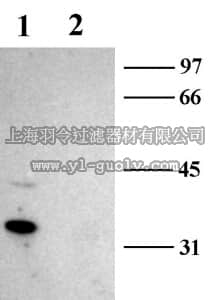 merck millipore,默克密理博,AB5474-50UL,Anti-Calcium Channel Antibody, Voltage Gated γ2
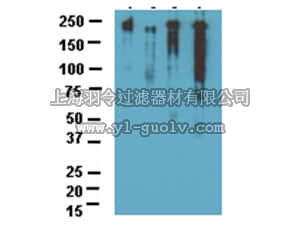 merck millipore,默克密理博,AB5888,Anti-NOGO A Antibody
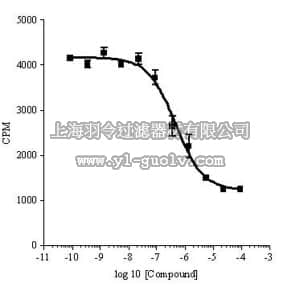 merck millipore,默克密理博,524734,Phosphodiesterase 3B, His•Tag, Human, Recombinant, S. frugiperda
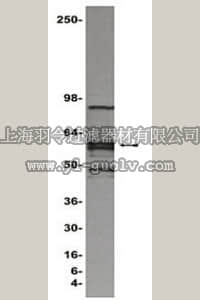 merck millipore,默克密理博,17-604,ChIPAb+ LEF1 - ChIP Validated Antibody and Primer Set
merck millipore,默克密理博,AB4140,Anti-MOP3 Antibody
 merck millipore,默克密理博,14-598,Lambda Protein Phosphatase, GST, 250 µg