


- 当前位置:首页 > >Merck Millipore > 生命科学研究
- 生命科学研究
- 产品介绍
重要规格表
品种反应性 主要应用 宿主 格式 抗体类型 Xn, H, M, R, Ca WB Rb Affinity Purified Polyclonal Antibody 描述 产品目录编号 AB9927 Replaces 09-288 描述 Anti-phospho-Akt1 (Tyr326) Antibody Alternate Names - RAC-PK-alpha
- RAC-alpha serine/threonine-protein kinase
- Protein kinase B
- PKB
- Proto-oncogene c-Akt
背景信息 The serine/threonine kinase Akt family contains several members, including Akt1 (also designated PKB or RacPK), Akt2 (also designated PKB-β or RacPK-β) and Akt3 (also designated PKB-γ or thyoma viral proto-oncogene 3), which exhibit sequence homology with the protein kinase A and C families and are encoded by the c-Akt proto-oncogene. All members of the Akt family have a Pleckstrin homology domain. Akt1 and Akt2 are activated by PDGF stimulation. This activation is dependent on PDGFR-β tyrosine residues 740 and 751, which bind the 85 kDa subunit of the phosphatidylinositol 3-kinase (PI 3-kinase) complex. The activation of Akt1 and Akt2 is inhibited by the PI kinase inhibitor wortmannin. Taken together, this data strongly suggests that the protein signals downstream of the PI kinases. 产品信息 格式 Affinity Purified 控制 - EGF treated and untreated HeLa cell lysates
演示 Purified rabbit polyclonal in buffer containing 0.1 M Tris-Glycine (pH 7.4), 150 mM NaCl with 0.05% sodium azide. 应用 应用 Detect phospho-Akt1 (Tyr326) using this Anti-phospho-Akt1 (Tyr326) Antibody validated for use in WB. 主要应用 - Western Blotting
生物信息 免疫原品种 KLH-conjugated linear peptide corresponding to human Akt1 phosphorylated at Tyr326. 表位 Phosphorylated Tyr326 浓缩 Please refer to the Certificate of Analysis for the lot-specific concentration. 宿主 Rabbit 特异性 This antibody recognizes Akt1 phosphorylated at Tyr326. 品种反应性 XenopusHumanMouseRatCanine Species Reactivity Note Demonstrated to react with Human. Predicted to react with Mouse, Rat, Canine, and Xenopus based on 100% sequence homology. 抗体类型 Polyclonal Antibody Entrez基因编号 - NP_001014431
Entrez基因汇总 The serine-threonine protein kinase encoded by the AKT1 gene is catalytically inactive in serum-starved primary and immortalized fibroblasts. AKT1 and the related AKT2 are activated by platelet-derived growth factor. The activation is rapid and specific, and it is abrogated by mutations in the pleckstrin homology domain of AKT1. It was shown that the activation occurs through phosphatidylinositol 3-kinase. In the developing nervous system AKT is a critical mediator of growth factor-induced neuronal survival. Survival factors can suppress apoptosis in a transcription-independent manner by activating the serine/threonine kinase AKT1, which then phosphorylates and inactivates components of the apoptotic machinery. Multiple alternatively spliced transcript variants have been found for this gene. [provided by RefSeq]. 基因符号 - RAC
- AKT1
- PKB
修改 - Phosphorylation
纯化方法 Affinity purified UniProt编号 - P31749
UniProt汇总 FUNCTION: Plays a role as a key modulator of the AKT-mTOR signaling pathway controlling the tempo of the process of newborn neurons integration during adult neurogenesis, including correct neuron positioning, dendritic development and synapse formation (By similarity). General protein kinase capable of phosphorylating several known proteins. Phosphorylates TBC1D4. Signals downstream of phosphatidylinositol 3-kinase (PI3K) to mediate the effects of various growth factors such as platelet-derived growth factor (PDGF), epidermal growth factor (EGF), insulin and insulin-like growth factor I (IGF-I). Plays a role in glucose transport by mediating insulin-induced translocation of the GLUT4 glucose transporter to the cell surface. Mediates the antiapoptotic effects of IGF-I. Mediates insulin-stimulated protein synthesis by phosphorylating TSC2 at 'Ser-939' and 'Thr-1462', thereby activating mTORC1 signaling and leading to both phosphorylation of 4E-BP1 and in activation of RPS6KB1. Promotes glycogen synthesis by mediating the insulin-induced activation of glycogen synthase. The activated form can suppress FoxO gene transcription and promote cell cycle progression. Essential for the SPATA13-mediated regulation of cell migration and adhesion assembly and disassembly. Ref.6 Ref.10 Ref.14 Ref.15 Ref.17 Ref.19 CATALYTIC ACTIVITY: ATP + a protein = ADP + a phosphoprotein.
ENZYME REGULATION: Three specific sites, one in the kinase domain (Thr-308) and the two other ones in the C-terminal regulatory region (Ser-473 and Tyr-474), need to be phosphorylated for its full activation.
SUBUNIT STRUCTURE: Interacts with AGAP2 (isoform 2, PIKE-A), the interaction requires guanine nucleotides and stimulates the kinase activity. Interacts (via the C-terminus) with CCDC88A (via its C-terminus) and THEM4 (via its C-terminus). Interacts with AKTIP. Interacts (via PH domain) with MTCP1, TCL1A AND TCL1B. Interacts with TRAF6. Interacts with GRB10; the interaction leads to GRB10 phosphorylation thus promoting YWHAE binding. Interacts with RARA; the interaction phosphorylates RARA and represses its transactivation activity. Interacts with TNK2.
SUBCELLULAR LOCATION: Cytoplasm. Nucleus. Cell membrane. Note: Nucleus after activation by integrin-linked protein kinase 1 (ILK1). Nuclear translocation is enhanced by interaction with TCL1A. Phosphorylation on Tyr-176 by TNK2 results in its localization to the cell membrane where it is targeted for further phosphorylations on Thr-308 and Ser-473 leading to its activation and the activated form translocates to the nucleus.
TISSUE SPECIFICTY: Expressed in all human cell types so far analyzed. The Tyr-176 phosphorylated form shows a significant increase in expression in breast cancers during the progressive stages i.e. normal to hyperplasia (ADH), ductal carcinoma in situ (DCIS), invasive ductal carcinoma (IDC) and lymph node metastatic (LNMM) stages. DOMAIN: Binding of the PH domain to the phosphatidylinositol 3-kinase alpha (PI3K) results in its targeting to the plasma membrane. The PH domain mediates interaction with TNK2 and Tyr-176 is also essential for this interaction.
The AGC-kinase C-terminal mediates interaction with THEM4.
PTM: Phosphorylation on Thr-308, Ser-473 and Tyr-474 is required for full activity. Activated TNK2 phosphorylates it on Tyr-176 resulting in its binding to the anionic plasma membrane phospholipid PA. This phosphorylated form localizes to the cell membrane, where it is targeted by PDPK1 and PDPK2 for further phosphorylations on Thr-308 and Ser-473 leading to its activation. Ser-473 phosphorylation by mTORC2 favors Thr-308 phosphorylation by PDPK1. Ser-473 phosphorylation is enhanced by interaction with AGAP2 isoform 2 (PIKE-A). Ser-473 phosphorylation is enhanced in focal cortical dysplasias with Taylor-type balloon cells.
Ubiquitinated; undergoes both 'Lys-48'- and 'Lys-63'-linked polyubiquitination. TRAF6-induced 'Lys-63'-linked AKT1 ubiquitination is critical for phosphorylation and activation. When ubiquitinated, it translocates to the plasma membrane, where it becomes phosphorylated. When fully phosphorylated and translocated into the nucleus, undergoes 'Lys-48'-polyubiquitination catalyzed by TTC3, leading to its degradation by the proteasome. Ref.10 Ref.14 Ref.17 Ref.34 Ref.8 Ref.20 Ref.9 Ref.16 Ref.21 Ref.26 Ref.27 INVOLVEMENT IN DISEASE: Defects in AKT1 are a cause of susceptibility to breast cancer (BC) [MIM:114480]. A common malignancy originating from breast epithelial tissue. Breast neoplasms can be distinguished by their histologic pattern. Invasive ductal carcinoma is by far the most common type. Breast cancer is etiologically and genetically heterogeneous. Important genetic factors have been indicated by familial occurrence and bilateral involvement. Mutations at more than one locus can be involved in different families or even in the same case.
Defects in AKT1 are associated with colorectal cancer (CRC) [MIM:114500].
Defects in AKT1 are associated with susceptibility to ovarian cancer [MIM:604370]; also called susceptibility to familial breast-ovarian cancer type 1 (BROVCA1).
SEQUENCE SIMILARITIES: Belongs to the protein kinase superfamily. AGC Ser/Thr protein kinase family. RAC subfamily.
Contains 1 AGC-kinase C-terminal domain.
Contains 1 PH domain.
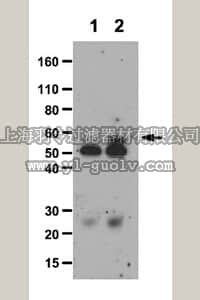
Contains 1 protein kinase domain.产品使用声明 质量保证 Evaluated by Western Blot in EGF treated and untreated HeLa cell lysates.
Western Blot Analysis: 2 µg/mL of this antibody detected AKT1 on 10 µg of EGF treated and untreated HeLa cell lysates.使用声明 - Unless otherwise stated in our catalog or other company documentation accompanying the product(s), our products are intended for research use only and are not to be used for any other purpose, which includes but is not limited to, unauthorized commercial uses, in vitro diagnostic uses, ex vivo or in vivo therapeutic uses or any type of consumption or application to humans or animals.
储存和货运信息 存储条件 Stable for 1 year at 2-8°C from date of receipt. 包装信息 数量 100 µg
上一件merck millipore产品:merck millipore,默克密理博,AP189P,Donkey Anti-Rat IgG Antibody, HRP conjugate, Species Adsorbed
下一件merck millipore产品:merck millipore,默克密理博,14-656M,LIM Kinase 1 Protein, active, 250 µg
相关产品
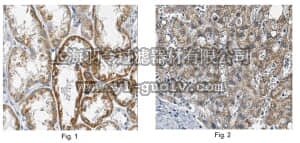 merck millipore,默克密理博,MABN457,Anti-Mitochondrial dicarboxylate carrier Antibody, clone 1F5.1
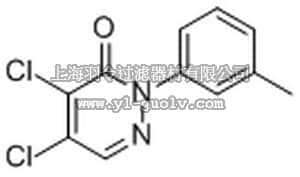 merck millipore,默克密理博,567417,SOD1 Inhibitor, LCS-1 - CAS 41931-13-9 - Calbiochem
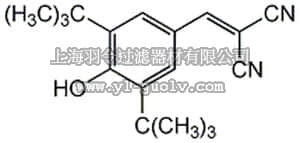 merck millipore,默克密理博,658425,AG 17 - CAS 10537-47-0 - Calbiochem
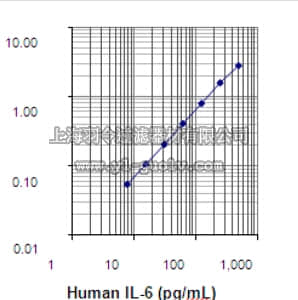 merck millipore,默克密理博,EZHIL6,Human IL-6 ELISA Kit, EZHIL6
 merck millipore,默克密理博,AP189P,Donkey Anti-Rat IgG Antibody, HRP conjugate, Species Adsorbed
 merck millipore,默克密理博,14-656M,LIM Kinase 1 Protein, active, 250 µg
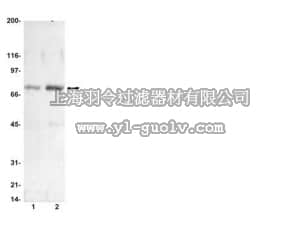 merck millipore,默克密理博,15-107,MAPK Pathway 1 Explorer Antibody MiniPack
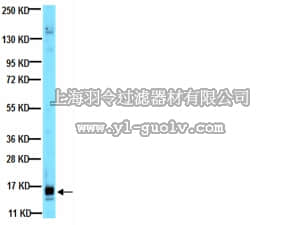 merck millipore,默克密理博,05-1117,Anti-VEGF Antibody, clone VG1
merck millipore,默克密理博,14-478,Yes Protein, active, 10 µg
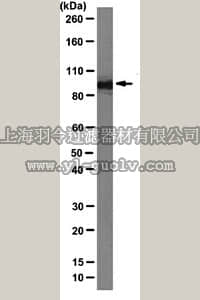 merck millipore,默克密理博,05-1530,Anti-Importin beta-1 Antibody, clone 3H14