


- 当前位置:首页 > >Merck Millipore > 生命科学研究
- 生命科学研究
-
-
merck millipore,默克密理博,AB765P,Anti-Mouse Collagen Type I Antibody
产品名称:Anti-Mouse Collagen Type I Antibody
产品型号:AB765P
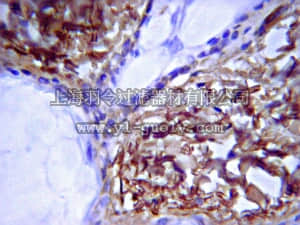
Anti-Mouse Collagen Type I Antibody detects level of Mouse Collagen Type I & has been published & validated for use in ELISA, IH, RIA & WB.
merck millipore,默克密理博,AB765P,Anti-Mouse Collagen Type I Antibody
- 产品介绍
重要规格表
品种反应性 主要应用 宿主 格式 抗体类型 M WB, ELISA, IHC Rb Purified Polyclonal Antibody 描述 产品目录编号 AB765P Replaces AB765 品牌系列 Chemicon®
商名 - Chemicon
描述 Anti-Mouse Collagen Type I Antibody 概述 Collagen Type I extracted and purified from mouse skin. Antibody shows less than 0.1% reactivity with mouse Collagen Types II, IV and with human, rat and chicken Collagens Type I in addition to a 1.0% reactivity with mouse Collagen Type III. 背景信息 Collagen is the main protein of connective tissue in animals and the most abundant protein in mammals, making up about 25% of the total protein content. It is one of the long, fibrous structural proteins whose functions are quite different from those of globular proteins such as enzymes; tough bundles of collagen called collagen fibers are a major component of the extracellular matrix that supports most tissues and gives cells structure from the outside, but collagen is also found inside certain cells. Collagen has great tensile strength, and is the main component of fascia, cartilage, ligaments, tendons, bone and teeth. Along with soft keratin, it is responsible for skin strength and elasticity, and its degradation leads to wrinkles that accompany aging. It strengthens blood vessels and plays a role in tissue development. It is present in the cornea and lens of the eye in crystalline form. Collagen occurs in many places throughout the body. There are 12 types of collagen described in literature. Collagen Type 1: This is the most abundant collagen of the human body. It is present in scar tissue, the end product when tissue heals by repair. It is found in tendons, the endomysium of myofibrils and the organic part of bone. Collagen Type 4: It is present in basal lamina and the eye lens. Also serves as part of the filtration system in capillaries and the glomeruli of nephron in the kidney. 产品信息 格式 Purified 控制 - Mouse skin and mouse liver tissues
演示 Purified rabbit polyclonal serum in buffer containing 0.01 M phosphate, 0.09 M NaCl, pH 7.2. No preservatives. 应用 应用 Anti-Mouse Collagen Type I Antibody detects level of Mouse Collagen Type I & has been published & validated for use in ELISA, IH, RIA & WB. 主要应用 - Western Blotting
- ELISA
- Immunohistochemistry
应用说明 Western Blot Analysis:
1:500 dilution of a previous lot detected Collagen Type I on 10 μg of Mouse Liver lysate.
Immunohistochemistry:
1:40 dilution of a previous lot for immunofluorescent staining of frozen mouse skin and liver tissues.
RIA:
A 1:200 dilution of a previous lot was used in RIA.
ELISA:
A previous lot of this antibody was used in ELISA生物信息 免疫原品种 Collagen Type I extracted and purified from mouse skin. 浓缩 Please refer to the Certificate of Analysis for the lot-specific concentration. 宿主 Rabbit 特异性 Recognizes mouse Collagen Type I. 同种型 IgG 品种反应性 Mouse Species Reactivity Note Antibody shows less than 0.1% reactivity with mouse Collagen Types II, IV and with human, rat and chicken Collagens Type I in addition to a 1.0% reactivity with mouse Collagen Type III. 抗体类型 Polyclonal Antibody Entrez基因编号 - NM_000088.3
Entrez基因汇总 This gene encodes the pro-alpha1 chains of type I collagen whose triple helix comprises two alpha1 chains and one alpha2 chain. Type I is a fibril-forming collagen found in most connective tissues and is abundant in bone, cornea, dermis and tendon. Mutations in this gene are associated with osteogenesis imperfecta types I-IV, Ehlers-Danlos syndrome type VIIA, Ehlers-Danlos syndrome Classical type, Caffey Disease and idiopathic osteoporosis. Reciprocal translocations between chromosomes 17 and 22, where this gene and the gene for platelet-derived growth factor beta are located, are associated with a particular type of skin tumor called dermatofibrosarcoma protuberans, resulting from unregulated expression of the growth factor. Two transcripts, resulting from the use of alternate polyadenylation signals, have been identified for this gene. [provided by R. Dalgleish] 基因符号 - OI4
- COL1A1
纯化方法 Protein A purfied UniProt编号 - P02452
UniProt汇总 FUNCTION: SwissProt: P02452 # Type I collagen is a member of group I collagen (fibrillar forming collagen).
SIZE: 1464 amino acids; 138911 Da
SUBUNIT: Trimers of one alpha 2(I) and two alpha 1(I) chains. Interacts with MRC2 (By similarity).
SUBCELLULAR LOCATION: Secreted, extracellular space, extracellular matrix (By similarity).
TISSUE SPECIFICITY: Forms the fibrils of tendon, ligaments and bones. In bones the fibrils are mineralized with calcium hydroxyapatite.
PTM: Proline residues at the third position of the tripeptide repeating unit (G-X-Y) are hydroxylated in some or all of the chains. & O-linked glycan consists of a Glc-Gal disaccharide bound to the oxygen atom of a post-translationally added hydroxyl group.
DISEASE: SwissProt: P02452 # Defects in COL1A1 are the cause of Caffey disease [MIM:114000]; also known as infantile cortical hyperostosis. Caffey disease is characterized by an infantile episode of massive subperiosteal new bone formation that typically involves the diaphyses of the long bones, mandible, and clavicles. The involved bones may also appear inflamed, with painful swelling and systemic fever often accompanying the illness. The bone changes usually begin before 5 months of age and resolve before 2 years of age. & Defects in COL1A1 are a cause of Ehlers-Danlos syndrome type I (EDS-I) [MIM:130000]; also known as Ehlers-Danlos syndrome gravis. Ehlers-Danlos syndrome is a genetically and phenotypically heterogeneous connective-tissue disorder characterized by loose- jointedness and fragile, velvety, stretchable, bruisable skin that heals with peculiar 'cigarette-paper' scars. EDS-I is an autosomal dominant trait. & Defects in COL1A1 are a cause of autosomal dominant Ehlers-Danlos syndrome type VII (EDS-VII) [MIM:130060]; which includes also Ehlers-Danlos syndrome type VII-A1. EDS-VII is characterized by arthrochalasis multiplex congenita, skin hyperextensibility and bruisability. & Defects in COL1A1 are a cause of osteogenesis imperfecta type I (OI-I) [MIM:166200]. OI-I is a dominantly inherited serious newborn disease characterized by bone fragility, normal stature, little or no deformity, blue sclerae and hearing loss in 50% of families. Dentinogenesis imperfecta is rare and may distinguish a subset of OI type I (formation of dentine). & Defects in COL1A1 are a cause of osteogenesis imperfecta type II (OI-II) [MIM:166210]; also known as osteogenesis imperfecta congenita. OI-II is lethal in the perinatal period and is charaterized by calvarial mineralization, beaded ribs, compressed femurs, marked long bone deformity and platyspondyly (congenital flattening of the vertebral bodies). & Defects in COL1A1 are a cause of osteogenesis imperfecta type III (OI-III) [MIM:259420]; also called progressively deforming osteogenesis imperfecta with normal sclerae. OI-III is characterized by progressively deforming bones, usually with moderate deformity at birth, sclerae is variable in color, dentinogenesis imperfecta and hearing loss are common. The stature is very short. & Defects in COL1A1 are a cause of osteogenesis imperfecta type IV (OI-IV) [MIM:166220]. OI-IV is charaterized by normal sclerae, moderate to mild deformity and variable short stature. Dentinogenesis imperfecta is common and hearing loss occurs in some patients. & Genetic variations in COL1A1 are associated with susceptibility to involutional osteoporosis [MIM:166710]; also known as senile osteoporosis or postmenopausal osteoporosis. Osteoporosis is characterized by reduced bone mineral density, disrutption of bone microarchitecture, and the alteration of the amount and variety of non-collagenous proteins in bone. Osteoporotic bones are more at risk of fracture. & A chromosomal aberration involving COL1A1 is a cause of dermatofibrosarcoma protuberans (DFSP) [MIM:607907]. Translocation t(17;22)(q22;q13) with PDGF. DFSP is an uncommon, locally aggressive, but rarely metastasizing tumor of the deep dermis and subcutaneous tissue. It typically occurs during early or middle adult life and is most frequently located on the trunk and proximal extremities.
SIMILARITY: SwissProt: P02452 ## Belongs to the fibrillar collagen family. & Contains 1 VWFC domain产品使用声明 使用声明 - Unless otherwise stated in our catalog or other company documentation accompanying the product(s), our products are intended for research use only and are not to be used for any other purpose, which includes but is not limited to, unauthorized commercial uses, in vitro diagnostic uses, ex vivo or in vivo therapeutic uses or any type of consumption or application to humans or animals.
储存和货运信息 存储条件 Stable for 1 year at -20ºC from date of receipt. 包装信息 数量 100 µg
上一件merck millipore产品:merck millipore,默克密理博,442630,GMBS
下一件merck millipore产品:merck millipore,默克密理博,412512,IRE1 Inhibitor III, 4μ8C - CAS 14003-96-4 - Calbiochem
相关产品
 merck millipore,默克密理博,AB15467P,Anti-ARG3.1 Antibody
 merck millipore,默克密理博,SF-1689,GATA2; Human, Cyanine 5 RNA Detection Probe,SmartFlare
merck millipore,默克密理博,CBL163-KC,Mouse Anti-Human CD33, clone WM53 (1mg) KC
 merck millipore,默克密理博,442630,GMBS
 merck millipore,默克密理博,412512,IRE1 Inhibitor III, 4μ8C - CAS 14003-96-4 - Calbiochem
 merck millipore,默克密理博,71279,Veggie Yeast Extract - Novagen
 merck millipore,默克密理博,DR1087,Anti-TWIST1 Mouse mAb (3E11)
 merck millipore,默克密理博,03-196,RIPAb+™ EED - RIP Validated Antibody and Primer Set
 merck millipore,默克密理博,14-486,p70 S6 Kinase Protein, active, 10 µg