


- 当前位置:首页 > >Merck Millipore > 生命科学研究
- 生命科学研究
- 产品介绍
重要规格表
品种反应性 主要应用 宿主 格式 抗体类型 R, H IHC, ELISA, WB Rb Serum Polyclonal Antibody 描述 产品目录编号 AB5112 品牌系列 Chemicon®
商名 - Chemicon
描述 Anti-Parkin Antibody, a.a. 305-323 产品信息 格式 Serum 演示 Rabbit serum. Lyophilized. Reconstitute with 50 μL of sterile distilled water. Centrifuge to remove insoluble material. Contains no preservative. 应用 应用 Detect Parkin using this Anti-Parkin Antibody, a.a. 305-323 validated for use in ELISA, WB, IH. 主要应用 - Immunohistochemistry
- ELISA
- Western Blotting
应用说明 Immunohistochemistry: 1:1000 - 1:2000
One site ELISA
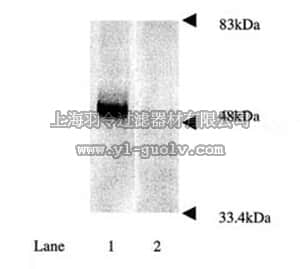
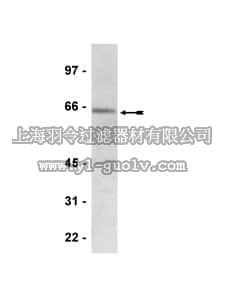
Western blot: 1:1000 - 1:2000 (recognizes a doublet at 44-52 kDa on blots of human brain)
The immunogen peptide is available (cat# AG237) for pre-absorbtion controls.
Optimal working dilutions must be determined by the end user.生物信息 免疫原品种 A 19 amino acid peptide (RILGEEQYNRYQQYGAEEC) corresponding to amino acids 305-323 of the human parkin molecule. An internal peptide sequence was chosen to avoid the possibility of cross reactivity with ubiquitin. 表位 a.a. 305-323 宿主 Rabbit 特异性 Parkin. Parkinson's disease is a common neurodegenerative disease is caused by slow death of neurons in the substantial nigra, a brain region that utilizes the neurotransmitter dopamine. Parkin, a recently discovered gene encoding a large protein, may be involved in normal and abnormal protein degradation in cells. Recent evidence indicates that point mutations in the Parkin gene appear to be responsible for the pathogenesis of some forms of Parkinson's disease. 品种反应性 RatHuman 抗体类型 Polyclonal Antibody Entrez基因编号 - NM_013988.1
- NM_004562.1
- NM_013987.1
Entrez基因汇总 The precise function of this gene is unknown; however, the encoded protein is a component of a multiprotein E3 ubiquitin ligase complex that mediates the targeting of substrate proteins for proteasomal degradation. Mutations in this gene are known to cause Parkinson disease and autosomal recessive juvenile Parkinson disease. Alternative splicing of this gene produces multiple transcript variants encoding distinct isoforms. Additional splice variants of this gene have been described but currently lack transcript support. 基因符号 - EC 6.3.2.-
- PARK2
- PDJ
- PRKN
- LPRS2
- AR-JP
- parkin
UniProt编号 - O60260
UniProt汇总 FUNCTION: SwissProt: O60260 # Functions within a multiprotein E3 ubiquitin ligase complex, catalyzing the covalent attachment of ubiquitin moieties onto substrate proteins. These substrates include SYT11, CCNE1, GPR37, STUB1, a 22 kDa O-linked glycosylated isoform of SNCAIP and SEPT5. May play a more general role in the ubiquitin proteasomal pathway by participating in the removal and/or detoxification of abnormally folded or damaged protein. Loss of this ubiquitin ligase activity appears to be the mechanism underlying pathogenesis of PARK2. May protect neurons against alpha synuclein toxicity, proteasomal dysfunction, GPR37 accumulation, and kainate-induced excitotoxicity. May play a role in controlling neurotransmitter trafficking at the presynaptic terminal and in calcium-dependent exocytosis. Regulates cyclin E during neuronal apoptosis. May represent a tumor suppressor gene.
SIZE: 465 amino acids; 51641 Da
SUBUNIT: Forms an E3 ubiquitin ligase complex with UBE2L3 or UBE2L6. Part of a SCF-like complex, consisting of PARK2, CUL1 and FBXW7. Interacts with SNCAIP. Binds to the C2A and C2B domains of SYT11. Interacts and regulates the turnover of SEPT5. Part of a complex, including STUB1, HSP70 and GPR37. The amount of STUB1 in the complex increases during ER stress. STUB1 promotes the dissociation of HSP70 from PARK2 and GPR37, thus facilitating PARK2-mediated GPR37 ubiquitination. HSP70 transiently associates with unfolded GPR37 and inhibits the E3 activity of PARK2, whereas, STUB1 enhances the E3 activity of PARK2 through promotion of dissociation of HSP70 from PARK2-GPR37 complexes. Interacts with PSMD4 and PACRG. Interacts with LRRK2. Interacts with RANBP2. Interacts with SUMO1 but not SUMO2, which promotes nuclear localization and autoubiquitination.
SUBCELLULAR LOCATION: Cytoplasm. Note=Co-localizes with STY11 in neutrites. Co-localizes with SNCAIP in brainstem Lewy bodies. Nucleus.
TISSUE SPECIFICITY: Highly expressed in the brain including the substantia nigra. Expressed in heart, testis and skeletal muscle. Expression is down-regulated or absent in tumor biopsies, and absent in the brain of PARK2 patients. Overexpression protects dopamine neurons from kainate-mediated apoptosis.
DOMAIN: SwissProt: O60260 The ubiquitin-like domain binds the PSMD4 subunit of 26S proteasomes.
PTM: Auto-ubiquitinates in an E2-dependent manner leading to its own degradation. & S-nitrosylated. The inhibition of PARK2 ubiquitin E3 ligase activity by S-nitrosylation could contribute to the degenerative process in PD by impairing the ubiquitination of PARK2 substrates.
DISEASE: SwissProt: O60260 # Defects in PARK2 are a cause of Parkinson disease (PD) [MIM:168600]. PD is a complex, multifactorial disorder that typically manifests after the age of 50 years, although early- onset cases (before 50 years) are known. PD generally arises as a sporadic condition but is occasionally inherited as a simple mendelian trait. Although sporadic and familial PD are very similar, inherited forms of the disease usually begin at earlier ages and are associated with atypical clinical features. PD is characterized by bradykinesia, resting tremor, muscular rigidity and postural instability, as well as by a clinically significant response to treatment with levodopa. The pathology of PD involves the loss of dopaminergic neurons in the substantia nigra and the presence of Lewy bodies (intraneuronal accumulations of aggregated proteins), in surviving neurons in various areas of the brain. & Defects in PARK2 are the cause of autosomal recessive early onset Parkinson disease 2 (PARK2) [MIM:600116]; also known as early-onset parkinsonism with diurnal fluctuation (EPDF) or autosomal recessive juvenile Parkinson disease (PDJ). PARK2 is symptomatically different in several aspects from idiopathic Parkinson disease, although classic symptoms such as bradykinesia, rigidity and tremor are present. Additional clinical features include early DOPA-induced dyskinesia, diurnal fluctuation of the symptoms, sleep benefit, dystonia and hyper-reflexia. PARK2 is usually characterized by onset before 40, with a mean age at onset of 23.2 years. Pathologically, PARK2 patients show loss of dopaminergic neurons in the substantia nigra, similar to that seen in Parkinson disease; however, Lewy bodies (intraneuronal accumulations of aggregated proteins) are absent. & Defects in PARK2 may be involved in the development and/or progression of ovarian cancer.
SIMILARITY: Contains 2 IBR-type zinc fingers. & Contains 2 RING-type zinc fingers. & Contains 1 ubiquitin-like domain.
MISCELLANEOUS: The parkin locus (PRKN), adjacent to the 6q telomere is hyper-recombinable and lies within FRA6E, the third most common fragile site in tumor tissue.产品使用声明 使用声明 - Unless otherwise stated in our catalog or other company documentation accompanying the product(s), our products are intended for research use only and are not to be used for any other purpose, which includes but is not limited to, unauthorized commercial uses, in vitro diagnostic uses, ex vivo or in vivo therapeutic uses or any type of consumption or application to humans or animals.
储存和货运信息 存储条件 Maintain lyophilized material at at -20°C to -70°C for up to 12 months after date of receipt. After reconstitution maintain at -20°C to -70°C in undiluted aliquots for up to 6 months. Avoid repeated freeze/thaw cycles. Glycerol (ACS grade or better) can be added (1:1) for greater stability. 包装信息 数量 50 µL
上一件merck millipore产品:merck millipore,默克密理博,DR1061,Anti-ENO1 Mouse mAb (8G8)
下一件merck millipore产品:merck millipore,默克密理博,06-1116,Anti-IL-33R ST2 (IL1RL1) Antibody
相关产品
 merck millipore,默克密理博,AB9415,Anti-Cannabinoid Receptor 1 Antibody
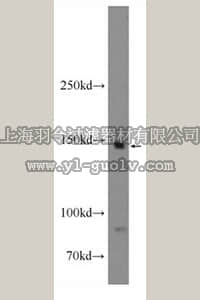 merck millipore,默克密理博,ABN499,Anti-MYBPC3 Antibody
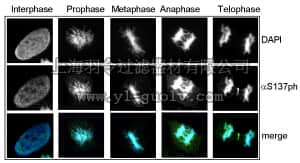 merck millipore,默克密理博,09-018,Anti-phospho Histone Macro H2A (Ser137) Antibody
merck millipore,默克密理博,AB3085,Anti-Na+/H+ Exchanger-3 Antibody
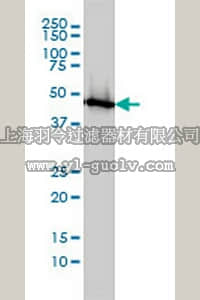 merck millipore,默克密理博,DR1061,Anti-ENO1 Mouse mAb (8G8)
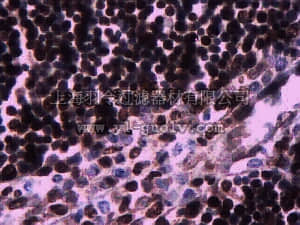 merck millipore,默克密理博,06-1116,Anti-IL-33R ST2 (IL1RL1) Antibody
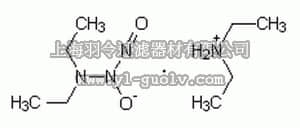 merck millipore,默克密理博,292500,Diethylamine NONOate - CAS 56329-27-2 - Calbiochem
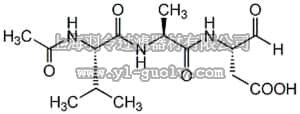 merck millipore,默克密理博,218735,Caspase Inhibitor II - CAS 147837-52-3 - Calbiochem
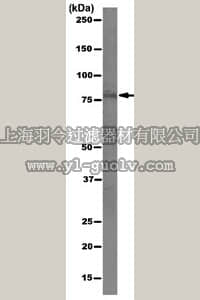 merck millipore,默克密理博,05-1952,Anti-SETDB2 Antibody, clone 5B7.2
 merck millipore,默克密理博,07-681,Anti-phospho-AMPK α (Thr172) Antibody