- 当前位置:首页 > >Merck Millipore > 生命科学研究
- 生命科学研究
-

-
merck millipore,默克密理博,SCR013,LT2 Immortalized Pancreatic Mesenchymal Cell Line
产品名称:LT2 Immortalized Pancreatic Mesenchymal Cell Line
产品型号:SCR013
The LT2 Immortalized Pancreatic Mesenchymal cell line is an attachment-dependent human cell line derived from isolated primary cultures of human fetal pancreatic fibroblasts.
merck millipore,默克密理博,SCR013,LT2 Immortalized Pancreatic Mesenchymal Cell Line
- 产品介绍
重要规格表
主要应用 Cult 描述 产品目录编号 SCR013 品牌系列 Chemicon®
商名 - Chemicon
描述 LT2 Immortalized Pancreatic Mesenchymal Cell Line 背景信息 The LT2 Immortalized Pancreatic Mesenchymal cell line is an attachment-dependent human cell line derived from isolated primary cultures of human fetal pancreatic fibroblasts. It is immortalized through transfection resulting in expression of the large T antigen.
This cell line arose from a primary culture of dispersed human fetal pancreatic cells. A single pancreas gland at 18 weeks gestation was dispersed by micro-dissection and collagenase digestion (2 mg/ml for 50 minutes at 37°C). Following washout of enzyme, dispersed cells were incubated with magnetic beads coupled to monoclonal antibodies specific to CD90 though a DNA linkage. Magnetic isolation and the detachment of the magnetic beads by DNAse treatment resulted in the separation of fibroblasts from epithelial cells. The CD90 positive cells were then cultured in Pancreatic Cell Culture Supplement (SCR015) and transfected with an expression vector containing the large T antigen sequence. Antibiotic selection was used to select transfectants.产品信息 演示 All cell lines are extensively tested to assure: a) sterility, b) absence of common human viruses (HBV, HCV and HIV1), c) absence of mycoplasma and, d) achievement of performance specifications prior to QC release. Cells are manufactured to GMP standards. 应用 应用 The LT2 Immortalized Pancreatic Mesenchymal cell line is an attachment-dependent human cell line derived from isolated primary cultures of human fetal pancreatic fibroblasts. 主要应用 - Stem Cell Culture
应用说明 Culture Notes:
• Sterile technique is required in a dedicated cell culture facility that is free from contamination
• We recommend the use of the associated reagents and procedures described herein to optimize cell line viability
• These cells require culture in a 37°C, CO2 incubator, calibrated to 5% CO2 for the standard addition of sodium bicarbonate to the base medium (2.2 g/L).
Establishing Cultures from Cryopreserved cells:
Reagents & Equipment required:
• Water bath equilibrated to 37°C
• 1 x PBS equilibrated to room temperature or 37°C
• Pancreatic Cell Culture Supplement (SCR015)
• Pancreatic Cell Culture Medium (SCR016)
• Growth medium: SCR016 supplemented with SCR015
• Centrifuge
• Tissue culture flasks
• Hemacytometer
Procedure:
To establish cultures from cryopreserved cells, first ensure that adequate equipment and reagents are available to perform the necessary procedures in a timely manner. Prepare a sufficient volume of growth medium using Pancreatic Cell Culture Supplement (SCR015) & Pancreatic Cell Culture Medium (SCR016) according to our instructions (refer to SCR015 or SCR016 product datasheets).
1. Remove the desired number of vials containing cells from storage and rapidly transfer to a 37°C water bath. Provide continuous agitation, e.g., swirling, to the vial while it is submerged in the 37°C water bath. Use proper safety precautions for handling extremely cold materials including gloves and eye protection. Continue with agitation until the cells are completely thawed and no ice remains within the cell suspension, about 1 to 2 minutes. Maximum cell viability is dependent on rapid and complete thawing of frozen cells.
2. Transfer the thawed cells to a 15 mL centrifuge tube, add approximately 10 mLs of PBS to the centrifuge tube, agitate and then centrifuge at 460 x g for 10 minutes. Decant the supernatant as completely as possible and resuspend the cells in a total volume of 1 mL of growth medium by repetitive elutriation using a 1 mL pipette. This procedure washes out the cryopreservative used to freeze the cells. Count cells by a suitable method including a hemacytometer or automated cell counting device
3. Cultures established from frozen cell stocks require adaptation to achieve maximum growth rates and this usually requires about two to three successive passages. We suggest establishing the initial culture of LT2 cells derived from frozen stock at a plating density of about 15,000 cells/cm2, followed by two successive passages where the cells are plated at 3,000 cells/cm2. Rapid achievement of a homogeneous cell suspension within the tissue culture flask containing growth medium is necessary to establish uniform cell distribution within the culture. Following the initial plating, allow cells to incubate in 5% CO2 at 37°C and monitor cell growth by visual inspection. When these cultures are 80% to 90% confluent, split and subculture the cells as described in the next section.
Subculture Procedures:
Reagents & Equipment required:
• Accutase™ dissociation reagent (SCR005)
• 1 x PBS equilibrated to room temperature or 37°C
• Pancreatic Cell Culture Supplement (SCR015)
• Pancreatic Cell Culture Medium (SCR016)
• Growth medium: SCR016 supplemented with SCR015
• Tissue Culture Flasks (T-25 or T-75)
• Hemacytometer
Procedure:
1. Equilibrate sufficient PBS and Accutase™ to 37°C. Wash each flask three times with PBS (5 mLs per T-25 per wash or 15 mLs per T-75 per wash) and then add Accutase™ (2 mLs/T-25 or 6 mLs/T-75) and incubate within the cell culture incubator for 10 to 15 minutes. Visualize the culture and assure complete detachment of cells by rapping the flask firmly on a solid surface.
2. Transfer the dissociated cells to a centrifuge tube and combine this with a PBS wash of the flask (5mL/T-25; 10 mL/T75). Centrifuge for 10 mins at 460 x g and remove the supernatant.
3. Resuspend the pelleted cells in 1 mL growth medium by repetitive elutriation using a 1 mL pipette. Maintain the cell suspension at 4°C prior to completion of the subculture process. Count the cells using an automated cell counter or hemacytometer. For automated counters, count in the size range 4.5 to 17.5 μm.
4. Plate LT2 cells at 3,000 cells/cm2 for routine passage by adding the appropriate volume of cell suspension to growth medium.
For optimal viability, complete the subculture process within 2-3 hours of dissociation by Accutase™ treatment. Fully adapted LT2 cells require 4 to 5 days to reach approximately 90% confluence. We recommend feeding every two to three days. For longer or shorter periods between subculture, cultures may be inoculated at lower or higher densities. Subculture at less than 1,500 cells/cm2 should be avoided to maintain maximal growth rates. Our suggested procedures are provided as guidelines and may require adjustments within different laboratory environments. These cells undergo crisis if feeding is too infrequent or subculture is delayed beyond confluence. Cultures will recover from mild crisis within a few passages but severe crisis conditions may necessitate re-establishing cultures from frozen stock.
Cryopreservation Procedure:
Reagents & Equipment required:
• Pancreatic Cell Cryopreservation Medium (SCR017)
• RPMI-1640 containing 25 mM HEPES, pH 7.2 (SLM-140-B)
• Cryogenic vials
Procedure:
1. Add an equal volume of 2X Pancreatic Cell Cryopresercation Medium to a known volume of cell suspension in RPMI 1640 containing 25 mM HEPES, pH 7.2. It is preferable to freeze LT2 cells at a concentration of 2 to 5 million cells per mL.
2. Dispense into cryogenic vials using suitable volumes for the desired applications.
3. Freeze the cell suspension at a slow rate, approximately 1°C/minute by standard methods.
4. After complete freezing, transfer vials of cells to liquid N2 containing Dewar flask preferably in the vapor phase for long-term storage at maximum viability生物信息 品种反应性 Human 细胞系类型 - Mesenchymal Stem Cells
产品使用声明 使用声明 - Unless otherwise stated in our catalog or other company documentation accompanying the product(s), our products are intended for research use only and are not to be used for any other purpose, which includes but is not limited to, unauthorized commercial uses, in vitro diagnostic uses, ex vivo or in vivo therapeutic uses or any type of consumption or application to humans or animals.
- This product contains genetically modified organisms (GMO). Within the EU GMOs are regulated by Directives 2001/18/EC and 2009/41/EC of the European Parliament and of the Council and their national implementation in the member States respectively. This legislation obliges Merck-Millipore to request certain information about you and the establishment where the GMOs are being handled.
储存和货运信息 存储条件 We recommend that cryopreserved cells be used to establish cultures immediately upon receipt. If stored prior to culture, it is preferable to store in the vapor phase of liquid N2. However, storage prior to culture is likely to result in diminished recovery of viable cells. 包装信息 数量 1 vial 包装 5 x10⁵ cells
上一件merck millipore产品:merck millipore,默克密理博,475986,mTOR Kinase Inhibitor II, WYE-354 - CAS 1062169-56-5 - Calbiochem
下一件merck millipore产品:merck millipore,默克密理博,ABN117,Anti-PDE4D3 Antibody
相关产品
 merck millipore,默克密理博,SF-116,EGFR; Mouse, Cyanine 5, RNA Detection Probe,SmartFlare
merck millipore,默克密理博,SF-2476,GABRB3; Human, Cyanine 5 RNA Detection Probe,SmartFlare
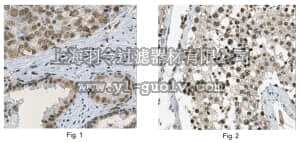 merck millipore,默克密理博,MABE163,Anti-ASF-1 (SF2) Antibody, clone AK96
 merck millipore,默克密理博,521726,Platelet Factor 4, Human Platelets
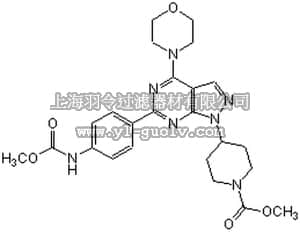 merck millipore,默克密理博,475986,mTOR Kinase Inhibitor II, WYE-354 - CAS 1062169-56-5 - Calbiochem
 merck millipore,默克密理博,ABN117,Anti-PDE4D3 Antibody
 merck millipore,默克密理博,14-790M,PI3 Kinase (p110α/p65α), 250 µg