


- 当前位置:首页 > >Merck Millipore > 生命科学研究
- 生命科学研究
- 产品介绍
重要规格表
主要应用 WB 描述 产品目录编号 NS106 Replaces NS118 品牌系列 Chemicon®
商名 - Chemicon
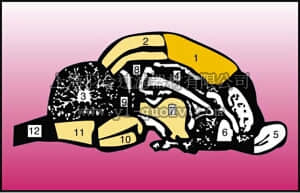
描述 Brain Blot, Adult Mouse 概述 The brain is one of the most complex organs in higher vertebrates. It is responsible for controlling growth, physical, mental, physiological, endocrinological and emotional activities. The brain cells are inherently complex and obviously depends upon the ability of its cells to specialize in one or more of these activities. Brain tissues have been divided into dozens of major and hundreds of sub-areas that are anatomically and functionally distinct. The brain cells achieve these specialized activities by expressing hundreds of specific house keeping proteins, enzymes, transporters and receptors. Expression of many genes in various areas of the brain is age and development related and may undergo and irreversible change. Therefore, it is very important to study the normal and abnormal expression of various proteins in order to delineate their physiological functions. Acquisition of animal or human brain tissue is not only time-consuming and expensive, but also requires expertise and training in brain anatomy, cell and molecular biology. Chemicon has carefully dissected and processed 12 anatomically and functionally distinct areas (listed below) of mouse brain for the study of proteins using Western blots. The brain proteins have been electrophoresed, electro-blotted, and blocked. A lane of pre-stained molecular weight markers is included in each blot to assist you in identifying the size of the proteins.
1. Frontal cortex. 2. Posterior Cortex. 3. Cerebellum. 4. Hippocampus. 5. Olfactory bulb. 6. Striatum. 7. Thalamus. 8. Midbrain. 9. Entorhinal Cortex. 10. Pons. 11. Medulla oblongata. 12. Spinal cord.
ANIMAL:
Normal adult mouse (Balb/C Male; Wt. ~25-35 g, 12-16 weeks old)
BRAIN TISSUE EXTRACTION:
Whole brain tissue was collected after quick decapitation and washed in cold normal saline to remove any contaminating blood. Various regions of the brain, as outlined in Fig. 1. were immediately dissected and kept in cold extraction buffer [50 mM Tris, pH 6.8, 1 mM EDTA, 2% SDS, 1 mg/mL each of protease inhibitors (leupeptin, aprotinin and pepstatin)]. Protein concentration was equalized in all brain regions.
SDS-GEL ELECTROPHORESIS:
Brain tissue extracts were mixed with 2X standard Laemmeli reducing buffer and heated for 5 minutes at 90°C. Brain tissue proteins (100 mg) were run on a 4-20% reducing SDS-mini gel at 200 V for approximately 45 minutes. Pre-stained high range kaleidoscope molecular weight markers (Biorad # 161-0324) were loaded on each gel: A (Aprotin, blue 7.7K); B (Lysozyme, red, 18.6K); C (Soybean trypsin inhibitor, orange, 32.5K) D (Carbonic anhydrase, violet 42.9K); E (Bovine serum albumin, green, 80K); F (beta-Galactosidase, magenta, 139K); and G (Myosin, blue, 244K). The proteins were transferred to PVDF (0.45μm) using mini-transblot cells. Homogeneity of protein transfer in all 12 lanes was verified. Protein lanes were identified and marked 1-12. Membranes were washed in PBS to remove dye. Pre-stained molecular weight standards have been marked A-G on the blot. Top (T) and bottom (B) of the gel/blot are also marked to identify the gel boundries.
BLOCKING:
After destaining, PVDF membranes were blocked with PBS/milk-based buffer and air dried so as to minimize damage to membrane and proteins.产品信息 演示 Blots are provided pre-blocked and in a ready-to-use format. 应用 应用 This blot will be most useful for proteins that are relatively abundant in whole brain tissue. 主要应用 - Western Blotting
应用说明 RECOMMENDED USAGE:
This blot will be most useful for proteins that are relatively abundant in whole brain tissue. Very low abundant proteins require the use of enriched cell membranes or nuclear fractions which may be poorly represented in whole tissue blots.
Although every effort has been made to ensure manufacturing consistency and reproducibility, some lane to lane and blot to blot variations are expected. The blots are produced for qualitative use only. It is suggested that if the blots are used to investigate quantitative expression differences, that appropriate ubiquitously expressed proteins (i.e. actin, MAB1501 or G3DPH, MAB374, for example) be probed for at the same time to serve as normalization controls.生物信息 品种 Mouse 品种反应性 Mouse 产品使用声明 使用声明 - Unless otherwise stated in our catalog or other company documentation accompanying the product(s), our products are intended for research use only and are not to be used for any other purpose, which includes but is not limited to, unauthorized commercial uses, in vitro diagnostic uses, ex vivo or in vivo therapeutic uses or any type of consumption or application to humans or animals.
储存和货运信息 存储条件 Maintain unused blots at 2-8°C in a sealed bag. Brain Blot should be handled with care. The blot should be used within 3-4 months from date of receipt. The Brain Blot should be immersed in 100% methanol for 10 seconds then in water for two minutes. Finally the wet blot should be transferred into the desired antibody solution. 包装信息 数量 1 blot
上一件merck millipore产品:merck millipore,默克密理博,572630,SU5402 - CAS 215543-92-3 - Calbiochem
下一件merck millipore产品:merck millipore,默克密理博,SF-2341,TAL1; Human, Cyanine 3 RNA Detection Probe,SmartFlare
相关产品
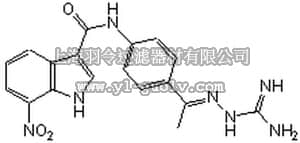 merck millipore,默克密理博,220488,Chk2 Inhibitor, PV1019 - Calbiochem
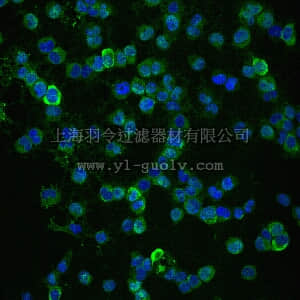 merck millipore,默克密理博,AB5320A4,Anti-NG2, Alexa Fluor488 Conjugate Antibody
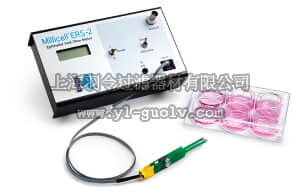 merck millipore,默克密理博,MERSSTX03,替换电极,1 对
 merck millipore,默克密理博,HTS078RTA,Ready-to-Assay™ S1P2 Lysophospholipid Receptor Frozen Cells
 merck millipore,默克密理博,572630,SU5402 - CAS 215543-92-3 - Calbiochem
 merck millipore,默克密理博,SF-2341,TAL1; Human, Cyanine 3 RNA Detection Probe,SmartFlare
 merck millipore,默克密理博,171608,Anti-β-Amyloid₄₀ (FCA3340) Rabbit pAb
 merck millipore,默克密理博,MACL09625,MultiScreen 装柱器,25 µL,黑色,铝制,非无菌
 merck millipore,默克密理博,IM51,Anti-MMP-2 (Ab-4) Mouse mAb (75-7F7)
 merck millipore,默克密理博,05-1558,Anti-PI3 Kinase b Antibody, p110b, clone 8C3.2