- 当前位置:首页 > >Merck Millipore > 生命科学研究
- 生命科学研究
-
-
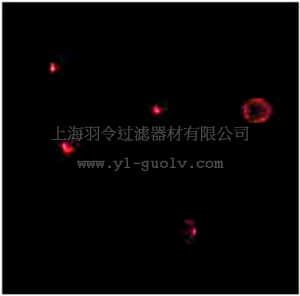
merck millipore,默克密理博,MABE199,Anti-phospho-p53 (Ser33) Antibody, clone EP2393Y, rabbit monoclonal
产品名称:Anti-phospho-p53 (Ser33) Antibody, clone EP2393Y, rabbit monoclonal
产品型号:MABE199
Anti-phospho-p53 (Ser33) Antibody, clone EP2393Y is a rabbit monoclonal antibody for detection of phospho-p53 (Ser33) also known as Phosphoprotein p53, Antigen NY-CO-13, cellular tumor antigen p53 & h More>>
merck millipore,默克密理博,MABE199,Anti-phospho-p53 (Ser33) Antibody, clone EP2393Y, rabbit monoclonal
- 产品介绍
重要规格表
品种反应性 主要应用 宿主 格式 抗体类型 H ICC, WB Rb Diluted Culture Supernatant Monoclonal Antibody 描述 产品目录编号 MABE199 描述 Anti-phospho-p53 (Ser33) Antibody, clone EP2393Y, rabbit monoclonal Alternate Names - Tumor suppressor p53
- tumor protein p53
- Phosphoprotein p53
- Antigen NY-CO-13
- p53 tumor suppressor
- transformation-related protein 53
- cellular tumor antigen p53
背景信息 p53 acts as both a tumor-suppressor and transcription factor that, upon activation by DNA damage and other cellular stress signals, leads to the transcription of genes triggering cell-cycle arrest, apoptosis, and DNA repair (1,2). The gene for the nuclear phosphoprotein p53 is the most commonly mutated gene yet identified in human cancers (3). p53 is frequently mutated or inactivated in about 60% of cancers (4,5). Cyclin dependent kinase 9, whose well-known substrate is RNA polymerase II, can also phosphorylate p53, more specifically, Ser33 on the N-terminus and, Ser315 and Ser392 on the C-terminus (6). 产品信息 格式 Diluted Culture Supernatant 控制 - Etoposide treated and untreated T47D cell lysates
演示 Rabbit Monoclonal in buffer containing 50 mM Tris-Glycine (pH 7.4), 0.15 M NaCl containing 40% Glycerol, 0.01% sodium azide and 0.05% BSA. 应用 应用 Anti-phospho-p53 (Ser33) Antibody, clone EP2393Y is a rabbit monoclonal antibody for detection of phospho-p53 (Ser33) also known as Phosphoprotein p53, Antigen NY-CO-13, cellular tumor antigen p53 & has been validated in WB, ICC. 主要应用 - Immunocytochemistry
- Western Blotting
应用说明 Immunocytochemistry Analysis: 1:100 dilution from a representative lot detected p53 in A431 cells. 生物信息 免疫原品种 Phospho specific peptide corresponding to human p53 phosphorylated at Ser33. 表位 Phosphorylated Ser53 克隆 EP2393Y 宿主 Rabbit 特异性 This antibody recognizes p53 phosphorylated at Ser33. 同种型 IgG 品种反应性 Human Species Reactivity Note Demonstrated to react with human. 抗体类型 Monoclonal Antibody 基因符号 - OTTHUMP00000221340
- LFS1
- P53
- p53
- TRP53
- FLJ92943
修改 - Phosphorylation
纯化方法 Unpurified UniProt编号 - P04637
UniProt汇总 FUNCTION: Acts as a tumor suppressor in many tumor types; induces growth arrest or apoptosis depending on the physiological circumstances and cell type. Involved in cell cycle regulation as a trans-activator that acts to negatively regulate cell division by controlling a set of genes required for this process. One of the activated genes is an inhibitor of cyclin-dependent kinases. Apoptosis induction seems to be mediated either by stimulation of BAX and FAS antigen expression, or by repression of Bcl-2 expression. Implicated in Notch signaling cross-over. Isoform 2 enhances the transactivation activity of isoform 1 from some but not all TP53-inducible promoters. Isoform 4 suppresses transactivation activity and impairs growth suppression mediated by isoform 1. Isoform 7 inhibits isoform 1-mediated apoptosis.
COFACTOR: Binds 1 zinc ion per subunit.
SUBUNIT STRUCTURE: Interacts with AXIN1. Probably part of a complex consisting of TP53, HIPK2 and AXIN1 By similarity. Binds DNA as a homotetramer. Interacts with histone acetyltransferases EP300 and methyltransferases HRMT1L2 and CARM1, and recruits them to promoters. In vitro, the interaction of TP53 with cancer-associated/HPV (E6) viral proteins leads to ubiquitination and degradation of TP53 giving a possible model for cell growth regulation. This complex formation requires an additional factor, E6-AP, which stably associates with TP53 in the presence of E6. Interacts (via C-terminus) with TAF1; when TAF1 is part of the TFIID complex. Interacts with ING4; this interaction may be indirect. Found in a complex with CABLES1 and TP73. Interacts with HIPK1, HIPK2, and P53DINP1. Interacts with WWOX. May interact with HCV core protein. Interacts with USP7 and SYVN1. Interacts with HSP90AB1. Interacts with CHD8; leading to recruit histone H1 and prevent transactivation activity By similarity. Interacts with ARMC10, BANP, CDKN2AIP and E4F1. Interacts with YWHAZ; the interaction enhances TP53 transcriptional activity. Phosphorylation of YWHAZ on 'Ser-58' inhibits this interaction. Interacts (via DNA-binding domain) with MAML1 (via N-terminus). Interacts with MKRN1. Interacts with PML (via C-terminus). Interacts with MDM2; leading to ubiquitination and proteasomal degradation of TP53. Directly interacts with FBXO42; leading to ubiquination and degradation of TP53. Interacts (phosphorylated at Ser-15 by ATM) with the phosphatase PP2A-PPP2R5C holoenzyme; regulates stress-induced TP53-dependent inhibition of cell proliferation. Interacts with PPP2R2A. Interacts with DAXX, BRD7 and TRIM24. Interacts (when monomethylated at Lys-382) with L3MBTL1. Isoform 1 interacts with isoform 2 and with isoform 4.
SUBCELLULAR LOCATION: Cytoplasm. Nucleus. Nucleus › PML body. Endoplasmic reticulum. Note: Interaction with BANP promotes nuclear localization. Recruited into PML bodies together with CHEK2.
Isoform 1: Nucleus. Cytoplasm. Note: Predominantly nuclear but localizes to the cytoplasm when expressed with isoform 4.
Isoform 2: Nucleus. Cytoplasm. Note: Localized mainly in the nucleus with minor staining in the cytoplasm.
Isoform 3: Nucleus. Cytoplasm. Note: Localized in the nucleus in most cells but found in the cytoplasm in some cells.
Isoform 4: Nucleus. Cytoplasm. Note: Predominantly nuclear but translocates to the cytoplasm following cell stress.
Isoform 7: Nucleus. Cytoplasm. Note: Localized mainly in the nucleus with minor staining in the cytoplasm.
Isoform 8: Nucleus. Cytoplasm. Note: Localized in both nucleus and cytoplasm in most cells. In some cells, forms foci in the nucleus that are different from nucleoli.
Isoform 9: Cytoplasm
TISSUE SPECIFICITY: Ubiquitous. Isoforms are expressed in a wide range of normal tissues but in a tissue-dependent manner. Isoform 2 is expressed in most normal tissues but is not detected in brain, lung, prostate, muscle, fetal brain, spinal cord and fetal liver. Isoform 3 is expressed in most normal tissues but is not detected in lung, spleen, testis, fetal brain, spinal cord and fetal liver. Isoform 7 is expressed in most normal tissues but is not detected in prostate, uterus, skeletal muscle and breast. Isoform 8 is detected only in colon, bone marrow, testis, fetal brain and intestine. Isoform 9 is expressed in most normal tissues but is not detected in brain, heart, lung, fetal liver, salivary gland, breast or intestine.
INDUCTION: Up-regulated in response to DNA damage. Isoform 2 is not induced in tumor cells in response to stress.
DOMAIN: The nuclear export signal acts as a transcriptional repression domain.
PTM: Acetylated. Acetylation of Lys-382 by CREBBP enhances transcriptional activity. Deacetylation of Lys-382 by SIRT1 impairs its ability to induce proapoptotic program and modulate cell senescence.
Phosphorylation on Ser residues mediates transcriptional activation. Phosphorylated by HIPK1 By similarity. Phosphorylation at Ser-9 by HIPK4 increases repression activity on BIRC5 promoter. Phosphorylated on Thr-18 by VRK1. Phosphorylated on Ser-20 by CHEK2 in response to DNA damage, which prevents ubiquitination by MDM2. Phosphorylated on Thr-55 by TAF1, which promotes MDM2-mediated degradation. Phosphorylated on Ser-46 by HIPK2 upon UV irradiation. Phosphorylation on Ser-46 is required for acetylation by CREBBP. Phosphorylated on Ser-392 following UV but not gamma irradiation. Phosphorylated upon DNA damage, probably by ATM or ATR. Phosphorylated on Ser-15 upon ultraviolet irradiation; which is enhanced by interaction with BANP.
Dephosphorylated by PP2A-PPP2R5C holoenzyme at Thr-55. SV40 small T antigen inhibits the dephosphorylation by the AC form of PP2A.
May be O-glycosylated in the C-terminal basic region. Studied in EB-1 cell line.
Ubiquitinated by MDM2 and SYVN1, which leads to proteasomal degradation. Ubiquitinated by RFWD3, which works in cooperation with MDM2 and may catalyze the formation of short polyubiquitin chains on p53/TP53 that are not targeted to the proteasome. Ubiquitinated by MKRN1 at Lys-291 and Lys-292, which leads to proteasomal degradation. Deubiquitinated by USP10, leading to its stabilization. Ubiquitinated by TRIM24, which leads to proteasomal degradation. Ubiquitination by TOPORS induces degradation. Deubiquitination by USP7, leading to stabilization. Isoform 4 is monoubiquitinated in an MDM2-independent manner.
Monomethylated at Lys-372 by SETD7, leading to stabilization and increased transcriptional activation. Monomethylated at Lys-370 by SMYD2, leading to decreased DNA-binding activity and subsequent transcriptional regulation activity. Lys-372 monomethylation prevents interaction with SMYD2 and subsequent monomethylation at Lys-370. Dimethylated at Lys-373 by EHMT1 and EHMT2. Monomethylated at Lys-382 by SETD8, promoting interaction with L3MBTL1 and leading to repress transcriptional activity. Demethylation of dimethylated Lys-370 by KDM1A prevents interaction with TP53BP1 and represses TP53-mediated transcriptional activation.
Sumoylated by SUMO1.
INVOLVEMENT IN DISEASE: Note=TP53 is found in increased amounts in a wide variety of transformed cells. TP53 is frequently mutated or inactivated in about 60% of cancers. TP53 defects are found in Barrett metaplasia a condition in which the normally stratified squamous epithelium of the lower esophagus is replaced by a metaplastic columnar epithelium. The condition develops as a complication in approximately 10% of patients with chronic gastroesophageal reflux disease and predisposes to the development of esophageal adenocarcinoma.
Defects in TP53 are a cause of esophageal cancer (ESCR) [MIM:133239].
Defects in TP53 are a cause of Li-Fraumeni syndrome (LFS) [MIM:151623]. LFS is an autosomal dominant familial cancer syndrome that in its classic form is defined by the existence of a proband affected by a sarcoma before 45 years with a first degree relative affected by any tumor before 45 years and another first degree relative with any tumor before 45 years or a sarcoma at any age. Other clinical definitions for LFS have been proposed (Ref.138 and Ref.141) and called Li-Fraumeni like syndrome (LFL). In these families affected relatives develop a diverse set of malignancies at unusually early ages. Four types of cancers account for 80% of tumors occurring in TP53 germline mutation carriers: breast cancers, soft tissue and bone sarcomas, brain tumors (astrocytomas) and adrenocortical carcinomas. Less frequent tumors include choroid plexus carcinoma or papilloma before the age of 15, rhabdomyosarcoma before the age of 5, leukemia, Wilms tumor, malignant phyllodes tumor, colorectal and gastric cancers.
Defects in TP53 are involved in head and neck squamous cell carcinomas (HNSCC) [MIM:275355]; also known as squamous cell carcinoma of the head and neck.
Defects in TP53 are a cause of lung cancer (LNCR) [MIM:211980].
Defects in TP53 are a cause of choroid plexus papilloma (CPLPA) [MIM:260500]. Choroid plexus papilloma is a slow-growing benign tumor of the choroid plexus that often invades the leptomeninges. In children it is usually in a lateral ventricle but in adults it is more often in the fourth ventricle. Hydrocephalus is common, either from obstruction or from tumor secretion of cerebrospinal fluid. If it undergoes malignant transformation it is called a choroid plexus carcinoma. Primary choroid plexus tumors are rare and usually occur in early childhood.
Defects in TP53 are a cause of adrenocortical carcinoma (ADCC) [MIM:202300]. ADCC is a rare childhood tumor of the adrenal cortex. It occurs with increased frequency in patients with the Beckwith-Wiedemann syndrome and is a component tumor in Li-Fraumeni syndrome.
SEQUENCE SIMILARITIES: Belongs to the p53 family.产品使用声明 质量保证 Evaluated by Western Blot in etoposide treated and untreated T47D cell lysates.
Western Blot Analysis: 1:2,000 dilution of this antibody detected p53 in etoposide treated and untreated T47D cell lysates.使用声明 - Unless otherwise stated in our catalog or other company documentation accompanying the product(s), our products are intended for research use only and are not to be used for any other purpose, which includes but is not limited to, unauthorized commercial uses, in vitro diagnostic uses, ex vivo or in vivo therapeutic uses or any type of consumption or application to humans or animals.
储存和货运信息 存储条件 Stable for 1 year at -20ºC from date of receipt. Handling Recommendations: Upon first thaw, and prior to removing the cap, centrifuge the vial and gently mix the solution. Aliquot into microcentrifuge tubes and store at -20°C. Avoid repeated freeze/thaw cycles, which may damage IgG and affect product performance. Note: Variability in freezer temperatures below
-20°C may cause glycerol containing Solutions to become frozen during storage.包装信息 数量 100 µL
上一件merck millipore产品:merck millipore,默克密理博,AB3853,Anti-Cortactin Antibody, phospho-specific (Tyr486)
下一件merck millipore产品:merck millipore,默克密理博,09-495,Anti-phospho LKB1 (Ser431) Antibody
相关产品
 merck millipore,默克密理博,MAB1501R,Anti-Actin Antibody, near a.a. 50-70, clone C4
 merck millipore,默克密理博,382149,Histone Deacetylase Inhibitor III
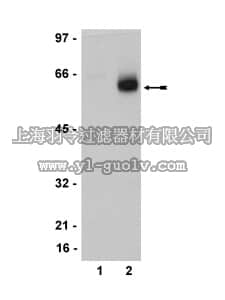 merck millipore,默克密理博,05-824,Anti-Estrogen Receptor β Antibody, clone 68-4, rabbit monoclonal
 merck millipore,默克密理博,AB1248,Anti-Cytochrome P450 Enzyme CYP1A2 Antibody
merck millipore,默克密理博,AB3853,Anti-Cortactin Antibody, phospho-specific (Tyr486)
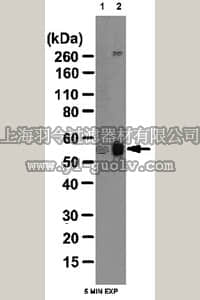 merck millipore,默克密理博,09-495,Anti-phospho LKB1 (Ser431) Antibody
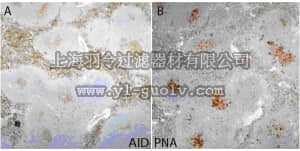 merck millipore,默克密理博,MABF63,Anti-Activation-induced cytidine deaminase (AID) Antibody, clone 328.8
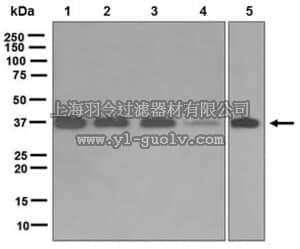 merck millipore,默克密理博,MABD183,Anti-RANKL, clone EPR4999, Rabbit Monoclonal Antibody
 merck millipore,默克密理博,S7807,CpG WIZ Fragile X Amplification Kit