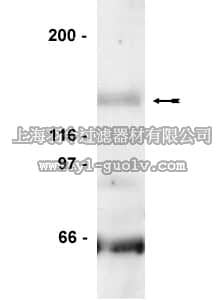
- 当前位置:首页 > >Merck Millipore > 生命科学研究
- 生命科学研究
-

-
merck millipore,默克密理博,MAB5450,Anti-Tau Antibody, phosphoThreonine 231, clone PHF-6
产品名称:Anti-Tau Antibody, phosphoThreonine 231, clone PHF-6
产品型号:MAB5450
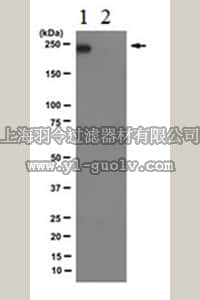
Anti-Tau Antibody, phosphoThreonine 231, clone PHF-6 is an antibody against Tau for use in ELISA & WB.
merck millipore,默克密理博,MAB5450,Anti-Tau Antibody, phosphoThreonine 231, clone PHF-6
- 产品介绍
重要规格表
品种反应性 主要应用 宿主 格式 抗体类型 H WB, ELISA M Ascites Monoclonal Antibody 描述 产品目录编号 MAB5450 品牌系列 Chemicon®
商名 - Chemicon
描述 Anti-Tau Antibody, phosphoThreonine 231, clone PHF-6 产品信息 格式 Ascites 演示 Liquid. 应用 应用 Anti-Tau Antibody, phosphoThreonine 231, clone PHF-6 is an antibody against Tau for use in ELISA & WB. 主要应用 - Western Blotting
- ELISA
应用说明 Western blot: 1:1000, non-phosphate buffers recommended. Specific for phospho-tau however highly phosphorylated blocking materials like non-fat milk can sometimes cause difficulties, thus we generally recommend blocking western blots with TBS-1-2% BSA solutions (filtered through a 0.45μm membrane) for better results.
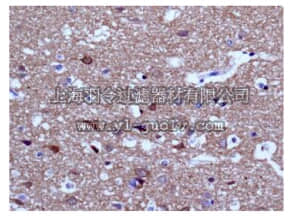
Immunohistochemistry: fresh frozen tissues with Tris-NaCl-Triton treatment
Optimal working dilutions must be determined by end user.生物信息 免疫原品种 Paired helical filaments tau preparation from human brain. 表位 phosphoThreonine 231 克隆 PHF-6 宿主 Mouse 特异性 Reacts with human Tau phosphorylated at threonine 231 and fetal tau. The antibody also reacts with dephosphorylated neurofibrillary tangles. MAB5450 is reactive with the Thr231 phosphorylated and diphosphorylated peptides. No reactivity with normal adult tau or with unphosphorylated or serine 235 phosphorylated protein. 同种型 IgG1 品种反应性 Human 抗体类型 Monoclonal Antibody Entrez基因编号 - NM_016841.2
- NM_005910.3
- NM_016834.2
- NM_016835.2
Entrez基因汇总 This gene encodes the microtubule-associated protein tau (MAPT) whose transcript undergoes complex, regulated alternative splicing, giving rise to several mRNA species. MAPT transcripts are differentially expressed in the nervous system, depending on stage of neuronal maturation and neuron type. MAPT gene mutations have been associated with several neurodegenerative disorders such as Alzheimer's disease, Pick's disease, frontotemporal dementia, cortico-basal degeneration and progressive supranuclear palsy. 基因符号 - PPND
- MAPT
- MTBT2
- MAPTL
- tau
- FTDP-17
- MSTD
- TAU
- FLJ31424
- MTBT1
- PHF-tau
- DDPAC
- MGC138549
修改 - Phosphorylation
UniProt编号 - P10636
UniProt汇总 FUNCTION: SwissProt: P10636 # Promotes microtubule assembly and stability, and might be involved in the establishment and maintenance of neuronal polarity. The C-terminus binds axonal microtubules while the N- terminus binds neural plasma membrane components, suggesting that tau functions as a linker protein between both. Axonal polarity is predetermined by tau localization (in the neuronal cell) in the domain of the cell body defined by the centrosome. The short isoforms allow plasticity of the cytoskeleton whereas the longer isoforms may preferentially play a role in its stabilization.
SIZE: 758 amino acids; 78878 Da
SUBUNIT: Interacts with PSMC2 through SQSTM1 (By similarity). Interacts with SQSTM1 when polyubiquitinated.
SUBCELLULAR LOCATION: Cytoplasm, cytosol. Cell membrane. Note=Mostly found in the axons of neurons, in the cytosol and in association with plasma membrane components.
TISSUE SPECIFICITY: Expressed in neurons. Isoform PNS-tau is expressed in the peripheral nervous system while the others are expressed in the central nervous system.DEVELOPMENTAL STAGE: Four-repeat (type II) tau is expressed in an adult-specific manner and is not found in fetal brain, whereas three-repeat (type I) tau is found in both adult and fetal brain.
DOMAIN: SwissProt: P10636 The tau/MAP repeat binds to tubulin. Type I isoforms contain 3 repeats while type II isoforms contain 4 repeats.
PTM: Phosphorylation at serine and threonine residues in S-P or T- P motifs by proline-directed protein kinases (PDPK: CDC2, CDK5, GSK-3, MAPK) (only 2-3 sites per protein in interphase, seven-fold increase in mitosis, and in PHF-tau), and at serine residues in K- X-G-S motifs by MAP/microtubule affinity-regulating kinase (MARK) in Alzheimer diseased brains. Phosphorylation decreases with age. Phosphorylation within tau's repeat domain or in flanking regions seems to reduce tau's interaction with, respectively, microtubules or plasma membrane components. Phosphorylation on Ser-610, Ser- 622, Ser-641 and Ser-673 in several isoforms during mitosis. & Polyubiquitinated. Requires functional TRAF6 and may provoke SQSTM1-dependent degradation by the proteasome (By similarity). PHF-tau can be modified by three different forms of polyubiquitination. 'Lys-48'-linked polyubiquitination is the major form, 'Lys-6'-linked and 'Lys-11'-linked polyubiquitination also occur. & Glycation of PHF-tau, but not normal brain tau. Glycation is a non-enzymatic post-translational modification that involves a covalent linkage between a sugar and an amino group of a protein molecule forming ketoamine. Subsequent oxidation, fragmentation and/or cross-linking of ketoamine leads to the production of advanced glycation endproducts (AGES). Glycation may play a role in stabilizing PHF aggregation leading to tangle formation in AD.
DISEASE: SwissProt: P10636 # In Alzheimer disease, the neuronal cytoskeleton in the brain is progressively disrupted and replaced by tangles of paired helical filaments (PHF) and straight filaments, mainly composed of hyperphosphorylated forms of TAU (PHF-TAU or AD P-TAU). & Defects in MAPT are a cause of frontotemporal dementia and parkinsonism linked to chromosome 17 (FTDP17) [MIM:600274, 172700]; also called frontotemporal dementia (FTD) or historically termed Pick complex. This form of frontotemporal dementia is characterized by presenile dementia with behavioral changes, deterioration of cognitive capacities and loss of memory. In some cases, parkinsonian symptoms are prominent. Neuropathological changes include frontotemporal atrophy often associated with atrophy of the basal ganglia, substantia nigra, amygdala. In most cases, protein tau deposits are found in glial cells and/or neurons. & Defects in MAPT are a cause of pallido-ponto-nigral degeneration (PPND) [MIM:168610]. The clinical features include ocular motility abnormalities, dystonia and urinary incontinence, besides progressive parkinsonism and dementia. & Defects in MAPT are a cause of corticobasal degeneration (CBD). It is marked by extrapyramidal signs and apraxia and can be associated with memory loss. Neuropathologic features may overlap Alzheimer disease, progressive supranuclear palsy, and Parkinson disease. & Defects in MAPT are a cause of progressive supranuclear palsy (PSP) [MIM:601104, 260540]; also known as Steele-Richardson- Olszewski syndrome. PSP is characterized by akinetic-rigid syndrome, supranuclear gaze palsy, pyramidal tract dysfunction, pseudobulbar signs and cognitive capacities deterioration. Neurofibrillary tangles and gliosis but no amyloid plaques are found in diseased brains. Most cases appear to be sporadic, with a significant association with a common haplotype including the MAPT gene and the flanking regions. Familial cases show an autosomal dominant pattern of transmission with incomplete penetrance; genetic analysis of a few cases showed the occurrence of tau mutations, including a deletion of Asn-613. & Defects in MAPT may be a cause of hereditary dysphasic disinhibition dementia (HDDD) [MIM:607485]. HDDD is a frontotemporal dementia characterized by progressive cognitive deficits with memory loss and personality changes, severe dysphasic disturbances leading to mutism, and hyperphagia.
SIMILARITY: Contains 4 Tau/MAP repeats.产品使用声明 使用声明 - Unless otherwise stated in our catalog or other company documentation accompanying the product(s), our products are intended for research use only and are not to be used for any other purpose, which includes but is not limited to, unauthorized commercial uses, in vitro diagnostic uses, ex vivo or in vivo therapeutic uses or any type of consumption or application to humans or animals.
储存和货运信息 存储条件 Maintain at -20°C in undiluted aliquots for up to 12 months after date of receipt. Avoid repeated freeze/thaw cycles. 包装信息 数量 100 ul
上一件merck millipore产品:merck millipore,默克密理博,AB21-K,Goat Anti-Rabbit IgG
下一件merck millipore产品:merck millipore,默克密理博,09-466,Anti-phospho-CrkL (Tyr207) Antibody
相关产品
 merck millipore,默克密理博,5380-OP,OmniPur HEPES, Sodium Salt - CAS 75277-39-3 - Calbiochem
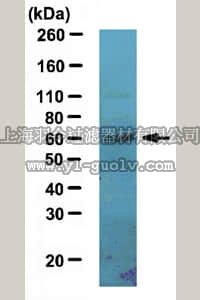 merck millipore,默克密理博,ABE181,Anti-LBP-1a Antibody
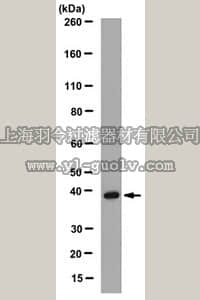 merck millipore,默克密理博,MABT107,Anti-Src-like-adapter Antibody/SLAP1, clone 1D9.1
 merck millipore,默克密理博,IL011,Interleukin-11, recombinant
merck millipore,默克密理博,AB21-K,Goat Anti-Rabbit IgG
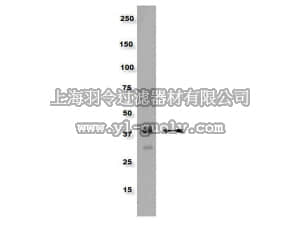 merck millipore,默克密理博,09-466,Anti-phospho-CrkL (Tyr207) Antibody
 merck millipore,默克密理博,SF-451,miR-181a-5p; Human, Cyanine 5, RNA Detection Probe,SmartFlare
 merck millipore,默克密理博,MABC685,Anti-ENC1 Antibody, clone EPR5406(B), rabbit monoclonal