


- 当前位置:首页 > >Merck Millipore > 生命科学研究
- 生命科学研究
-

-
merck millipore,默克密理博,MAB3468,Anti-β Galactosidase Antibody, clone DC1-4C7
产品名称:Anti-β Galactosidase Antibody, clone DC1-4C7
产品型号:MAB3468
Anti-β Galactosidase Antibody, clone DC1-4C7 is an antibody against β Galactosidase for use in ELISA & WB.
merck millipore,默克密理博,MAB3468,Anti-β Galactosidase Antibody, clone DC1-4C7
- 产品介绍
重要规格表
品种反应性 主要应用 宿主 格式 抗体类型 E. coli, Vrt WB, ELISA M Ascites Monoclonal Antibody 描述 产品目录编号 MAB3468 Replaces MAB1802 品牌系列 Chemicon®
商名 - Chemicon
描述 Anti-β Galactosidase Antibody, clone DC1-4C7 产品信息 格式 Ascites 演示 Liquid. Contains no preservative. 应用 应用 Anti-β Galactosidase Antibody, clone DC1-4C7 is an antibody against β Galactosidase for use in ELISA & WB. 主要应用 - Western Blotting
- ELISA
应用说明 Western blot
ELISA
Optimal working dilutions must be determined by the end user.生物信息 免疫原品种 Beta galactosidase from E. coli. 克隆 DC1-4C7 宿主 Mouse 特异性 Beta galactosidase. 同种型 IgG1 品种反应性 E. coliVertebrates 抗体类型 Monoclonal Antibody Entrez基因编号 - NM_001079811.1
- NM_000404.2
Entrez基因汇总 The GLB1 gene encodes beta-galactosidase-1 (EC 3.2.1.23), a lysosomal hydrolase that cleaves the terminal beta-galactose from ganglioside substrates and other glycoconjugates (Yoshida et al., 1991 [PubMed 1907800]). Beta-galactosidase also occurs in a complex with neuraminidase (NEU1; MIM 608272) and protective protein/cathepsin A (PPCA; MIM 256540), which is a component of certain cell surface receptors (Hinek, 1996 [PubMed 8922281]). See also galactosylceramidase (GALC; MIM 606890) (EC 3.2.1.46), a genetically distinct beta-galactosidase that is involved in the catabolism of other lipid compounds.[supplied by OMIM] 基因符号 - EC 3.2.1.23
- GLB1
- Lactase
- S-Gal
- ELNR1
- EBP
UniProt编号 - P16278
UniProt汇总 FUNCTION: SwissProt: P16279 # This protein has no beta-galactosidase catalytic activity, but plays functional roles in the formation of extracellular elastic fibers (elastogenesis) and in the development of connective tissue. Seems to be identical to the elastin-binding protein (EBP), a major component of the non- integrin cell surface receptor expressed on fibroblasts, smooth muscle cells, chondroblasts, leukocytes, and certain cancer cell types. In elastin producing cells, associates with tropoelastin intracellularly and functions as a recycling molecular chaperone which facilitates the secretions of tropoelastin and its assembly into elastic fibers.| P16278 # Cleaves beta-linked terminal galactosyl residues from gangliosides, glycoproteins, and glycosaminoglycans.
SIZE: 546 amino acids; 60552 Da
SUBCELLULAR LOCATION: Cytoplasm, perinuclear region. Note=Localized to the perinuclear area of the cytoplasm but not to lysosomes.
DOMAIN: SwissProt: P16279
DISEASE: SwissProt: P16278 # Defects in GLB1 are the cause of GM1-gangliosidosis type I [MIM:230500]; also known as infantile GM1-gangliosidosis. This autosomal recessive disorder is characterized by the accumulation in visceral tissues, and ultimately excessive excretion in the urine, of beta-linked galactose-terminal oligosaccharides. Patients show central nervous system degeneration, and the coarse facial features, hepatosplenomegaly and skeletal dysmorphology reminiscent of Hurler syndrome. The infantile form is rapidly progressive leading to death usually between the first and second year. & Defects in GLB1 are the cause of GM1-gangliosidosis type II [MIM:230600]; also known as late infantile/juvenile type GM1- gangliosidosis. Patients do not display the skeletal changes associated with the infantile form, but they nonetheless excrete elevated amounts of beta-linked galactose-terminal oligosaccharides. Inheritance is autosomal recessive. & Defects in GLB1 are the cause of GM1-gangliosidosis type III [MIM:230650]; also known as adult or chronic GM1- gangliosidosis. Patients show mild skeletal abnormalities, dysarthria, gait disturbance, dystonia and visual impairment. Visceromegaly is absent. Inheritance is autosomal recessive. & Defects in GLB1 are the cause of mucopolysaccharidosis IV B (MPS4B) [MIM:253010]; also known as Morquio syndrome B. MPS4B is a rare autosomal recessive disorder characterized by severe bone deformities without CNS involvement.
SIMILARITY: SwissProt: P16279 ## Belongs to the glycosyl hydrolase 35 family. | P16278 ## Belongs to the glycosyl hydrolase 35 family.产品使用声明 使用声明 - Unless otherwise stated in our catalog or other company documentation accompanying the product(s), our products are intended for research use only and are not to be used for any other purpose, which includes but is not limited to, unauthorized commercial uses, in vitro diagnostic uses, ex vivo or in vivo therapeutic uses or any type of consumption or application to humans or animals.
储存和货运信息 存储条件 Maintain at -20°C in undiluted aliquots up to 6 months after date of receipt. Avoid repeated freeze/thaw cycles. 包装信息 数量 100 µL
上一件merck millipore产品:merck millipore,默克密理博,MAB5294-60UL,Anti-Neurofilament 70 kDa Antibody, clone DP5 2.7.3
下一件merck millipore产品:merck millipore,默克密理博,06-566,Anti-Csk Antibody
相关产品
merck millipore,默克密理博,AB3541,Anti-Tet Repressor Antibody
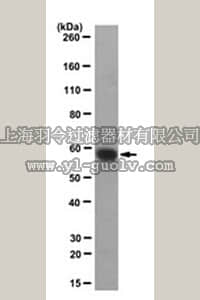 merck millipore,默克密理博,MABN304,Anti-Monoamine oxidase type B(MAO-B) Antibody, clone 3F12/G10/2E3
 merck millipore,默克密理博,14-462,Rsk3 Protein, active, 10 µg
 merck millipore,默克密理博,AB9348,Anti-Myelin Basic Protein Antibody
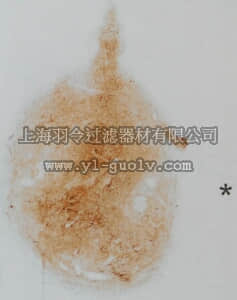 merck millipore,默克密理博,MAB5294-60UL,Anti-Neurofilament 70 kDa Antibody, clone DP5 2.7.3
 merck millipore,默克密理博,06-566,Anti-Csk Antibody
merck millipore,默克密理博,12-151,PKA Inhibitor peptide
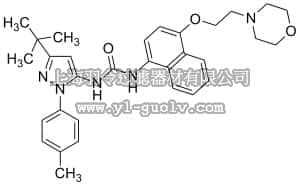 merck millipore,默克密理博,506172,p38 MAP Kinase Inhibitor X, BIRB 796 - CAS 285983-48-4 - Calbiochem
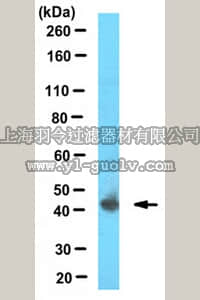 merck millipore,默克密理博,ABS491,Anti-ACOT7 Antibody
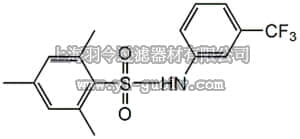 merck millipore,默克密理博,525185,Phospholipase C Activator, m-3M3FBS - CAS 200933-14-8 - Calbiochem