


- 当前位置:首页 > >Merck Millipore > 生命科学研究
- 生命科学研究
-
-
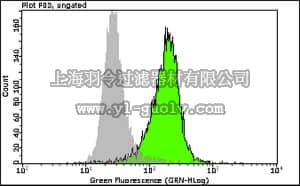
merck millipore,默克密理博,FCMAB108A4,Anti-phospho-SMC1 (Ser957) Antibody, clone 5D11G5 Alexa Fluor 488
产品名称:Anti-phospho-SMC1 (Ser957) Antibody, clone 5D11G5 Alexa Fluor 488
产品型号:FCMAB108A4
This Anti-phospho-SMC1 (Ser957) Antibody, clone 5D11G5 Alexa Fluor 488 is validated for use in WB, FC for the detection of phospho-SMC1 (Ser957).
merck millipore,默克密理博,FCMAB108A4,Anti-phospho-SMC1 (Ser957) Antibody, clone 5D11G5 Alexa Fluor 488
- 产品介绍
重要规格表
品种反应性 主要应用 宿主 格式 抗体类型 B, H, Xn FC, WB M AlexaFluor®488 Monoclonal Antibody 描述 产品目录编号 FCMAB108A4 描述 Anti-phospho-SMC1 (Ser957) Antibody, clone 5D11G5 Alexa Fluor® 488 Alternate Names - SMC1A <br />SMCB <br />SMC1alpha <br />DXS423E <br />DKFZp686L19178 <br />SMC1 <br />SMC1L1 <br />Smcb <br />OTTHUMP00000061876 <br />KIAA0178 <br />SB1.8 <br />MGC138332 <br />CDLS2 <br />Sb1.8
背景信息 SMC (structural maintenance of chromosomes) proteins are Involved in chromosome cohesion during cell cycle and in DNA repair. ATM phosphorylates SMC1 on Ser957 and Ser966 both in vitro and in vivo. Phosphorylated SMC1 is part of the complex that functions as a downstream effector in both the ATM/NBS1 branch and the ATR/MSH2 branch of S-phase checkpoint. 产品信息 格式 AlexaFluor®488 控制 - HeLa Cells
演示 Purified mouse monoclonal IgG1 conjugated to Alexa Flour® 488 in PBS with 0.1% sodium azide and 15 mg/mL BSA. 应用 应用 This Anti-phospho-SMC1 (Ser957) Antibody, clone 5D11G5 Alexa Fluor 488 is validated for use in WB, FC for the detection of phospho-SMC1 (Ser957). 主要应用 - Flow Cytometry
- Western Blotting
生物信息 免疫原品种 KLH-conjugated, synthetic peptide corresponding to human SMC1 phosphorylated at Ser957 表位 Phosphorylated at and around Ser957 克隆 5D11G5 宿主 Mouse 特异性 Antibody recognizes SMC1 phosphorylolated at Ser957. 同种型 IgG1 品种反应性 BovineHumanXenopus Species Reactivity Note Tested and passed on Human. Predicted to cross-react with xenopus and bovine based on sequence homology 抗体类型 Monoclonal Antibody Entrez基因编号 - NM_006306
Entrez基因汇总 Proper cohesion of sister chromatids is a prerequisite for the correct segregation of chromosomes during cell division. The cohesin multiprotein complex is required for sister chromatid cohesion. This complex is composed partly of two structural maintenance of chromosomes (SMC) proteins, SMC3 and either SMC1L2 or the protein encoded by this gene. Most of the cohesin complexes dissociate from the chromosomes before mitosis, although those complexes at the kinetochore remain. Therefore, the encoded protein is thought to be an important part of functional kinetochores. In addition, this protein interacts with BRCA1 and is phosphorylated by ATM, indicating a potential role for this protein in DNA repair. This gene, which belongs to the SMC gene family, is located in an area of the X-chromosome that escapes X inactivation. 基因符号 - Sb1.8
- SMC1A
- SMCB
- SMC1alpha
- DXS423E
- DKFZp686L19178
- SMC1
- SMC1L1
- Smcb
- OTTHUMP00000061876
- KIAA0178
- SB1.8
- MGC138332
- CDLS2
修改 - Phosphorylation
纯化方法 Protein G purfied UniProt编号 - Q14683
UniProt汇总 FUNCTION: SwissProt: Q14683 # Involved in chromosome cohesion during cell cycle and in DNA repair. Central component of cohesin complex. The cohesin complex is required for the cohesion of sister chromatids after DNA replication. The cohesin complex apparently forms a large proteinaceous ring within which sister chromatids can be trapped. At anaphase, the complex is cleaved and dissociates from chromatin, allowing sister chromatids to segregate. The cohesin complex may also play a role in spindle pole assembly during mitosis. Involved in DNA repair via its interaction with BRCA1 and its related phosphorylation by ATM, or via its phosphorylation by ATR. Works as a downstream effector both in the ATM/NBS1 branch and in the ATR/MSH2 branch of S-phase checkpoint.
SIZE: 1233 amino acids; 143233 Da
SUBUNIT: Interacts with POLE. Interacts with SYCP2. Interacts with BRCA1. Found in a complex with CDCA5, SMC3 and RAD21, PDS5A/APRIN and PDS5B/SCC-112 (By similarity). Forms a heterodimer with SMC3 in cohesin complexes. Cohesin complexes are composed of the SMC1 (SMC1A or SMC1B) and SMC3 heterodimer attached via their hinge domain, RAD21 which link them, and one STAG protein (STAG1, STAG2 or STAG3), which interacts with RAD21. In germ cell cohesin complexes, SMC1A is mutually exclusive with SMC1B. Interacts with BRCA1. Interacts with KNTC2.
SUBCELLULAR LOCATION: Nucleus. Note=Associates with chromatin. Before prophase it is scattered along chromosome arms. During prophase, most of cohesin complexes dissociate from chromatin probably because of phosphorylation by PLK, except at centromeres, where cohesin complexes remain. At anaphase, the RAD21 subunit of the cohesin complex is cleaved, leading to the dissociation of the complex from chromosomes, allowing chromosome separation. In germ cells, cohesin complex dissociates from chromatin at prophase I, and may be replaced by a meiosis-specific cohesin complex. The phosphorylated form on Ser-957 and Ser-966 associates with chromatin during G1/S/G2 phases but not during M phase, suggesting that phosphorylation does not regulate cohesin function. Integral component of the functional centromere-kinetochore complex at the kinetochore region during mitosis.
DOMAIN: SwissProt: Q14683 The flexible hinge domain, which separates the large intramolecular coiled coil regions, allows the heterotypic interaction with the corresponding domain of SMC3, forming a V- shaped heterodimer. The two heads of the heterodimer are then connected by different ends of the cleavable RAD21 protein, forming a ring structure (By similarity).
PTM: Phosphorylated by ATM upon ionizing radiation in a NBS1- dependent manner. Phosphorylated by ATR upon DNA methylation in a MSH2/MSH6-dependent manner. Phosphorylation of Ser-957 and Ser-966 activates it and is required for S-phase checkpoint activation.
DISEASE: SwissProt: Q14683 # Defects in SMC1A are the cause of Cornelia de Lange syndrome type 2 (CDLS2) [MIM:300590]; also known as Cornelia de Lange syndrome X-linked. CDLS is a clinically heterogeneous developmental disorder associated with malformations affecting multiple systems. CDLS is characterized by facial dysmorphisms, abnormal hands and feet, growth delay, cognitive retardation and various other malformations including gastroesophageal dysfunction and cardiac, ophthalmologic and genitourinary anomalies.
SIMILARITY: Belongs to the SMC family. SMC1 subfamily.产品使用声明 质量保证 Evaluated by Flow Cytometry with Hela Cells 使用声明 - Unless otherwise stated in our catalog or other company documentation accompanying the product(s), our products are intended for research use only and are not to be used for any other purpose, which includes but is not limited to, unauthorized commercial uses, in vitro diagnostic uses, ex vivo or in vivo therapeutic uses or any type of consumption or application to humans or animals.
储存和货运信息 存储条件 Maintain refrigerated at 2-8°C in undiluted aliquots for up to 6 months from date of receipt. Protect from light. 包装信息 数量 100 tests
上一件merck millipore产品:merck millipore,默克密理博,ABS444,Anti-PLAC3 Antibody
下一件merck millipore产品:merck millipore,默克密理博,14-926,IKKε Protein, active, 10 µg
相关产品
 merck millipore,默克密理博,IL020,Interleukin-10 Protein, Recombinant mouse
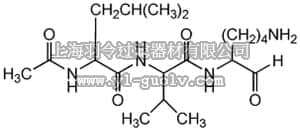 merck millipore,默克密理博,219385,Cathepsin B Inhibitor II - Calbiochem
 merck millipore,默克密理博,S7842,CpG WIZ H19-IGF2 Amplification Kit
 merck millipore,默克密理博,SF-1094,Cyclophilin A; Rat, Cyanine 5, RNA Detection Probe,SmartFlare
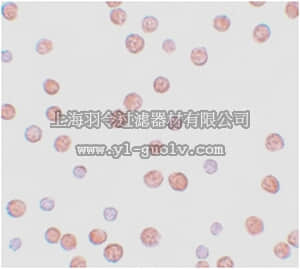 merck millipore,默克密理博,ABS444,Anti-PLAC3 Antibody
merck millipore,默克密理博,14-926,IKKε Protein, active, 10 µg
merck millipore,默克密理博,SF-161,miR-196a-5p; Human, Cyanine 3, RNA Detection Probe,SmartFlare
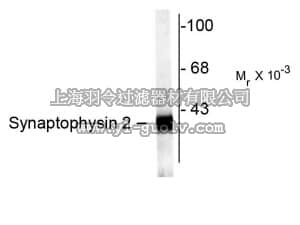 merck millipore,默克密理博,AB9840,Anti-Synaptophysin 2 Antibody
merck millipore,默克密理博,SF-801,PDPK1; Human, Cyanine 5, RNA Detection Probe,SmartFlare
