


- 当前位置:首页 > >Merck Millipore > 生命科学研究
- 生命科学研究
- 产品介绍
重要规格表
品种反应性 主要应用 宿主 格式 抗体类型 H WB Rb Affinity Purified Polyclonal Antibody 描述 产品目录编号 AB4063 品牌系列 Chemicon®
商名 - Chemicon
描述 Anti-APC Antibody Alternate Names - Adenomatous Polyposis Coli Protein
产品信息 格式 Affinity Purified 演示 Peptide affinity purified immunoglobulin. Liquid in 0.02 M phosphate with 0.15 M NaCl, pH 7.6 and 0.1% sodium azide as a preservative. 应用 应用 Use Anti-APC Antibody (Rabbit Polyclonal Antibody) validated in WB to detect APC also known as Adenomatous Polyposis Coli Protein. 主要应用 - Western Blotting
应用说明 Western blot: 1-3 ug/mL.
Optimal working dilutions must be determined by end user.生物信息 免疫原品种 Synthetic peptide from the C-terminal sequence of human APC. 浓缩 Please refer to the Certificate of Analysis for the lot-specific concentration. 宿主 Rabbit 特异性 Recognizes human APC (Adenomatous Polyposis Coli). APC functions as a tumor suppressor and plays a role in the Wnt signaling pathway. This antibody detects an ~310 kDa band, corresponding to the expected molecular weight of APC. 品种反应性 Human 抗体类型 Polyclonal Antibody Entrez基因编号 - NM_000038.3
Entrez基因汇总 This gene encodes a tumor suppressor protein that includes among its many intracellular functions one of nuclear export. Defects in this gene cause familial adenomatous polyposis (FAP), an autosomal dominant pre-malignant disease that usually progresses to malignancy. Disease-associated mutations tend to be clustered in a small region designated the mutation cluster region (MCR) and result in a truncated protein product. 基因符号 - FPC
- APC
- FAP
- GS
- DP3
- DP2.5
- DP2
UniProt编号 - P25054
UniProt汇总 FUNCTION: SwissProt: P25054 # Tumor suppressor. Promotes rapid degradation of CTNNB1 and participates in Wnt signaling. APC activity is correlated with its phosphorylation state.
SIZE: 2843 amino acids; 311646 Da
SUBUNIT: Forms homooligomers. Interacts with DIAPH1 and DIAPH2 (By similarity). Interacts with PDZ domains of DLG1 and DLG3. Associates with catenins. Binds axin. Interacts with the N- terminus of ARHGEF4, and the C-terminus of MAPRE1, MAPRE2 and MAPRE3. Found in a complex consisting of ARHGEF4, APC and CTNNB1.
TISSUE SPECIFICITY: Expressed in a variety of tissues.
PTM: Phosphorylated by GSK3B.
DISEASE: SwissProt: P25054 # Defects in APC are a cause of familial adenomatous polyposis (FAP) [MIM:175100]; which includes also Gardner syndrome (GS). FAP and GS contribute to tumor development in patients with uninherited forms of colorectal cancer. FAP is characterized by adenomatous polyps of the colon and rectum, but also of upper gastrointestinal tract (ampullary, duodenal and gastric adenomas). This is a viciously premalignant disease with one or more polyps progressing through dysplasia to malignancy in untreated gene carriers with a median age at diagnosis of 40 years. & APC mutations have led to some interesting observations. (1) the great majority of the mutations found to date would result in truncation of the APC product. (2) almost all the mutations have occurred within the first half of the coding sequence, and somatic mutations in colorectal tumors are further clustered in a particular region, called MCR (mutation cluster region). (3) most identified point mutations in the APC gene are transitions from cytosine to other nucleotides. (4) the location of germline mutations tends to correlate with the number of colorectal polyps in FAP patients. Inactivation of both alleles of the APC gene seems to be required as an early event to develop most adenomas and carcinomas in the colon and rectum as well as some of those in the stomach. & Defects in APC are a cause of hereditary desmoid disease (HDD) [MIM:135290]; also called familial infiltrative fibromatosis (FIF). It is an autosomal dominant trait with 100% penetrance and possible variable expression among affected relatives. HDD patients show multifocal fibromatosis of the paraspinal muscles, breast, occiput, arms, lower ribs, abdominal wall, and mesentery. Desmoid tumors appears also as a complication of familial adenomatous polyposis. & Defects in APC are a cause of medulloblastoma (MDB) [MIM:155255]. MDB is a malignant, invasive embryonal tumor of the cerebellum with a preferential manifestation in children. Although the majority of medulloblastomas occur sporadically, some manifest within familial cancer syndromes such as Turcot syndrome and basal cell nevus syndrome (Gorlin syndrome). & Defects in APC are a cause of Turcot syndrome [MIM:276300]. Turcot syndrome is an autosomal dominant disorder characterized by malignant tumors of the brain associated with multiple colorectal adenomas. Skin features include sebaceous cysts, hyperpigmented and cafe au lait spots.
SIMILARITY: SwissProt: P25054 ## Contains 7 ARM repeats.产品使用声明 使用声明 - Unless otherwise stated in our catalog or other company documentation accompanying the product(s), our products are intended for research use only and are not to be used for any other purpose, which includes but is not limited to, unauthorized commercial uses, in vitro diagnostic uses, ex vivo or in vivo therapeutic uses or any type of consumption or application to humans or animals.
储存和货运信息 存储条件 Maintain at 2-8°C in undiluted aliquots for up to 6 months after date of receipt. 包装信息 数量 100 µg
上一件merck millipore产品:merck millipore,默克密理博,FCMAB208P,Milli-Mark™ Anti-CD79αcy-PE Antibody, clone HM57
下一件merck millipore产品:merck millipore,默克密理博,AB5714,Anti-Hey 1/HRT1 Antibody
相关产品
 merck millipore,默克密理博,539215,Protein C, Human Plasma
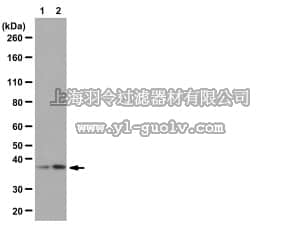 merck millipore,默克密理博,07-1282,Anti-phospho-PRAS40 (Thr246) Antibody
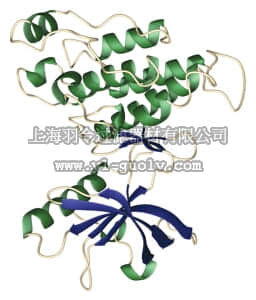 merck millipore,默克密理博,33-016,PI 3-Kinase HTRF™ Assay; 385 wells
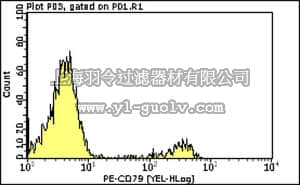 merck millipore,默克密理博,FCMAB208P,Milli-Mark™ Anti-CD79αcy-PE Antibody, clone HM57
 merck millipore,默克密理博,AB5714,Anti-Hey 1/HRT1 Antibody
merck millipore,默克密理博,MAB1926,Anti-Fibronectin Antibody, cell binding domain, clone P1H11
merck millipore,默克密理博,16-155,Anti-phospho-Ser/Thr-Pro MPM-2 Antibody, FITC conjugate
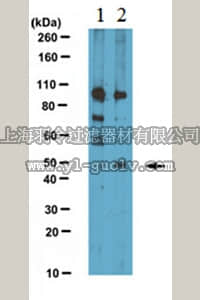 merck millipore,默克密理博,ABE387,Anti-ATF4 Antibody
 merck millipore,默克密理博,14-453,Akt1/PKBα (δPH, S473D) Protein, active, 10 µg