- 当前位置:首页 > >Merck Millipore > 生命科学研究
- 生命科学研究
-
-
merck millipore,默克密理博,07-220,Anti-Notch1 Antibody, cytoplasmic domain
产品名称:Anti-Notch1 Antibody, cytoplasmic domain
产品型号:07-220
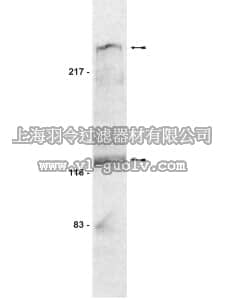
Detect Notch1 with Anti-Notch1 Antibody, cytoplasmic domain (Rabbit Polyclonal Antibody), that has been shown to work in WB.
merck millipore,默克密理博,07-220,Anti-Notch1 Antibody, cytoplasmic domain
- 产品介绍
重要规格表
品种反应性 主要应用 宿主 格式 抗体类型 R WB Rb Purified Polyclonal Antibody 描述 产品目录编号 07-220 Replaces 04-1046 品牌系列 Upstate
商名 - Upstate
描述 Anti-Notch1 Antibody, cytoplasmic domain 背景信息 The Notch protein family is a group of highly conserved proteins important in the determination of cell fate and maintenance of progenitors in many developmental systems. This family of proteins function both as membrane cell receptors and as transcription factors. Activation of Notch by cell-cell interactions causes a transcription inhibitory effect that enables inhibition of differentiation in some cells but not in others. As a consequence, some cells adopt a particular fate while other progenitors remain uncommitted. The Notch protein is important in cell fate during myogenesis, neurogenesis, oogenesis, and wing and eye development in Drosophila. In mammals, four Notch genes were identified (Notch1-4) that are expressed in a wide variety of cells and play a crucial role in differentiation and development. 产品信息 格式 Purified 控制 - Mouse L fibroblasts transfected with Notch1
演示 0.1M Tris-glycine, pH 7.4, 0.15M NaCl, 0.05% sodium azide before the addition of glycerol to 30% 应用 应用 Detect Notch1 with Anti-Notch1 Antibody, cytoplasmic domain (Rabbit Polyclonal Antibody), that has been shown to work in WB. 主要应用 - Western Blotting
生物信息 免疫原品种 GST fusion protein corresponding to residues 2272-2488 of rat Notch1 宿主 Rabbit 特异性 Notch1 同种型 IgG 品种反应性 Rat 抗体类型 Polyclonal Antibody Entrez基因编号 - NM_017617
Entrez基因汇总 This gene encodes a member of the Notch family. Members of this Type 1 transmembrane protein family share structural characteristics including an extracellular domain consisting of multiple epidermal growth factor-like (EGF) repeats, and an intracellular domain consisting of multiple, different domain types. Notch family members play a role in a variety of developmental processes by controlling cell fate decisions. The Notch signaling network is an evolutionarily conserved intercellular signaling pathway which regulates interactions between physically adjacent cells. In Drosophilia, notch interaction with its cell-bound ligands (delta, serrate) establishes an intercellular signaling pathway that plays a key role in development. Homologues of the notch-ligands have also been identified in human, but precise interactions between these ligands and the human notch homologues remain to be determined. This protein is cleaved in the trans-Golgi network, and presented on the cell surface as a heterodimer. This protein functions as a receptor for membrane bound ligands, and may play multiple roles during development. 基因符号 - TAN1
- NOTCH1
- notch1
- hN1
纯化方法 Protein A chromatography UniProt编号 - P46531
UniProt汇总 FUNCTION: SwissProt: P46531 # Functions as a receptor for membrane-bound ligands Jagged1, Jagged2 and Delta1 to regulate cell-fate determination. Upon ligand activation through the released notch intracellular domain (NICD) it forms a transcriptional activator complex with RBP-J kappa and activates genes of the enhancer of split locus. Affects the implementation of differentiation, proliferation and apoptotic programs. May be important for normal lymphocyte function. In altered form, may contribute to transformation or progression in some T-cell neoplasms. Involved in the maturation of both CD4+ and CD8+ cells in the thymus. May be important for follicular differentiation and possibly cell fate selection within the follicle. During cerebellar development, may function as a receptor for neuronal DNER and may be involved in the differentiation of Bergmann glia (By similarity).
SIZE: 2556 amino acids; 272500 Da
SUBUNIT: Heterodimer of a C-terminal fragment N(TM) and an N- terminal fragment N(EC) which are probably linked by disulfide bonds. Interacts with DNER, DTX1, DTX2 and RBPSUH. Also interacts with MAML1, MAML2 and MAML3 which act as transcriptional coactivators for NOTCH1.
SUBCELLULAR LOCATION: Cell membrane; Single-pass type I membrane protein (By similarity). & Notch 1 intracellular domain: Nucleus (By similarity). Note=Following proteolytical processing NICD is translocated to the nucleus (By similarity).
TISSUE SPECIFICITY: In fetal tissues most abundant in spleen, brain stem and lung. Also present in most adult tissues where it is found mainly in lymphoid tissues.
PTM: Synthesized in the endoplasmic reticulum as an inactive form which is proteolytically cleaved by a furin-like convertase in the trans-Golgi network before it reaches the plasma membrane to yield an active, ligand-accessible form. Cleavage results in a C- terminal fragment N(TM) and a N-terminal fragment N(EC). Following ligand binding, it is cleaved by TNF-alpha converting enzyme (TACE) to yield a membrane-associated intermediate fragment called notch extracellular truncation (NEXT). This fragment is then cleaved by presenilin dependent gamma-secretase to release a notch-derived peptide containing the intracellular domain (NICD) from the membrane (By similarity). & Phosphorylated (By similarity).
DISEASE: SwissProt: P46531 # NOTCH1 truncation is associated with T-cell acute lymphoblastic leukemia. & Defects in NOTCH1 are a cause of aortic valve disease [MIM:109730]. The disorder consists of an early developmental defect in the aortic valve and a later de-repression of calcium deposition that causes progressive aortic valve disease. Calcification of the aortic valve is the third leading cause of heart disease in adults. The incidence increases with age, and it is often associated with a bicuspid aortic valve present in 1-2% of the population.
SIMILARITY: SwissProt: P46531 ## Belongs to the NOTCH family. & Contains 5 ANK repeats. & Contains 36 EGF-like domains. & Contains 3 LNR (Lin/Notch) repeats.产品使用声明 质量保证 routinely evaluated by immunoblot on a TENT buffer lysate from mouse L fibroblasts transfected with rat Notch1 使用声明 - Unless otherwise stated in our catalog or other company documentation accompanying the product(s), our products are intended for research use only and are not to be used for any other purpose, which includes but is not limited to, unauthorized commercial uses, in vitro diagnostic uses, ex vivo or in vivo therapeutic uses or any type of consumption or application to humans or animals.
储存和货运信息 存储条件 2 years at -20°C 包装信息 数量 200 µg
上一件merck millipore产品:merck millipore,默克密理博,SF-1086,S100B; Mouse, Cyanine 5, RNA Detection Probe,SmartFlare
下一件merck millipore产品:merck millipore,默克密理博,SCR550,Simplicon™ RNA Reprogramming Kit
相关产品
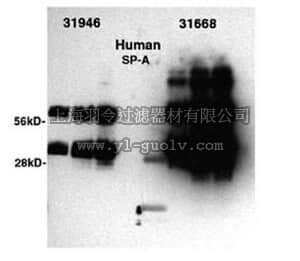 merck millipore,默克密理博,MAB3280,Anti-Surfactant Protein A Antibody, clone #10
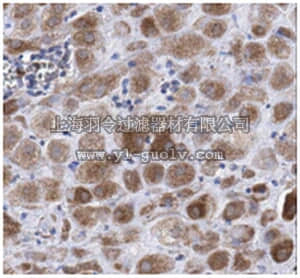 merck millipore,默克密理博,MABN119,Anti-KLF6 Antibody, clone 12A8.3
 merck millipore,默克密理博,AB3381,Anti-Myosin Light Chain Antibody, phospho-specific (Ser19)
 merck millipore,默克密理博,05-762,Anti-Caveolin-1 Antibody, clone 7C8
 merck millipore,默克密理博,SF-1086,S100B; Mouse, Cyanine 5, RNA Detection Probe,SmartFlare
 merck millipore,默克密理博,SCR550,Simplicon™ RNA Reprogramming Kit
merck millipore,默克密理博,MAB3737,Anti-TLR2 Antibody, clone 11G7
 merck millipore,默克密理博,ABS431,Anti-phospho-P70S6K (Thr470) Antibody