


- 当前位置:首页 > >Merck Millipore > 生命科学研究
- 生命科学研究
-
-
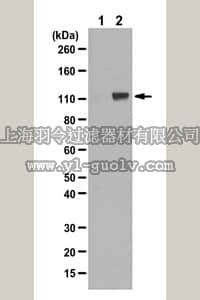
merck millipore,默克密理博,07-1375,Anti-phospho-Androgen Receptor (Ser81) Antibody
产品名称:Anti-phospho-Androgen Receptor (Ser81) Antibody
产品型号:07-1375
Anti-phospho-Androgen Receptor (Ser81) Antibody is an antibody against phospho-Androgen Receptor (Ser81) for use in WB.
merck millipore,默克密理博,07-1375,Anti-phospho-Androgen Receptor (Ser81) Antibody
- 产品介绍
重要规格表
品种反应性 主要应用 宿主 格式 抗体类型 H WB Rb Affinity Purified Polyclonal Antibody 描述 产品目录编号 07-1375 品牌系列 Upstate
商名 - Upstate
描述 Anti-phospho-Androgen Receptor (Ser81) Antibody 背景信息 The X-linked androgen receptor (Dihydrotestosterone receptor; Nuclear receptor subfamily 3 group C member 4) is a member of the family of NR3 ligand-dependent transcription factors characterized by a ligand binding domain at the C-terminus, a central DNA-binding domain, and N-terminal transcription- activation domains. Androgen receptors are activated by steroid hormones such as testosterone and dihydrotestosterone. Activated androgen receptors translocate from the cytoplasm to the nucleus where they form homodimers that bind DNA. The androgen receptor associates with a number of adaptor-like proteins and functions as a complex that may induce or repress transcription depending on whether its associated proteins are co-activators or co-repressors that affect transcription possibly by modifying chromatin; co-activators are involved in histone acetylation and transcriptional activation whereas co-repressors are involved in histone deactylation and transcriptional repression. The androgen receptor is important for determining sex and male characteristics. Defective androgen receptors may play a role in Reifenstein syndrome, Kennedy disease, as well as prostate cancer. 产品信息 格式 Affinity Purified 控制 - R1881 (methyltrienolone) treated LNCap lysates
演示 Purified rabbit polyclonal in buffer containing 0.1 M Tris-Glycine (pH 7.4), 150 mM NaCl with 0.05% sodium azide. 应用 应用 Anti-phospho-Androgen Receptor (Ser81) Antibody is an antibody against phospho-Androgen Receptor (Ser81) for use in WB. 主要应用 - Western Blotting
生物信息 免疫原品种 KLH-conjugated synthetic peptide corresponding to amino acids including and surrounding Ser81 of human Androgen Receptor. 宿主 Rabbit 特异性 Detects Androgen Receptor (AR) only when phosphorylated on Ser81 品种反应性 Human Species Reactivity Note Primate, Dog, Horse, and Cow expected based only 1 amino acid difference. 抗体类型 Polyclonal Antibody Entrez基因编号 - NP_000035.2
Entrez基因汇总 NP_000035.2 基因符号 - TFM
- AR
- androgen receptor
- RP11-383C12.1
- AIS
- DHTR
- HUMARA
- KD
- NR3C4
- SBMA
- SMAX1
修改 - Phosphorylation
UniProt编号 - P10275
UniProt汇总 FUNCTION: Steroid hormone receptors are ligand-activated transcription factors that regulate eukaryotic gene expression and affect cellular proliferation and differentiation in target tissues. Transcription factor activity is modulated by bound coactivator and corepressor proteins. Transcription activation is down-regulated by NR0B2. Activated, but not phosphorylated, by HIPK3.
SIZE: 919 amino acids; 98989 Da
SUBUNIT STRUCTURE:Binds DNA as a homodimer. Part of a ternary complex containing AR, EFCAB6/DJBP and PARK7. Interacts with HIPK3 and NR0B2 in the presence of androgen. The ligand binding domain interacts with MYST2/HBO1 in the presence of dihydrotestosterone. Interacts with EFCAB6/DJBP, PELP1, PQBP1, RANBP9, RBAK, SPDEF, SRA1, TGFB1I1, ZNF318 and RREB1. Interacts with ZMIZ1/ZIMP10 and ZMIZ2/ZMIP7 which both enhance its transactivation activity. Interacts with SLC30A9 and RAD54L2/ARIP4 By similarity. Interacts via the ligand-binding domain with LXXLL and FXXLF motifs from NCOA1, NCOA2, NCOA3, NCOA4 and MAGEA11. The AR N-terminal poly-Gln region binds Ran resulting in enhancement of AR-mediated transactivation. Ran-binding decreases as the poly-Gln length increases.
SUBCELLULAR LOCATION: Nucleus
DOMAIN: Composed of three domains: a modulating N-terminal domain, a DNA-binding domain and a C-terminal steroid-binding domain. In the presence of bound steroid the ligand-binding domain interacts with the N-terminal modulating domain, and thereby activates AR transcription factor activity. Agonist binding is required for dimerization and binding to target DNA. The transcription factor activity of the complex formed by ligand-activated AR and DNA is modulated by interactions with coactivator and corepressor proteins. Interaction with RANBP9 is mediated by both the N-terminal domain and the DNA-binding domain. Interaction with EFCAB6/DJBP is mediated by the DNA-binding domain.
POST-TRANSLATIONAL MODIFICATIONS: Sumoylated on Lys-386 (major) and Lys-520. Phosphorylated in prostate cancer cells in response to several growth factors including EGF. Phosphorylation is induced by c-Src kinase (CSK). Tyr-534 is one of the major phosphorylation sites and an increase in phosphorylation and Src kinase activity is associated with prostate cancer progression.
POLYMORPHISM: The poly-Gln region of AR is highly polymorphic and the number of Gln varies in the population (from 17 to 26). A smaller size of the poly-Gln region may be associated with the development of prostate cancer. The poly-Gly region of AR is polymorphic and ranges from 24 to 31 Gly. A poly-Gly region shorter or equal to 23 may be associated with the development of androgenetic alopecia.
INVOLVEMENT IN DISEASE: Genetic variation in AR can be responsible of androgenetic alopecia (AGA) [MIM:109200].
Defects in AR are the cause of androgen insensibility syndrome (AIS) [MIM:300068]; previously known as testicular feminization syndrome (TFM). It can be complete (CAIS) when external genitalia are phenotypically female; or partial (PAIS) when external genitalia are substantively ambiguous or mild (MAIS) when external genitalia are normal male or nearly so.
Defects in AR are the cause of X-linked spinal and bulbar muscular atrophy (SBMA) [MIM:313200]; also known as Kennedy disease. In SBMA patients the number of Gln ranges from 40 to 52. Longer expansions result in earlier onset and more severe clinical manifestations of the disease.
Defects in AR may play a role in metastatic prostate cancer. The mutated receptor stimulates prostate growth and metastases development despite of androgen ablation. This treatment can reduce primary and metastatic lesions probably by inducing apoptosis of tumor cells when they express the wild-type receptor.
Defects in AR may be the cause of infertility male syndrome [MIM:308370]; also called androgen insensitivity. It is characterized by azoospermia, elevated testosterone and luteinizing hormone plasma levels and an abnormal androgen receptor.
Defects in AR are the cause of Reifenstein syndrome [MIM:312300]; also known as partial androgen insensitivity. The features of this form of male pseudohermaphroditism are hypospadias, hypogonadism, gynecomastia, normal XY karyotype, and a pedigree pattern consistent with X-linked recessive inheritance.
Miscellaneous: In the absence of ligand, steroid hormone receptors are thought to be weakly associated with nuclear components; hormone binding greatly increases receptor affinity. The hormone-receptor complex appears to recognize discrete DNA sequences upstream of transcriptional start sites.
Transcriptional activity is enhanced by binding to RANBP9.
The level of tyrosine phosphorylation may serve as a diagnostic tool to predict patient outcome in response to hormone-ablation therapy. Inhibition of tyrosine phosphorylation may be an effective intervention target for hormone-refractory prostate cancer.
Sequence similarities: Belongs to the nuclear hormone receptor family. NR3 subfamily.Contains 1 nuclear receptor DNA-binding domain.
产品使用声明 质量保证 Routinely evaluated by western blot on R1881 (methyltrienolone) treated LNCap lysates 使用声明 - Unless otherwise stated in our catalog or other company documentation accompanying the product(s), our products are intended for research use only and are not to be used for any other purpose, which includes but is not limited to, unauthorized commercial uses, in vitro diagnostic uses, ex vivo or in vivo therapeutic uses or any type of consumption or application to humans or animals.
储存和货运信息 存储条件 Stable for 1 year at 2-8°C from date of receipt.
Handling Recommendations: Upon receipt, and prior to removing the cap, centrifuge the vial and gently mix the solution. Avoid repeated freeze/thaw cycles, which may damage IgG and affect product performance.
包装信息 数量 200 µL
上一件merck millipore产品:merck millipore,默克密理博,407254,IGFBP-3, CF, Mouse, Recombinant
下一件merck millipore产品:merck millipore,默克密理博,SF-1492,TFRC; Human, Cyanine 5 RNA Detection Probe,SmartFlare
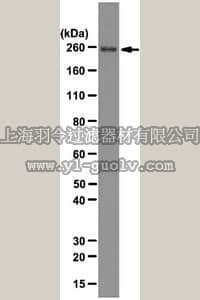 merck millipore,默克密理博,04-1569,Anti-RNA polymerase II subunit B1 Antibody, clone 4F8
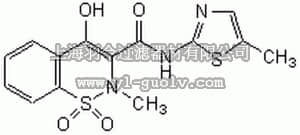 merck millipore,默克密理博,444800,Meloxicam - CAS 71125-38-7 - Calbiochem
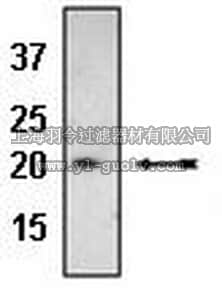 merck millipore,默克密理博,04-432,Anti-Bad (NT) Antibody, rabbit monoclonal
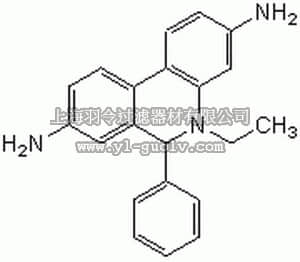 merck millipore,默克密理博,309800,Dihydroethidium - CAS 38483-26-0 - Calbiochem
 merck millipore,默克密理博,407254,IGFBP-3, CF, Mouse, Recombinant
 merck millipore,默克密理博,SF-1492,TFRC; Human, Cyanine 5 RNA Detection Probe,SmartFlare
merck millipore,默克密理博,05-23-0600,Substance P - CAS 33507-63-0 - Calbiochem
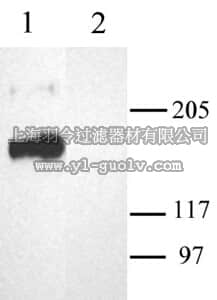 merck millipore,默克密理博,AB5152-50UL,Anti-Calcium Channel Antibody, Voltage Gated α 1A
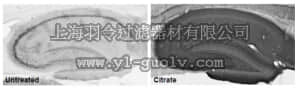 merck millipore,默克密理博,MABN611,Anti-Lgi1 Antibody, clone N283/7
 merck millipore,默克密理博,MAB2153,Anti-E-Selectin Antibody, lectin domain, clone UZ4