


- 当前位置:首页 > >Merck Millipore > 生命科学研究
- 生命科学研究
-
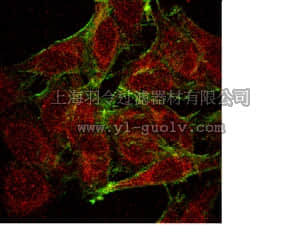
-
merck millipore,默克密理博,05-1469,Anti-NFĸB Antibody, p65, clone 1G10.2
产品名称:Anti-NFĸB Antibody, p65, clone 1G10.2
产品型号:05-1469
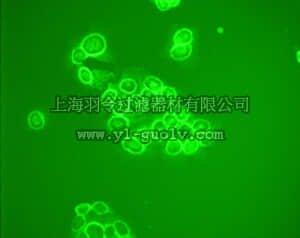
Anti-NFĸB Antibody, p65, clone 1G10.2 detects level of NFĸB & has been published & validated for use in WB, IF & IC.
merck millipore,默克密理博,05-1469,Anti-NFĸB Antibody, p65, clone 1G10.2
- 产品介绍
重要规格表
品种反应性 主要应用 宿主 格式 抗体类型 B, H, M, R ICC, WB M Purified Monoclonal Antibody 描述 产品目录编号 05-1469 描述 Anti-NFĸB Antibody, p65, clone 1G10.2 背景信息 NFĸB (Nuclear Factor kappa B) represents a group of transcription factors that are structurally related and evolutionarily conserved proteins related to the proto-oncogene c-Rel. The five members in mammals includes Rel (cRel), RelA (p65), RelB, NFĸB1 (p50 and its precursor p105), and NFĸB2 (p52 and its precursor p100)1, 2. NFĸB/Rel proteins exist as homo- or heterodimer complexes.
In a majority of unstimulated cells, the NFĸB transcription factors are bound to the inhibitory IĸB proteins and retained in the cytoplasm in their inactive form. Upon stimulation by multiple inducers, IĸBα is rapidly phosphorylated and degraded. This results in the release of the NFĸB complex, most commonly the p105/p65 heterodimer. The p105 subunit is cleaved into its active p50 form. This cleavage exposes the NLS sequence on the p50 subunit. The p50/p65 heteroduplex then translocates to the nucleus where it activates gene transcription.
产品信息 格式 Purified 演示 Purified mouse monoclonal in 0.1M Tris-Glycine (pH 7.4) with 150mM NaCl and 0.05% NaN3. 应用 应用 Anti-NFĸB Antibody, p65, clone 1G10.2 detects level of NFĸB & has been published & validated for use in WB, IF & IC. 主要应用 - Immunocytochemistry
- Western Blotting
生物信息 免疫原品种 Synthetic peptide corresponding to the NLS region of human NFĸB p65. 表位 NLS 克隆 1G10.2 浓缩 Please refer to the Certificate of Analysis for the lot-specific concentration. 宿主 Mouse 特异性 Detects NFĸB p65. 同种型 IgG1κ 品种反应性 BovineHumanMouseRat Species Reactivity Note Human, Mouse, and Rat. Other species have not been tested. Expected to cross-react with bovine based on complete sequence homology. 抗体类型 Monoclonal Antibody Entrez基因编号 - NP_068810.2
Entrez基因汇总 NFKB1 (MIM 164011) or NFKB2 (MIM 164012) is bound to REL (MIM 164910), RELA, or RELB (MIM 604758) to form the NFKB complex. The p50 (NFKB1)/p65 (RELA) heterodimer is the most abundant form of NFKB. The NFKB complex is inhibited by I-kappa-B proteins (NFKBIA, MIM 164008 or NFKBIB, MIM 604495), which inactivate NFKB by trapping it in the cytoplasm. Phosphorylation of serine residues on the I-kappa-B proteins by kinases (IKBKA, MIM 600664, or IKBKB, MIM 603258) marks them for destruction via the ubiquitination pathway, thereby allowing activation of the NFKB complex. Activated NFKB complex translocates into the nucleus and binds DNA at kappa-B-binding motifs such as 5-prime GGGRNNYYCC 3-prime or 5-prime HGGARNYYCC 3-prime (where H is A, C, or T; R is an A or G purine; and Y is a C or T pyrimidine).[supplied by OMIM] 纯化方法 Protein G purfied UniProt编号 - P19838
UniProt汇总 Function: NF-kappa-B is a pleiotropic transcription factor which is present in almost all cell types and is involved in many biological processed such as inflammation, immunity, differentiation, cell growth, tumorigenesis and apoptosis. NF-kappa-B is a homo- or heterodimeric complex formed by the Rel-like domain-containing proteins RELA/p65, RELB, NFKB1/p105, NFKB1/p50, REL and NFKB2/p52 and the heterodimeric p65-p50 complex appears to be most abundant one. The dimers bind at kappa-B sites in the DNA of their target genes and the individual dimers have distinct preferences for different kappa-B sites that they can bind with distinguishable affinity and specificity. Different dimer combinations act as transcriptional activators or repressors, respectively. NF-kappa-B is controlled by various mechanisms of post-translational modification and subcellular compartmentalization as well as by interactions with other cofactors or corepressors. NF-kappa-B complexes are held in the cytoplasm in an inactive state complexed with members of the NF-kappa-B inhibitor (I-kappa-B) family. In a conventional activation pathway, I-kappa-B is phosphorylated by I-kappa-B kinases (IKKs) in response to different activators, subsequently degraded thus liberating the active NF-kappa-B complex which translocates to the nucleus. NF-kappa-B heterodimeric p65-p50 and RelB-p50 complexes are transcriptional activators. The NF-kappa-B p50-p50 homodimer is a transcriptional repressor, but can act as a transcriptional activator when associated with BCL3. NFKB1 appears to have dual functions such as cytoplasmic retention of attached NF-kappa-B proteins by p105 and generation of p50 by a cotranslational processing. The proteasome-mediated process ensures the production of both p50 and p105 and preserves their independent function, although processing of NFKB1/p105 also appears to occur post-translationally. p50 binds to the kappa-B consensus sequence 5'-GGRNNYYCC-3', located in the enhancer region of genes involved in immune response and acute phase reactions. In a complex with MAP3K8, NFKB1/p105 represses MAP3K8-induced MAPK signaling; active MAP3K8 is released by proteasome-dependent degradation of NFKB1/p105. Ref.32
Subunit structure: Component of the NF-kappa-B p65-p50 complex. Component of the NF-kappa-B p65-p50 complex. Homodimer; component of the NF-kappa-B p50-p50 complex. Component of the NF-kappa-B p105-p50 complex. Component of the NF-kappa-B p50-c-Rel complex. Component of a complex consisting of the NF-kappa-B p50-p50 homodimer and BCL3. Also interacts with MAP3K8. NF-kappa-B p50 subunit interacts with NCOA3 coactivator, which may coactivate NF-kappa-B dependent expression via its histone acetyltransferase activity. Interacts with DSIPI; this interaction prevents nuclear translocation and DNA-binding. Interacts with SPAG9 and UNC5CL. NFKB1/p105 interacts with CFLAR; the interaction inhibits p105 processing into p50. NFKB1/p105 forms a ternary complex with MAP3K8 and TNIP2. Interacts with GSK3B; the interaction prevents processing of p105 to p50. NFKB1/p50 interacts with NFKBIE. NFKB1/p50 interacts with NFKBIZ. Nuclear factor NF-kappa-B p50 subunit interacts with NFKBID By similarity.
Subcellular location: Nucleus. Cytoplasm. Note= Nuclear, but also found in the cytoplasm in an inactive form complexed to an inhibitor (I-kappa-B).
Induction: By phorbol ester and TNF-alpha.
Domain: The C-terminus of p105 might be involved in cytoplasmic retention, inhibition of DNA-binding, and transcription activation.
Glycine-rich region (GRR) appears to be a critical element in the generation of p50.
Post-translational modification: While translation occurs, the particular unfolded structure after the GRR repeat promotes the generation of p50 making it an acceptable substrate for the proteasome. This process is known as cotranslational processing. The processed form is active and the unprocessed form acts as an inhibitor (I kappa B-like), being able to form cytosolic complexes with NF-kappa B, trapping it in the cytoplasm. Complete folding of the region downstream of the GRR repeat precludes processing.
Phosphorylation at 'Ser-903' and 'Ser-907' primes p105 for proteolytic processing in response to TNF-alpha stimulation. Phosphorylation at 'Ser-927' and 'Ser-932' are required for BTRC/BTRCP-mediated proteolysis.
Polyubiquitination seems to allow p105 processing.
S-nitrosylation of Cys-61 affects DNA binding.
Sequence similarities: Contains 7 ANK repeats.
Contains 1 death domain.
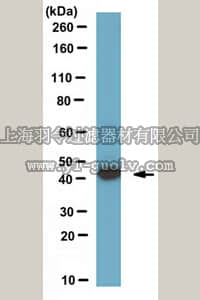
Contains 1 RHD (Rel-like) domain.产品使用声明 质量保证 Routinely evaluated by Western Blot.
Western Blot Analysis:
This lot detected NFB, p65 at 1:1,000 dilution in Jurkat cell lysate resolved via SDS-PAGE and transferred to PVDF.使用声明 - Unless otherwise stated in our catalog or other company documentation accompanying the product(s), our products are intended for research use only and are not to be used for any other purpose, which includes but is not limited to, unauthorized commercial uses, in vitro diagnostic uses, ex vivo or in vivo therapeutic uses or any type of consumption or application to humans or animals.
储存和货运信息 存储条件 Stable for 1 year at 2-8°C from date of receipt.
Handling Recommendations: Upon receipt, and prior to removing the cap, centrifuge the vial and gently mix the solution.
包装信息 数量 200 µg
上一件merck millipore产品:merck millipore,默克密理博,MABN10,Anti-Amyloid β Antibody, clone W0-2
下一件merck millipore产品:merck millipore,默克密理博,MABF28,Anti-PAR-3 Antibody, clone 8E8
相关产品
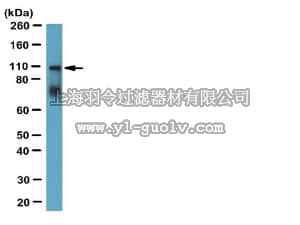 merck millipore,默克密理博,AB1094,Anti-Myosin X Antibody
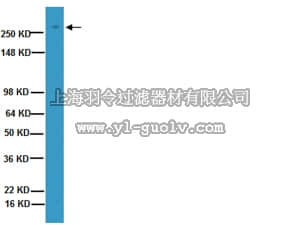 merck millipore,默克密理博,MAB3442,Anti-von Willebrand Factor Antibody, clone 21-43
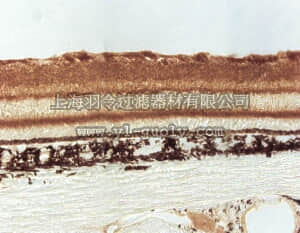 merck millipore,默克密理博,AB5358-200UL,Anti-Sodium Channel NaB2 Antibody
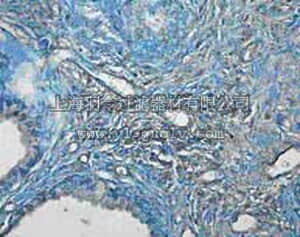 merck millipore,默克密理博,PC461,PhosphoDetect™ Anti-p53 (pSer¹⁵) (Ab-6) Rabbit pAb
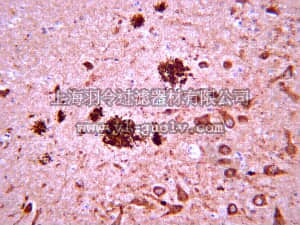 merck millipore,默克密理博,MABN10,Anti-Amyloid β Antibody, clone W0-2
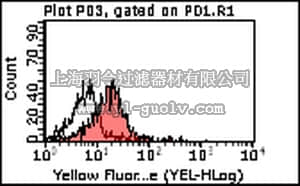 merck millipore,默克密理博,MABF28,Anti-PAR-3 Antibody, clone 8E8
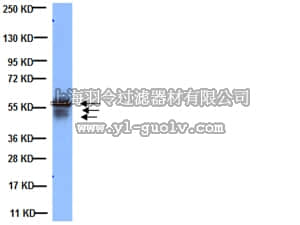
 merck millipore,默克密理博,MABN323,Anti-Ermin Antibody, clone 160
 merck millipore,默克密理博,SF-1635,IL1A; Human, Cyanine 5 RNA Detection Probe,SmartFlare
 merck millipore,默克密理博,OP145,Anti-MDM2 (Ab-5) Mouse mAb (4B2C1.11)