


- 当前位置:首页 > >Merck Millipore > 生命科学研究
- 生命科学研究
-

-
merck millipore,默克密理博,MABC161,Anti-BRCA1 Antibody, clone MS13
产品名称:Anti-BRCA1 Antibody, clone MS13
产品型号:MABC161
Anti-BRCA1 Antibody, clone MS13 detects level of BRCA1 & has been published & validated for use in Western Blotting, IHC, ICC.
merck millipore,默克密理博,MABC161,Anti-BRCA1 Antibody, clone MS13
- 产品介绍
重要规格表
品种反应性 主要应用 宿主 格式 抗体类型 H ICC, WB, IHC M Purified Monoclonal Antibody 描述 产品目录编号 MABC161 描述 Anti-BRCA1 Antibody, clone MS13 Alternate Names - RING finger protein 53
- Breast cancer type 1 susceptibility protein
背景信息 Breast cancer type 1 susceptibility protein (BCRA1; RING finger protein 53) functions as a tumor suppressor. BRCA1 is an important member of the DNA repair pathway. After DNA damage, BRCA1 is phosphorylated on multiple serine residues by the ATR kinase or Chk2, and is localized to lesion sites with PCNA. BRCA1 interacts with a wide range of proteins including Rad50, NBS1, and Mre11, c-Abl tyrosine kinase, and γH2A.X, involved in the detection of damaged DNA and activation of appropriate repair pathways. BRCA1 may also respond to DNA damage by promoting gene expression through association with transcriptional proteins and RNA polymerase II, and may regulate the p53 pathway by this mechanism. Previous studies have indicated that mutations in the BRCA1 gene may contribute to the development of breast and ovarian cancer. 产品信息 格式 Purified 控制 - HeLa nuclear extract
演示 Purified mouse monoclonal IgG1κ in buffer containing 0.1 M Tris-Glycine (pH 7.4), 150 mM NaCl with 0.05% sodium azide. 应用 应用 Anti-BRCA1 Antibody, clone MS13 detects level of BRCA1 & has been published & validated for use in Western Blotting, IHC, ICC. 主要应用 - Immunocytochemistry
- Western Blotting
- Immunohistochemistry
应用说明 Immunohistochemistry Analysis: A 1:50 dilution from a representative lot detected BRCA1 in human breast cancer and human ovarian cancer tissues.
Immunocytochemistry Analysis: A 1:500 dilution from a representative lot detected BRCA1 in HeLa and A431 cells.生物信息 免疫原品种 Recombinant protein corresponding to human BRCA1. 克隆 MS13 浓缩 Please refer to the Certificate of Analysis for the lot-specific concentration. 宿主 Mouse 同种型 IgG1κ 品种反应性 Human Species Reactivity Note Demonstrated to react with Human. 抗体类型 Monoclonal Antibody Entrez基因编号 - NP_009225
Entrez基因汇总 This gene encodes a nuclear phosphoprotein that plays a role in maintaining genomic stability, and it also acts as a tumor suppressor. The encoded protein combines with other tumor suppressors, DNA damage sensors, and signal transducers to form a large multi-subunit protein complex known as the BRCA1-associated genome surveillance complex (BASC). This gene product associates with RNA polymerase II, and through the C-terminal domain, also interacts with histone deacetylase complexes. This protein thus plays a role in transcription, DNA repair of double-stranded breaks, and recombination. Mutations in this gene are responsible for approximately 40% of inherited breast cancers and more than 80% of inherited breast and ovarian cancers. Alternative splicing plays a role in modulating the subcellular localization and physiological function of this gene. Many alternatively spliced transcript variants, some of which are disease-associated mutations, have been described for this gene, but the full-length natures of only some of these variants has been described. A related pseudogene, which is also located on chromosome 17, has been identified. [provided by RefSeq, May 2009]. 基因符号 - Synonyms: RNF53
- BRCA1
纯化方法 Protein G purified UniProt编号 - P38398
UniProt汇总 FUNCTION: E3 ubiquitin-protein ligase that specifically mediates the formation of 'Lys-6'-linked polyubiquitin chains and plays a central role in DNA repair by facilitating cellular responses to DNA damage. It is unclear whether it also mediates the formation of other types of polyubiquitin chains. The E3 ubiquitin-protein ligase activity is required for its tumor suppressor function. The BRCA1-BARD1 heterodimer coordinates a diverse range of cellular pathways such as DNA damage repair, ubiquitination and transcriptional regulation to maintain genomic stability. Regulates centrosomal microtubule nucleation. Required for normal cell cycle progression from G2 to mitosis. Required for appropriate cell cycle arrests after ionizing irradiation in both the S-phase and the G2 phase of the cell cycle. Involved in transcriptional regulation of P21 in response to DNA damage. Required for FANCD2 targeting to sites of DNA damage. May function as a transcriptional regulator. Inhibits lipid synthesis by binding to inactive phosphorylated ACACA and preventing its dephosphorylation. Contributes to homologous recombination repair (HRR) via its direct interaction with PALB2, fine-tunes recombinational repair partly through its modulatory role in the PALB2-dependent loading of BRCA2-RAD51 repair machinery at DNA breaks. ENZYME REGULATION: The E3 ubiquitin-protein ligase activity is inhibited by phosphorylation by AURKA. Activity is increased by phosphatase treatment.
PATHWAY: Protein modification; protein ubiquitination.
SUBUNIT STRUCTURE: Heterodimer with BARD1. Part of the BRCA1-associated genome surveillance complex (BASC), which contains BRCA1, MSH2, MSH6, MLH1, ATM, BLM, PMS2 and the RAD50-MRE11-NBN protein complex. This association could be a dynamic process changing throughout the cell cycle and within subnuclear domains. Component of the BRCA1-A complex, at least composed of the BRCA1, BARD1, UIMC1/RAP80, FAM175A/Abraxas, BRCC3/BRCC36, BRE/BRCC45 and BABAM1/NBA1. Interacts (via BRCT domains) with FAM175A/Abraxas and RBBP8. Associates with RNA polymerase II holoenzyme. Interacts with SMC1A and COBRA1/NELFB. Interacts (via BRCT domains) with phosphorylated BRIP1. Interacts with FANCD2 (ubiquitinated). Interacts with BAP1. Interacts with DCLRE1C/Artemis and CLSPN. Interacts with H2AFX (phosphorylated on 'Ser-140'). Interacts with CHEK1 and CHEK2. Interacts with BRCC3. Interacts (via BRCT domains) with ACACA (phosphorylated); the interaction prevents dephosphorylation of ACACA. Interacts with AURKA. Interacts with UBXN1. Part of a trimeric complex containing BRCA1, BRCA2 and PALB2. Interacts with PALB2 and this interaction is essential for its function in HRR. Interacts with BRCA2 only in the presence of PALB2 which serves as the bridging protein.
SUBCELLULAR LOCATION: Nucleus. Note: Localizes at sites of DNA damage at double-strand breaks (DSBs); recruitment to DNA damage sites is mediated by the BRCA1-A complex.
Isoform 3: Cytoplasm
Isoform 5: Cytoplasm
TISSUE SPECIFICITY: Isoform 1 and isoform 3 are widely expressed. Isoform 3 is reduced or absent in several breast and ovarian cancer cell lines.
DOMAIN: The BRCT domains recognize and bind phosphorylated pSXXF motif on proteins. The interaction with the phosphorylated pSXXF motif of FAM175A/Abraxas, recruits BRCA1 at DNA damage sites. Ref.56
The RING-type zinc finger domain interacts with BAP1.
PTM: Phosphorylation at Ser-308 by AURKA is required for normal cell cycle progression from G2 to mitosis. Phosphorylated in response to IR, UV, and various stimuli that cause checkpoint activation, probably by ATM or ATR. Phosphorylation at Ser-988 by CHEK2 regulates mitotic spindle assembly. Ref.13 Ref.14 Ref.18 Ref.27 Ref.30 Ref.33 Ref.36 Ref.39 Ref.40
Autoubiquitinated, undergoes 'Lys-6'-linked polyubiquitination. 'Lys-6'-linked polyubiquitination does not promote degradation.
POLYMORPHISM: There is evidence that the presence of the rare form of Gln-356-Arg and Leu-871-Pro polymorphisms may be associated with an increased risk for developing ovarian cancer.
INVOLVEMENT IN DISEASE: Defects in BRCA1 are a cause of susceptibility to breast cancer (BC) [MIM:114480]. A common malignancy originating from breast epithelial tissue. Breast neoplasms can be distinguished by their histologic pattern. Invasive ductal carcinoma is by far the most common type. Breast cancer is etiologically and genetically heterogeneous. Important genetic factors have been indicated by familial occurrence and bilateral involvement. Mutations at more than one locus can be involved in different families or even in the same case. Note=Mutations in BRCA1 are thought to be responsible for 45% of inherited breast cancer. Moreover, BRCA1 carriers have a 4-fold increased risk of colon cancer, whereas male carriers face a 3-fold increased risk of prostate cancer. Cells lacking BRCA1 show defects in DNA repair by homologous recombination. Ref.1 Ref.15 Ref.50 Ref.52 Ref.55 Ref.58 Ref.59 Ref.60 Ref.61
Defects in BRCA1 are a cause of susceptibility to familial breast-ovarian cancer type 1 (BROVCA1) [MIM:604370]. A condition associated with familial predisposition to cancer of the breast and ovaries. Characteristic features in affected families are an early age of onset of breast cancer (often before age 50), increased chance of bilateral cancers (cancer that develop in both breasts, or both ovaries, independently), frequent occurrence of breast cancer among men, increased incidence of tumors of other specific organs, such as the prostate. Note=Mutations in BRCA1 are thought to be responsible for more than 80% of inherited breast-ovarian cancer.
Defects in BRCA1 are a cause of susceptibility to ovarian cancer (OC) [MIM:167000]. The term ovarian cancer defines malignancies originating from ovarian tissue. Although many histologic types of ovarian tumors have been described, epithelial ovarian carcinoma is the most common form. Ovarian cancers are often asymptomatic and the recognized signs and symptoms, even of late-stage disease, are vague. Consequently, most patients are diagnosed with advanced disease.
Defects in BRCA1 are a cause of susceptibility to pancreatic cancer type 4 (PNCA4) [MIM:614320]. A malignant neoplasm of the pancreas. Tumors can arise from both the exocrine and endocrine portions of the pancreas, but 95% of them develop from the exocrine portion, including the ductal epithelium, acinar cells, connective tissue, and lymphatic tissue.
SEQUENCE SIMILARITIES: Contains 2 BRCT domains.
Contains 1 RING-type zinc finger.产品使用声明 质量保证 Evaluated by Western Blot in HeLa nuclear extract.
Western Blot Analysis: 0.5 µg/mL of this antibody detected BRCA1 on 10 µg of HeLa nuclear extract.使用声明 - Unless otherwise stated in our catalog or other company documentation accompanying the product(s), our products are intended for research use only and are not to be used for any other purpose, which includes but is not limited to, unauthorized commercial uses, in vitro diagnostic uses, ex vivo or in vivo therapeutic uses or any type of consumption or application to humans or animals.
储存和货运信息 存储条件 Stable for 1 year at 2-8°C from date of receipt. 包装信息 数量 100 µg
上一件merck millipore产品:merck millipore,默克密理博,AP183SA6,Goat Anti-Rat IgG Antibody, Alexa 647conjugate
下一件merck millipore产品:merck millipore,默克密理博,182516,Arp2/3 Complex Inhibitor II, CK-869 - Calbiochem
相关产品
 merck millipore,默克密理博,528205,Plasminogen Activator Inhibitor-1, Human, Recombinant - Calbiochem
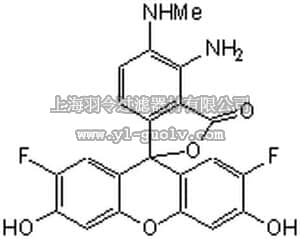 merck millipore,默克密理博,251515,DAF-FM - CAS 254109-20-1 - Calbiochem
 merck millipore,默克密理博,SF-2538,MAP4K1; Human, Cyanine 5 RNA Detection Probe,SmartFlare
 merck millipore,默克密理博,17-10188,LentiBrite ™ RFP-LC3 Control Mutant Lentiviral Biosensor
 merck millipore,默克密理博,AP183SA6,Goat Anti-Rat IgG Antibody, Alexa 647conjugate
 merck millipore,默克密理博,182516,Arp2/3 Complex Inhibitor II, CK-869 - Calbiochem
 merck millipore,默克密理博,573126,STAT3 Inhibitor XI, STX-0119 - Calbiochem
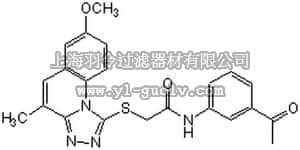 merck millipore,默克密理博,567806,Src Kinase Inhibitor II - CAS 459848-35-2 - Calbiochem
 merck millipore,默克密理博,MCH200102,Muse EGFR-RTK Activation Dual Detection