- 当前位置:首页 > >Merck Millipore > 生命科学研究
- 生命科学研究
- 产品介绍
重要规格表
品种反应性 主要应用 宿主 格式 抗体类型 H, M WB M Purified Monoclonal Antibody 描述 产品目录编号 MABC14 描述 Anti-VHL Antibody, clone 11E12 Alternate Names - pVHL
- von Hippel-Lindau disease tumor suppressor
- Protein G7
- elongin binding protein
- von Hippel-Lindau syndrome
背景信息 von Hippel-Lindau protein (VHL) is most widely recognized as belonging to an E3 ubiquitin ligase complex that specifically targets hypoxia-inducible factors (HIFs) for the purpose of polyubiquitination and proteolytic degradation. Within this complex, VHL acts as a target recruitment subunit for HIFα and its subsequent ubiquitination. The complex also contains proteins such as B and C elongins, Rbx1 and Cul2. Inactivation of VHL has been linked to renal cell carcinoma development, therefore suggesting that VHL plays a role as a tumor suppressor. VHL expression has been observed in both fetal and adult kidney and brain tissues. Defects in VHL expression are causal to renal cell carcinoma type 1 (RCC1), erythrocytosis familial type 2 (ECYT2), von Hippel-Lindau disease (VHLD), and pheochromocytoma. 产品信息 格式 Purified 控制 - Mouse fetal brain tissue lysate
演示 Purified mouse monoclonal IgG1κ in buffer containing 0.1 M Tris-Glycine (pH 7.4), 150 mM NaCl with 0.05% sodium azide. 应用 应用 This Anti-VHL Antibody, clone 11E12 is validated for use in WB, IP for the detection of VHL. 主要应用 - Western Blotting
应用说明 Immunoprecipitation: It has been shown that this VHL clone will immunoprecipitate VHL from HEK 293 cells (Shoenfeld, 1998). 生物信息 免疫原品种 Purified human VHL 克隆 11E12 浓缩 Please refer to the Certificate of Analysis for the lot-specific concentration. 宿主 Mouse 同种型 IgG1κ 品种反应性 HumanMouse Species Reactivity Note Demonstrated to react with mouse and human. 抗体类型 Monoclonal Antibody Entrez基因编号 - NP_000542
Entrez基因汇总 Von Hippel-Lindau syndrome (VHL) is a dominantly inherited familial cancer syndrome predisposing to a variety of malignant and benign tumors. A germline mutation of this gene is the basis of familial inheritance of VHL syndrome. The protein encoded by this gene is a component of the protein complex that includes elongin B, elongin C, and cullin-2, and possesses ubiquitin ligase E3 activity. This protein is involved in the ubiquitination and degradation of hypoxia-inducible-factor (HIF), which is a transcription factor that plays a central role in the regulation of gene expression by oxygen. RNA polymerase II subunit POLR2G/RPB7 is also reported to be a target of this protein. Alternatively spliced transcript variants encoding distinct isoforms have been observed. [provided by RefSeq]. 基因符号 - pVHL
- VHL
- VHL1
- HRCA1
- RCA1
纯化方法 Protein G UniProt编号 - P40337
UniProt汇总 FUNCTION: Involved in the ubiquitination and subsequent proteasomal degradation via the von Hippel-Lindau ubiquitination complex. Seems to act as target recruitment subunit in the E3 ubiquitin ligase complex and recruits hydroxylated hypoxia-inducible factor (HIF) under normoxic conditions. Involved in transcriptional repression through interaction with HIF1A, HIF1AN and histone deacetylases.
PATHWAY: Protein modification; protein ubiquitination.
SUBUNIT STRUCTURE: Component of the VCB (VHL-Elongin BC-CUL2) complex; this complex acts as a ubiquitin-ligase E3 and directs proteosome-dependent degradation of targeted proteins. Interacts with CUL2; this interaction is dependent on the integrity of the trimeric VBC complex. Interacts (via the beta domain) with HIF1A (via the NTAD domain); this interaction mediates degradation of HIF1A in normoxia and, in hypoxia, prevents ubiqitination and degradation of HIF1A by mediating hypoxia-induced translocation to the nucleus, a process which requires a hypoxia-dependent regulatory signal. Interacts with RNF139 and UBP33. Interacts with PHF17.
SUBCELLULAR LOCATION: Isoform 1: Cytoplasm. Membrane; Peripheral membrane protein. Nucleus. Note: Found predominantly in the cytoplasm and with less amounts nuclear or membrane-associated.
Isoform 3: Cytoplasm. Nucleus. Note: Equally distributed between the nucleus and the cytoplasm but not membrane-associated.
TISSUE SPECIFICITY: Expressed in the adult and fetal brain and kidney.
DOMAIN: The Elongin BC complex binding domain is also known as BC-box with the consensus [APST]-L-x(3)-C-x(3)-[AILV].
INVOLVEMENT IN IDSEASE: Defects in VHL are a cause of pheochromocytoma [MIM:171300]. The pheochromocytomas are catecholamine-producing, chromaffin tumors that arise in the adrenal medulla in 90% of cases. In the remaining 10% of cases, they develop in extra-adrenal sympathetic ganglia and may be referred to as "paraganglioma." Pheochromocytoma usually presents with hypertension. Approximately 10% of pheochromocytoma is hereditary. The genetic basis for most cases of non-syndromic familial pheochromocytoma is unknown.
Defects in VHL are the cause of von Hippel-Lindau disease (VHLD) [MIM:193300]. VHLD is a dominantly inherited familial cancer syndrome characterized by the development of retinal angiomatosis, cerebellar and spinal hemangioblastoma, renal cell carcinoma (RCC), phaeochromocytoma and pancreatic tumors. VHL type 1 is without pheochromocytoma, type 2 is with pheochromocytoma. VHL type 2 is further subdivided into types 2A (pheochromocytoma, retinal angioma, and hemangioblastomas without renal cell carcinoma and pancreatic cyst) and 2B (pheochromocytoma, retinal angioma, and hemangioblastomas with renal cell carcinoma and pancreatic cyst). VHL type 2C refers to patients with isolated pheochromocytoma without hemangioblastoma or renal cell carcinoma. The estimated incidence is 3/100000 births per year and penetrance is 97% by age 60 years.
Defects in VHL are the cause of erythrocytosis familial type 2 (ECYT2) [MIM:263400]; also called VHL-dependent polycythemia or Chuvash type polycythemia. ECYT2 is an autosomal recessive disorder characterized by an increase in serum red blood cell mass, hypersensitivity of erythroid progenitors to erythropoietin, increased erythropoietin serum levels, and normal oxygen affinity. Patients with ECYT2 carry a high risk for peripheral thrombosis and cerebrovascular events.
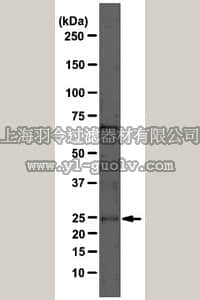
Defects in VHL are a cause of renal cell carcinoma type 1 (RCC1) [MIM:144700]; also known as hypernephroma or adenocarcinoma of kidney. Familial renal cell carcinoma syndromes form a group of diseases characterized by a predisposition to development of renal cell carcinomas (RCCs) with various histological subtypes.产品使用声明 质量保证 Evaluated by Western Blot in mouse fetal brain tissue lysate.
Western Blot Analysis: 1 µg/mL of the antibody detected VHL in 10 µg of mouse fetal brain tissue lysate.使用声明 - Unless otherwise stated in our catalog or other company documentation accompanying the product(s), our products are intended for research use only and are not to be used for any other purpose, which includes but is not limited to, unauthorized commercial uses, in vitro diagnostic uses, ex vivo or in vivo therapeutic uses or any type of consumption or application to humans or animals.
储存和货运信息 存储条件 Stable for 1 year at 2-8°C from date of receipt. 包装信息 数量 100 µg
上一件merck millipore产品:merck millipore,默克密理博,14-593M,HePTP Protein, 250 µg
下一件merck millipore产品:merck millipore,默克密理博,WBLUR0500,Luminata Crescendo Western HRP substrate, 500 mL
相关产品
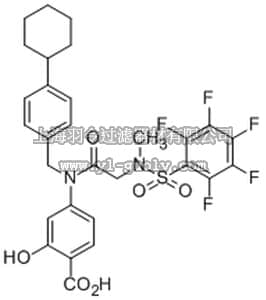 merck millipore,默克密理博,573132,STAT3 Inhibitor XVIII, BP-1-102 - Calbiochem
 merck millipore,默克密理博,524653,PBS-TWEEN Tablets - Calbiochem
 merck millipore,默克密理博,CBL194F,Anti-Cytokeratin 7 Antibody, clone LP5K, FITC conjugated
 merck millipore,默克密理博,05-1248-S,Anti-monomethyl Histone H3 (Lys9) Antibody, clone CMA306, Trial Size
 merck millipore,默克密理博,14-593M,HePTP Protein, 250 µg
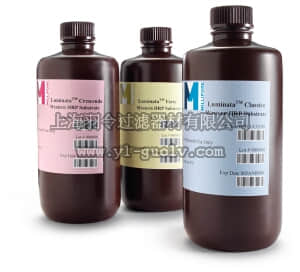 merck millipore,默克密理博,WBLUR0500,Luminata Crescendo Western HRP substrate, 500 mL
merck millipore,默克密理博,610205,Anti-Tie2 Mouse mAb (Ab33)
 merck millipore,默克密理博,71335,pET-46 Ek/LIC Vector Kit - Novagen
 merck millipore,默克密理博,PIMWS2450,24-Well Cell Culture Receiver Plate, TC, sterile, 50pk