


- 当前位置:首页 > >Merck Millipore > 生命科学研究
- 生命科学研究

- 产品介绍
重要规格表
品种反应性 主要应用 宿主 格式 抗体类型 H, B IHC, WB M Ascites Monoclonal Antibody 描述 产品目录编号 MAB1680 Replaces CBL229 品牌系列 Chemicon®
商名 - Chemicon
描述 Anti-Filamin A Antibody, clone TI10 Alternate Names - Nonmuscle Filamin
- Alpha-Filamin
- Filamin I
- Endothelial Actin-binding Protein
- ABP-280
背景信息 Filamin is a structural protein that forms flexible cross-links between two actin filaments. Filamin is a homodimer of polypeptide chains each joined to the other at one end with an actin binding site ath the other. It is present in smooth muscle, fibroblasts, platelets and lymphocytes. 产品信息 格式 Ascites 控制 - Positive control tisse: skin.
演示 Ascites. Liquid 应用 应用 Detect Filamin A using this Anti-Filamin A Antibody, clone TI10 validated for use in IP, WB, IH, IH(P). 主要应用 - Immunohistochemistry
- Western Blotting
应用说明 Immunoblotting: 1:250 to 1:1000
Immunoprecipitation:Suggested lysis buffer is PBS with 0.5% triton X-100 with proteinase inhibitors (note for full length filamin include calpain inhibitors). 5 microliters of antibody for every 300μL of cell lysate (3-5mg/ml total protein is suggested). Incubation is 4 hours RT or overnight 4C; Protein A/G agarose beads or rabbit anti-mouse secondary capture antibody is recommended for best recovery. 4-10% acrylamide gels are recommended for full length filamin or the 80kDa fragement visualization.
Immunofluorescence: 1:50 to 1:200 using standard ABC technique. Suitable for staining of paraffin embedded sections (lower dilutions). High temperature citrate buffer antigen retrieval technique recommended.
Optimal working dilutions must be determined by end user.生物信息 免疫原品种 Human platelet protein 克隆 TI10 宿主 Mouse 特异性 Human filamin (actin-bidning protein). Recognizes unprocessed (270-280 kDa) and the C-terminal 90 kDa calpain cleavage fragment of filamin (Aakhus, 1992). 同种型 IgG1 品种反应性 HumanBovine 抗体类型 Monoclonal Antibody Entrez基因编号 - NM_001456.3
- NM_001110556.1
Entrez基因汇总 Actin-binding protein, or filamin, is a 280-kD protein that crosslinks actin filaments into orthogonal networks in cortical cytoplasm and participates in the anchoring of membrane proteins for the actin cytoskeleton. Remodeling of the cytoskeleton is central to the modulation of cell shape and migration. Filamin A, encoded by the FLNA gene, is a widely expressed protein that regulates reorganization of the actin cytoskeleton by interacting with integrins, transmembrane receptor complexes, and second messengers.[supplied by OMIM] 基因符号 - DKFZp434P031
- FLNA
- Alpha-filamin
- OPD2
- Filamin-A
- MNS
- FLN
- FMD
- OPD1
- FLN1
- NHBP
- ABP-280
- ABPX
- OPD
- Filamin-1
非反应性品种 - Rat
- Mouse
UniProt编号 - P21333
UniProt汇总 FUNCTION: SwissProt: P21333 # Promotes orthogonal branching of actin filaments and links actin filaments to membrane glycoproteins. Anchors various transmembrane proteins to the actin cytoskeleton and serves as a scaffold for a wide range of cytoplasmic signaling proteins. Interaction with FLNA may allow neuroblast migration from the ventricular zone into the cortical plate. Tethers cell surface- localized furin, modulates its rate of internalization and directs its intracellular trafficking (By similarity).
SIZE: 2647 amino acids; 280739 Da
SUBUNIT: Interacts with PDLIM2 (By similarity). Homodimer. Interacts with FLNB, FURIN, HSPB7, INPPL1, KCND2, MYOT, MYOZ1, ARHGAP24, PSEN1 and PSEN2. Interacts also with various other binding partners in addition to filamentous actin.
SUBCELLULAR LOCATION: Cytoplasm, cell cortex.
TISSUE SPECIFICITY: Ubiquitous.
DOMAIN: SwissProt: P21333 Comprised of a NH2-terminal actin-binding domain, 24 internally homologous repeats and two hinge regions. Repeat 24 and the second hinge domain are important for dimer formation.
PTM: Phosphorylated upon DNA damage, probably by ATM or ATR (By similarity). Phosphorylation extent changes in response to cell activation. & The N-terminus is blocked.
DISEASE: SwissProt: P21333 # Defects in FLNA are the cause of periventricular nodular heterotopia 1 (PVNH1) [MIM:300049]; also called nodular heterotopia, bilateral periventricular (NHBP or BPNH). PVNH1 is an X-linked developmental dominant disorder in which many neurons fail to migrate into the cerebral cortex. They remain as nodules lining the ventricular surface. In heterozygous females these neurons presumably represent those cells that, after X-chromosome inactivation, contain the active X chromosome with the filamin mutation. Most hemizygous affected males die early during embryogenesis, whereas heterozygous females have normal intelligence but suffer from seizures and various manifestations outside the central nervous system, especially related to the vascular system. This implies that essential embryonic cell migration can only occur in FLNA-expressing cells. & Defects in FLNA are the cause of periventricular nodular heterotopia 4 (PVNH4) [MIM:300537]; also known as periventricular heterotopia Ehlers-Danlos variant. PVNH4 is characterized by nodular brain heterotopia, joint hypermobility and development of aortic dilatation in early adulthood. & Defects in FLNA are the cause of otopalatodigital syndrome type 1 (OPD1) [MIM:311300]. OPD1 is an X-linked dominant multiple congenital anomalies disease mainly characterized by a generalized skeletal dysplasia, mild mental retardation, hearing loss, cleft palate, and typical facial anomalies. OPD1 belongs to a group of X-linked skeletal dysplasias known as oto-palato- digital syndrome spectrum disorders that also include OPD2, Melnick-Needles syndrome (MNS), and frontometaphyseal dysplasia (FMD). Remodeling of the cytoskeleton is central to the modulation of cell shape and migration. FLNA is a widely expressed protein that regulates re-organization of the actin cytoskeleton by interacting with integrins, transmembrane receptor complexes and second messengers. Males with OPD1 have cleft palate, malformations of the ossicles causing deafness and milder bone and limb defects than those associated with OPD2. Obligate female carriers of mutations causing both OPD1 and OPD2 have variable (often milder) expression of a similar phenotypic spectrum. & Defects in FLNA are the cause of otopalatodigital syndrome type 2 (OPD2) [MIM:304120]; also known as cranioorodigital syndrome. OPD2 is a congenital bone disorder that is characterized by abnormally modeled, bowed bones, small or absent first digits and, more variably, cleft palate, posterior fossa brain anomalies, omphalocele and cardiac defects. & Defects in FLNA are the cause of frontometaphyseal dysplasia (FMD) [MIM:305620]. FMD is a congenital bone disease characterized by supraorbital hyperostosis, deafness and digital anomalies. & Defects in FLNA are the cause of Melnick-Needles syndrome (MNS) [MIM:309350]. MNS is a severe congenital bone disorder characterized by typical facies (exophthalmos, full cheeks, micrognathia and malalignment of teeth), flaring of the metaphyses of long bones, s-like curvature of bones of legs, irregular constrictions in the ribs, and sclerosis of base of skull. & Defects in FLNA are associated with cerebrofrontofacial syndrome [MIM:608578]. This syndrome consists of a phenotype of male PVNH, with relatively normal development, no epilepsy or other neurological abnormality, severe constipation, and facial dysmorphism and without a discernible skeletal phenotype. & Defects in FLNA are a cause of X-linked congenital idiopathic intestinal pseudoobstruction (CIIPX) [MIM:300048]. CIIPX is caused by severe abnormality of gastrointestinal motility either due to primary qualitative defects of enteric ganglia and nerve fibers, or secondary to a variety of conditions, such as myopathies, inflammatory or autoimmune diseases, drug toxicity, ischemia, or viral infections. CIIPX is diagnosed by radiological, surgical, or manometric evidence of abnormal bowel motility causing intestinal obstruction in the absence of any mechanical occlusion.
SIMILARITY: Belongs to the filamin family. & Contains 1 actin-binding domain. & Contains 2 CH (calponin-homology) domains. & Contains 24 filamin repeats.产品使用声明 使用声明 - Unless otherwise stated in our catalog or other company documentation accompanying the product(s), our products are intended for research use only and are not to be used for any other purpose, which includes but is not limited to, unauthorized commercial uses, in vitro diagnostic uses, ex vivo or in vivo therapeutic uses or any type of consumption or application to humans or animals.
储存和货运信息 存储条件 Maintain frozen at -20°C for up to 12 months in undiluted aliquots. Avoid repeated freeze/thaw cycles. 包装信息 数量 100 µL
上一件merck millipore产品:merck millipore,默克密理博,4700-0081,Guava 1X Lysing Solution
下一件merck millipore产品:merck millipore,默克密理博,MAB5550,Anti-TorsinA Antibody
相关产品
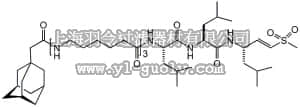 merck millipore,默克密理博,114802,AdaAhx₃L₃VS - CAS 389064-25-9 - Calbiochem
 merck millipore,默克密理博,SCM037,FibroGRO™ Xeno-Free Human Fibroblast Expansion Medium
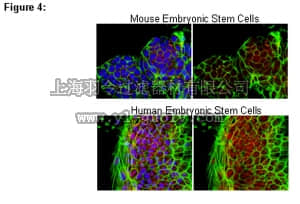 merck millipore,默克密理博,03-241,RIPAb+™ PUM2 Antibody
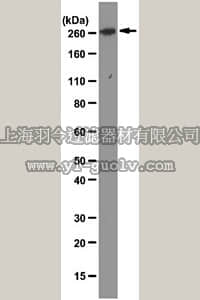 merck millipore,默克密理博,MABS14,Anti-mTOR Antibody, clone F11
 merck millipore,默克密理博,4700-0081,Guava 1X Lysing Solution
 merck millipore,默克密理博,MAB5550,Anti-TorsinA Antibody
 merck millipore,默克密理博,PC645,Anti-Cleaved Bid (Ab-1) Rabbit pAb
 merck millipore,默克密理博,ABS586,Anti-GUSB Antibody
 merck millipore,默克密理博,14-746,Src (1-530) Protein, active, 10 µg
 merck millipore,默克密理博,UFC203024,Amicon Ultra-2 Centrifugal Filter Unit with Ultracel-30 membrane