


- 当前位置:首页 > >Merck Millipore > 生命科学研究
- 生命科学研究
-
-
merck millipore,默克密理博,AB5932,Anti-Potassium Channel KvLQT1 Antibody, CT
产品名称:Anti-Potassium Channel KvLQT1 Antibody, CT
产品型号:AB5932
Anti-Potassium Channel KvLQT1 Antibody, C-terminus detects level of Potassium Channel KvLQT1 & has been published & validated for use in IH & WB.
merck millipore,默克密理博,AB5932,Anti-Potassium Channel KvLQT1 Antibody, CT
- 产品介绍
重要规格表
品种反应性 主要应用 宿主 格式 抗体类型 R, H, M WB, IHC Rb Affinity Purified Polyclonal Antibody 描述 产品目录编号 AB5932 品牌系列 Chemicon®
商名 - Chemicon
描述 Anti-Potassium Channel KvLQT1 Antibody, CT Alternate Names - slow delayed rectifier channel subunit
- IKs producing slow voltage-gated potassium channel subunit alpha KvLQT1
- KQT-like 1
- Voltage-gated potassium channel subunit Kv7.1
- kidney and cardiac voltage dependent K+ channel
- potassium voltage-gated channel, KQT-like subfamily, member 1
背景信息 KvLQT1(Kv7.1) is a voltage-gated potassium channel protein coded for by the gene KCNQ1. This protein is present in the cell membranes of cardiac muscle tissue and in inner ear neurons among other tissues. KvLQT1 can form heteromultimers with two other potassium channel proteins, KCNE1 and KCNE3 and in heart cells is required for the repolarization phase of the cardiac action potential. Mutations in the gene are associated with hereditary long QT syndrome, Romano-Ward syndrome, Jervell and Lange-Nielsen syndrome and familial atrial fibrillation, lead to a defective KvLQT1 protein and several forms of inherited arrhythmias known as Long QT syndrome, Short QT syndrome, and Familial Atrial Fibrillation. 产品信息 格式 Affinity Purified 控制 - Human heart tissue lysate
演示 Purified rabbit polyclonal in buffer containing 0.1 M Tris-Glycine (pH 7.4, 150 mM NaCl) with 0.05% sodium azide. 应用 应用 Anti-Potassium Channel KvLQT1 Antibody, C-terminus detects level of Potassium Channel KvLQT1 & has been published & validated for use in IH & WB. 主要应用 - Western Blotting
- Immunohistochemistry
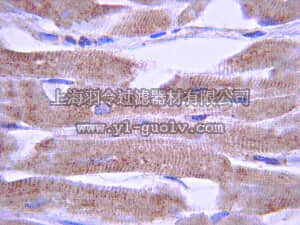
应用说明 Immunohistochemistry Analysis: 1:300 dilution from a previous lot detected Potassium Channel KvLQT1 in human myocardium tissue.
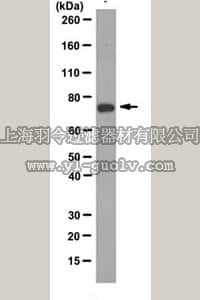
/Western Blotting Analysis: 2 μg/mL of this
antibody detected KvLQT1 in 10 μg of human
heart tissue lysate.
Optimal working dilutions must be determined by end user.生物信息 免疫原品种 KLH-conjugated linear peptide from the C-terminus of human KvLQT1. 表位 C-terminus 浓缩 Please refer to the Certificate of Analysis for the lot-specific concentration. 宿主 Rabbit 特异性 This antibody recognizes Potassium Channel KvLQT1 protein. 品种反应性 RatHumanMouse Species Reactivity Note Demonstrated to react with human. Predicted to react with rat and mouse based on 100% sequence homology. 抗体类型 Polyclonal Antibody Entrez基因编号 - NP_000209.2
Entrez基因汇总 This gene encodes a protein for a voltage-gated potassium channel required for the repolarization phase of the cardiac action potential. The gene product can form heteromultimers with two other potassium channel proteins, KCNE1 and KCNE3. Mutations in this gene are associated with hereditary long QT syndrome, Romano-Ward syndrome, Jervell and Lange-Nielsen syndrome and familial atrial fibrillation. The gene is located in a region of chromosome 11 that contains a large number of contiguous genes that are abnormally imprinted in cancer and the Beckwith-Wiedemann syndrome. Two alternative transcripts encoding distinct isoforms have been described. 基因符号 - LQT1
- KCNQ1
- JLNS1
- ATFB1
- SQT2
- CNA8
- LQT
- WRS
- Kv1.9
- KVLQT1
- RWS
- Kv7.1
- KCNA9
- QTS
纯化方法 Affinity Purfied UniProt编号 - P51787
UniProt汇总 FUNCTION: Probably important in cardiac repolarization. Associates with KCNE1 (MinK) to form the I(Ks) cardiac potassium current. Elicits a rapidly activating, potassium-selective outward current. Muscarinic agonist oxotremorine-M strongly suppresses KCNQ1/KCNE1 current in CHO cells in which cloned KCNQ1/KCNE1 channels were coexpressed with M1 muscarinic receptors. May associate also with KCNE3 (MiRP2) to form the potassium channel that is important for cyclic AMP-stimulated intestinal secretion of chloride ions, which is reduced in cystic fibrosis and pathologically stimulated in cholera and other forms of secretory diarrhea.
SIZE: 676 amino acids; 74699 Da
SUBUNIT: Heteromultimer with KCNE1 (MinK) or KCNE3 (MiRP2).
SUBCELLULAR LOCATION: Membrane; Multi-pass membrane protein.
TISSUE SPECIFICITY: Abundantly expressed in heart, pancreas, prostate, kidney, small intestine and peripheral blood leukocytes. Less abundant in placenta, lung, spleen, colon, thymus, testis and ovaries.
DOMAIN: The segment S4 is probably the voltage-sensor and is characterized by a series of positively charged amino acids at every third position.
DISEASE: Defects in KCNQ1 are the cause of long QT syndrome type 1 (LQT1) [MIM:192500]; also known as Romano-Ward syndrome (RWS). Long QT syndromes are heart disorders characterized by a prolonged QT interval on the ECG and polymorphic ventricular arrhythmias. They cause syncope and sudden death in response to exercise or emotional stress. LQT1 inheritance is an autosomal dominant. & Defects in KCNQ1 are a cause of Jervell and Lange-Nielsen syndrome (JLNS) [MIM:220400]. JLNS is an autosomal recessive cardio-auditory syndrome characterized by a prolonged QT interval in the electrocardiogram and congenital deafness. & Defects in KCNQ1 are the cause of atrial fibrillation type 1 (ATFB1) [MIM:607554]. ATFB is characterized by rapid and irregular activation of the atrium. ATFB causes thromboembolism, tachycardia-mediated cardiomyopathy, heart failure and ventricular arrhythmia. & Defects in KCNQ1 are the cause of short QT syndrome type 2 (SQT2) [MIM:609621]. Short QT syndromes are heart disorders characterized by idiopathic persistently and uniformly short QT interval on ECG in the absence of structural heart disease in affected individuals. They cause syncope and sudden death.
SIMILARITY: Belongs to the potassium channel family. KQT subfamily.
MISCELLANEOUS: Mutagenesis experiments were carried out by expressing in Xenopus oocytes or COS-7 cells KCNQ1 mutants either individually (homomultimers) or in combination with both wild-type KCNQ1 (mut/wt homomultimers) and minK (heteromultimers).产品使用声明 质量保证 Evaluated by Western Blot in human heart tissue lysate.
Western Blot Analysis: 2 µg/ml of this antibody detected KvLQT1 in 10 µg of human heart tissue lysate.使用声明 - Unless otherwise stated in our catalog or other company documentation accompanying the product(s), our products are intended for research use only and are not to be used for any other purpose, which includes but is not limited to, unauthorized commercial uses, in vitro diagnostic uses, ex vivo or in vivo therapeutic uses or any type of consumption or application to humans or animals.
储存和货运信息 存储条件 Stable for 1 year at 2-8°C from date of receipt. 包装信息 数量 100 µg
上一件merck millipore产品:merck millipore,默克密理博,04-1048,Anti-MMP-2 Antibody, clone EP1183Y, rabbit monoclonal
下一件merck millipore产品:merck millipore,默克密理博,MABE428,Anti-WDR5 Antibody, clone 7B11
相关产品
 merck millipore,默克密理博,MABS475,Anti-GRP-78 Antibody, clone C107
 merck millipore,默克密理博,UFC40HV25,Ultrafree-CL
 merck millipore,默克密理博,SF-2081,EGR3; Human, Cyanine 5 RNA Detection Probe,SmartFlare
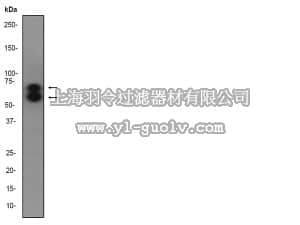 merck millipore,默克密理博,04-1048,Anti-MMP-2 Antibody, clone EP1183Y, rabbit monoclonal
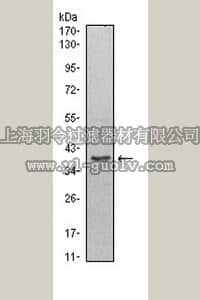 merck millipore,默克密理博,MABE428,Anti-WDR5 Antibody, clone 7B11
merck millipore,默克密理博,SF-1285,miR-106b-5p; Human, Cyanine 3 RNA Detection Probe,SmartFlare
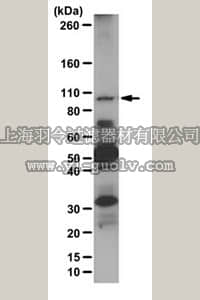 merck millipore,默克密理博,ABS229,Anti-HMG-CoA reductase Antibody
 merck millipore,默克密理博,454582,Anti-NMDAR 2B (984-1104) Rabbit pAb
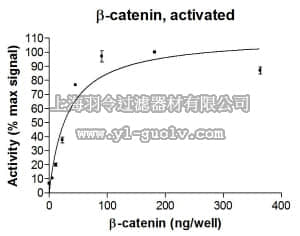 merck millipore,默克密理博,23-027,b-catenin Protein, activated, 10 µg