


- 当前位置:首页 > >Merck Millipore > 生命科学研究
- 生命科学研究
-

-
merck millipore,默克密理博,AB5493-200UL,Anti-Sodium Channel Nav1.5 Antibody
产品名称:Anti-Sodium Channel Nav1.5 Antibody
产品型号:AB5493-200UL
Anti-Sodium Channel Nav1.5 Antibody detects level of Sodium Channel Nav1.5 & has been published & validated for use in WB.
merck millipore,默克密理博,AB5493-200UL,Anti-Sodium Channel Nav1.5 Antibody
- 产品介绍
重要规格表
品种反应性 主要应用 宿主 格式 抗体类型 R WB Rb Affinity Purified Polyclonal Antibody 描述 产品目录编号 AB5493-200UL 品牌系列 Chemicon®
商名 - Chemicon
描述 Anti-Sodium Channel Nav1.5 Antibody Alternate Names - SCN5A
产品信息 格式 Affinity Purified 控制 - Included free of charge with the antibody is 40 μg of control antigen (lyophilized powder). For negative control, preincubate 1 μg of purified peptide with 1 μg of antibody for one hour at room temperature. Optimal concentrations must be determined by the end user.
演示 Affinity purified immunoglobulin. Lyophilized from PBS, pH 7.4, containing 1% BSA, 5% sucrose and 0.05% sodium azide. Reconstitute with 200 μL of sterile distilled water. Centrifuge antibody preparation before use (10,000 x g for 5 min). 应用 应用 Anti-Sodium Channel Nav1.5 Antibody detects level of Sodium Channel Nav1.5 & has been published & validated for use in WB. 主要应用 - Western Blotting
应用说明 Western blotting: 1:200 using ECL on rat heart membranes. See suggested protocol.
Dilutions should be made using a carrier protein such as BSA (1-3%).
Optimal working dilutions must be determined by the end user.生物信息 免疫原品种 Highly purified peptide corresponding to residues 493-511 of rat Nav1.5 (Accession P15389). 浓缩 Please refer to the Certificate of Analysis for the lot-specific concentration. 宿主 Rabbit 特异性 Recognizes Nav1.5 (Scn5a, SKM2). The epitope specific for Nav1.5 is not present in any other known proteins.
SPECIES REACTIVITIES:
The immunogen sequence is identical in mouse and conserved in human (17/19). Reactivity with other species has not yet been tested.品种反应性 Rat 抗体类型 Polyclonal Antibody Entrez基因编号 - NM_198056.2
- NM_000335.4
- NM_001099404.1
- NM_001099405.1
Entrez基因汇总 The protein encoded by this gene is an integral membrane protein and tetrodotoxin-resistant voltage-gated sodium channel subunit. This protein is found primarily in cardiac muscle and is responsible for the initial upstroke of the action potential in an electrocardiogram. Defects in this gene are a cause of long QT syndrome type 3 (LQT3), an autosomal dominant cardiac disease. Alternative splicing results in several transcript variants encoding different isoforms. 基因符号 - LQT3
- SCN5A
- HB2
- ICCD
- CMPD2
- CMD1E
- SSS1
- HB1
- PFHB1
- IVF
- HH1
- Nav1.5
- CDCD2
- HBBD
UniProt编号 - Q14524
UniProt汇总 FUNCTION: SwissProt: Q14524 # This protein mediates the voltage-dependent sodium ion permeability of excitable membranes. Assuming opened or closed conformations in response to the voltage difference across the membrane, the protein forms a sodium-selective channel through which Na(+) ions may pass in accordance with their electrochemical gradient. It is a tetrodotoxin-resistant Na(+) channel isoform. This channel is responsible for the initial upstroke of the action potential in the electrocardiogram.
SIZE: 2016 amino acids; 227162 Da
SUBUNIT: Interacts with the PDZ domain of the syntrophin SNTA1, SNTB1 and SNTB2 (By similarity). Interacts with NEDD4, NEDD4L and WWP2.
SUBCELLULAR LOCATION: Membrane; Multi-pass membrane protein.
TISSUE SPECIFICITY: Expressed in human atrial and ventricular cardiac muscle but not in adult skeletal muscle, brain, myometrium, liver, or spleen.
DOMAIN: SwissProt: Q14524 The sequence contains 4 internal repeats, each with 5 hydrophobic segments (S1,S2,S3,S5,S6) and one positively charged segment (S4). Segments S4 are probably the voltage-sensors and are characterized by a series of positively charged amino acids at every third position.
PTM: Ubiquitinated by NEDD4L; which promotes its endocytosis. Does not seem to be ubiquitinated by NEDD4 or WWP2.
DISEASE: SwissProt: Q14524 # Defects in SCN5A are a cause of progressive familial heart block type I (PFHBI) [MIM:113900]; also known as Lenegre-Lev disease or progressive cardiac conduction defect (PCCD). PFHBI is characterized by progressive alteration of cardiac conduction through the His-Purkinje system with right or left bundle branch block and widening of QRS complexes, leading to complete atrio- ventricular block and causing syncope and sudden death. PFHBI inheritance is autosomal dominant. & Defects in SCN5A are the cause of long QT syndrome type 3 (LQT3) [MIM:603830]. Long QT syndromes are heart disorders characterized by a prolonged QT interval on the ECG and polymorphic ventricular arrhythmias. They cause syncope and sudden death in response to exercise or emotional stress. LQT3 inheritance is an autosomal dominant. & Defects in SCN5A are the cause of Brugada syndrome [MIM:601144]. Brugada syndrome is an autosomal dominant inherited arrhythmia that causes the ventricles to beat so fast that they can prevent the blood from circulating efficiently in the body. When this situation occurs (called ventricular fibrillation), the individual will faint and may die in a few minutes if the heart is not reset. Brugada syndrome is an idiopathic ventricular fibrillation (IVF) syndrome characterized by right bundle branch block and ST elevation on an electrocardiogram (ECG). While Brugada syndrome is a disease that usually affects people in their 30's, it has actually been described at all ages. & Defects in SCN5A are the cause of autosomal recessive sick sinus syndrome 1 (SSS1) [MIM:608567]. The term 'sick sinus syndrome' encompasses a variety of conditions caused by sinus node dysfunction. The most common clinical manifestations are syncope, presyncope, dizziness, and fatigue. Electrocardiogram typically shows sinus bradycardia, sinus arrest, and/or sinoatrial block. Episodes of atrial tachycardias coexisting with sinus bradycardia ('tachycardia-bradycardia syndrome') are also common in this disorder. SSS occurs most often in the elderly associated with underlying heart disease or previous cardiac surgery, but can also occur in the fetus, infant, or child without heart disease or other contributing factors, in which case it is considered to be a congenital disorder. & Defects in SCN5A are a cause of idiopathic ventricular fibrillation (IVF) [MIM:603829]; also called paroxysmal familial ventricular fibrillation. IVF is a self originated, of unknown causation, ventricular fibrillation that causes the ventricles to beat so fast that they can prevent the blood from circulating efficiently in the body. This disorder is not truly idiopathic in many cases but can be caused by specific mutations such as those in the SCN5A gene. IVF is said to cause more than 300,000 sudden deaths each year in the United States alone. In approximately 5 to 12% of cases, there are no demonstrable cardiac or non-cardiac causes to account for the episode, which is therefore classified as idiopathic ventricular fibrillation. & Defects in SCN5A are a cause of sudden infant death syndrome (SIDS) [MIM:272120]. SIDS remains elusive in its causes and devastating in its consequences. Despite the impressive decline in the incidence of SIDS since the recommendation to avoid the prone sleep position, SIDS remains a leading cause of death in the first year of life. & Defects in SCN5A may be a cause of familial atrial standstill [MIM:108770]. Atrial standstill is an extremely rare arrhythmia, characterized by the absence of electrical and mechanical activity in the atria. Electrocardiographically, it is characterized by bradycardia, the absence of P waves, and a junctional narrow complex escape rhythm. & Defects in SCN5A are the cause of dilated cardiomyopathy 1E (CMD1E) [MIM:601154]; also known as dilated cardiomyopathy with conduction disorder and arrhythmia or dilated cardiomyopathy with conduction defect 2. CMD1E is characterized by autosomal dominant transmission, young age of onset, arrhythmia and conduction disorder that culminates, in most cases, in biatrial and biventricular dilation.
SIMILARITY: Belongs to the sodium channel family. & Contains 1 IQ domain.
MISCELLANEOUS: Na(+) channels in mammalian cardiac membrane have functional properties quite distinct from Na(+) channels in nerve and skeletal muscle.产品使用声明 使用声明 - Unless otherwise stated in our catalog or other company documentation accompanying the product(s), our products are intended for research use only and are not to be used for any other purpose, which includes but is not limited to, unauthorized commercial uses, in vitro diagnostic uses, ex vivo or in vivo therapeutic uses or any type of consumption or application to humans or animals.
储存和货运信息 存储条件 Maintain lyophilized material at -20°C for up to 6 months from date of receipt. After reconstitution maintain at -20°C in undiluted aliquots for up to 6 months. Avoid repeated freeze/thaw cycles. 包装信息 数量 200 µL
上一件merck millipore产品:merck millipore,默克密理博,MABN279,Anti-Beta-mannosidase Antibody, clone 1B3.1
下一件merck millipore产品:merck millipore,默克密理博,07-206,Anti-phospho-SHC (Tyr317) Antibody
相关产品
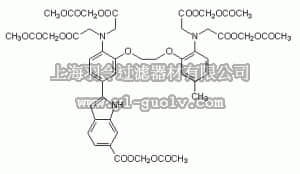 merck millipore,默克密理博,402096,INDO 1/AM
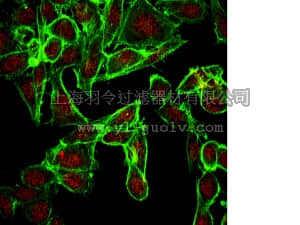 merck millipore,默克密理博,07-2045,Anti-EHMT1 Antibody (CT)
 merck millipore,默克密理博,SF-984,Collagen I; Human, Cyanine 5, RNA Detection Probe,SmartFlare
 merck millipore,默克密理博,648465,TRITON X-100 Detergent, Hydrogenated - CAS 92046-34-9 - Calbiochem
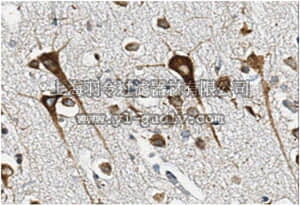 merck millipore,默克密理博,MABN279,Anti-Beta-mannosidase Antibody, clone 1B3.1
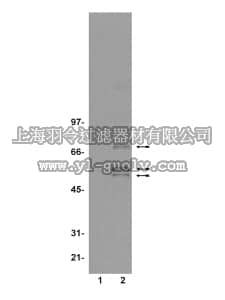 merck millipore,默克密理博,07-206,Anti-phospho-SHC (Tyr317) Antibody
 merck millipore,默克密理博,MAB5580,Anti-Arrestin Antibody, visual
merck millipore,默克密理博,AG533,ADAM 10, control peptide for AB19026
 merck millipore,默克密理博,539624,PKCζ Pseudosubstrate Inhibitor, Myristoylated - Calbiochem
 merck millipore,默克密理博,MAB10225,Anti-Lipoprotein H2 Antibody, clone MA1-6,MAB10225