


- 当前位置:首页 > >Merck Millipore > 生命科学研究
- 生命科学研究
-
-
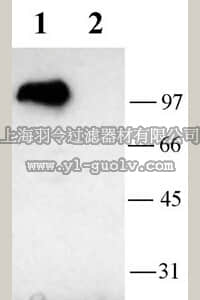
merck millipore,默克密理博,AB5188-50UL,Anti-Potassium Channel Kv3.1b Antibody
产品名称:Anti-Potassium Channel Kv3.1b Antibody
产品型号:AB5188-50UL
Detect Potassium Channel Kv3.1b using this Anti-Potassium Channel Kv3.1b Antibody validated for use in IH, IP & WB.
merck millipore,默克密理博,AB5188-50UL,Anti-Potassium Channel Kv3.1b Antibody
- 产品介绍
重要规格表
品种反应性 主要应用 宿主 格式 抗体类型 R, M WB, IHC Rb Affinity Purified Polyclonal Antibody 描述 产品目录编号 AB5188-50UL 品牌系列 Chemicon®
商名 - Chemicon
描述 Anti-Potassium Channel Kv3.1b Antibody 产品信息 格式 Affinity Purified 控制 - CONTROL ANTIGEN: Included free of charge with the antibody is 20 μg of control antigen (lyophilized powder in phosphate buffered saline, pH 7.4, containing 5% sucrose and 0.025% sodium azide). The stock solution of the antigen can be made up using 200 μL of sterile deionized water. For negative control, preincubate 1 μg of peptide with 1 μg of antibody for one hour at room temperature. Optimal concentrations must be determined by the end user.
演示 Affinity purified immunoglobulin. Lyophilized from phosphate buffered saline, pH 7.4, containing 1% BSA, 5% sucrose as a stabilizer and 0.025% sodium azide as a preservative. Reconstitute with 50 μL of sterile deionized water. Centrifuge antibody preparation before use (10,000 xg for 5 min). 应用 应用 Detect Potassium Channel Kv3.1b using this Anti-Potassium Channel Kv3.1b Antibody validated for use in IH, IP & WB. 主要应用 - Western Blotting
- Immunohistochemistry
应用说明 Immunohistochemistry on rat brain sections (Hartig et al. 1999; Atkinson & Deuchars 2000)
Western blot: 1:200 using ECL
Immunoprecipitation (Sobko et al. 1998a,b)
Dilutions should be made using a carrier protein such as BSA (1-3%)
Optimal working dilutions must be determined by the end user.
SUGGESTED PROTOCOL FOR IMMUNOHISTOCHEMISTRY
Sacrifice and tissue processing:
Rats are deeply anesthetized with pentobarbital sodium (Pental). Brain is fixed by transcardial perfusion, first with 50 mL of phosphate buffered saline (0.02M PBS, pH 7.4) containing heparin (5U/ml), then with 220 mL of ice-cold 4% paraformaldehyde in 0.1M PBS, pH 7.5 containing sucrose 4%. Brain is cut in coronal blocks and further fixed by immersion in the same fixative, refrigerated, for 1-2 hours. Brain blocks are transferred to 10% sucrose in 0.1M PBS and sectioned in a cryostat within 3 days. Brain sections, 30 μm thick, are floated in 0.1M PBS and then preserved in a cryopreservation buffer at -20°C. The cryopreservation buffer contains 40% ethylene glycol and 1% polyvinylpyrrolidone in 0.1M potassium acetate buffer, pH 6.5.
Staining procedure:
1. Floating sections are rinsed in 0.02M PBS, 2x 5 minutes.
2. Endogenous peroxidase activity is quenched by incubation with 0.2 % hydrogen peroxide in 0.1M phosphate buffer pH 7.3 containing 0.2% Triton X-100 for 25 minutes at room temperature.
3. Sections are rinsed in 0.02M PBS, 2x 5 minutes.
4. Sections are incubated with the primary antiserum in a medium containing 0.3% Triton X-100, 0.05% Tween 20, 4% normal donkey serum (NDS), for 1 hour at room temperature and then overnight refrigerated.
5. Sections are rinsed in 0.02M PBS, containing 4% NDS, 2x 5 minutes.
Sections are incubated with biotinylated donkey anti-rabbit (from Chemicon USA, catalog number AP182B) diluted 1:400 in 0.02M PBS, containing 0.3% Triton X-100, 0.05% Tween 20, and 4% NDS, for 1 hour at room temperature and then overnight refrigerated.
1. Sections are rinsed in 0.02M PBS containing 4% NDS, 2x 5 min.
2. Sections are incubated with extravidin-peroxidase (Sigma Catalog number E2886) diluted 1:100 in 0.02M PBS, for 45 minutes at room temperature.
3. Sections are rinsed in 0.02M PBS, 3x 5 minutes.
Color development:
1. Sections are incubated with a solution of diaminobenzidine at the concentration of 0.0125% and containing 0.05% nickel ammonium sulfate for 10 minutes at room temperature.
2. Sections are transferred to the same DAB solution but with added hydrogen peroxide at a final concentration of 0.0015%. Duration of incubation should be adjusted by the end user.
3. Sections are rinsed in 0.02M PBS, 4x 10 minutes.
4. Sections are mounted on glass slides (gelatinized or coated by any other type of adhesive material) and allowed to dry.
5. Sections are dehydrated in ascending series of ethanol concentrations (70%, 90%, 100%, 5 minutes in each), delipidated in xylene (10 minutes) and coverslipped in Permount (or any other xylene diluted adhesive).生物信息 免疫原品种 Purified peptide from rat Kv3.1b (amino acids 567-585) (Accession P251222), conjugated to KLH. 浓缩 Please refer to the Certificate of Analysis for the lot-specific concentration. 宿主 Rabbit 特异性 Recognizes a full length Kv3.1b protein. Does not cross react with any other potassium channel antigens tested so far. 品种反应性 RatMouse 抗体类型 Polyclonal Antibody Entrez基因编号 - NM_004976.3
Entrez基因汇总 The Shaker gene family of Drosophila encodes components of voltage-gated potassium channels and is comprised of four subfamilies. Based on sequence similarity, this gene is similar to one of these subfamilies, namely the Shaw subfamily. The protein encoded by this gene belongs to the delayed rectifier class of channel proteins and is an integral membrane protein that mediates the voltage-dependent potassium ion permeability of excitable membranes. Multiple transcript variants encoding different isoforms have been inferred for this gene based on orthologous loci. 基因符号 - MGC129855
- KCNC1
- KV4
- Kv3.1
- NGK2
- Kv4
- KV3.1
UniProt编号 - P48547
UniProt汇总 FUNCTION: SwissProt: P48547 # Mediates the voltage-dependent potassium ion permeability of excitable membranes. Assuming opened or closed conformations in response to the voltage difference across the membrane, the protein forms a potassium-selective channel through which potassium ions may pass in accordance with their electrochemical gradient.
SIZE: 511 amino acids; 57942 Da
SUBUNIT: Heteromultimer with KCNG3, KCNG4 and KCNV2.
SUBCELLULAR LOCATION: Membrane; Multi-pass membrane protein.
DOMAIN: SwissProt: P48547 The segment S4 is probably the voltage-sensor and is characterized by a series of positively charged amino acids at every third position. & The tail may be important in modulation of channel activity and/or targeting of the channel to specific subcellular compartments.
SIMILARITY: Belongs to the potassium channel family. C (Shaw) subfamily.产品使用声明 使用声明 - Unless otherwise stated in our catalog or other company documentation accompanying the product(s), our products are intended for research use only and are not to be used for any other purpose, which includes but is not limited to, unauthorized commercial uses, in vitro diagnostic uses, ex vivo or in vivo therapeutic uses or any type of consumption or application to humans or animals.
储存和货运信息 存储条件 Maintain lyophilized material at -20°C for up to 12 months. After reconstitution maintain at -20°C in undiluted aliquots for up to 6 months. Avoid repeated freeze/thaw cycles. 包装信息 数量 50 µL
上一件merck millipore产品:merck millipore,默克密理博,06-1414,Anti-phospho Cbx7 (Thr118) Antibody
下一件merck millipore产品:merck millipore,默克密理博,AB9750,Anti-14-3-3 phospho Serine58 Antibody
相关产品
 merck millipore,默克密理博,MAB1148,Anti-Tie-2 Antibody, extracellular, clone 1E11DH
 merck millipore,默克密理博,06-1283,Anti-acetyl-p53 (Lys320) Antibody
 merck millipore,默克密理博,06-756,Anti-Frizzled 5 Antibody
 merck millipore,默克密理博,14-590M,YopH Protein, active, 250 µg
 merck millipore,默克密理博,06-1414,Anti-phospho Cbx7 (Thr118) Antibody
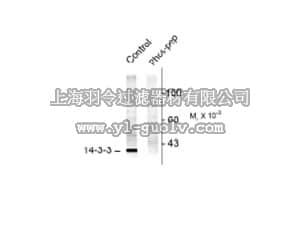 merck millipore,默克密理博,AB9750,Anti-14-3-3 phospho Serine58 Antibody
 merck millipore,默克密理博,SCM017,ENStem-A™ Neuronal Differentiation Medium
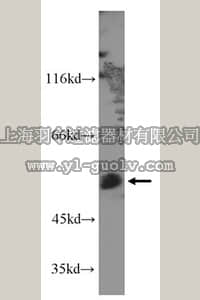 merck millipore,默克密理博,ABC291,Anti-FLI1 Antibody
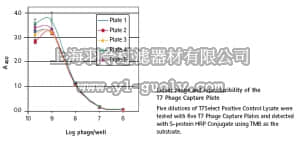 merck millipore,默克密理博,71531,T7 Phage Capture Plate
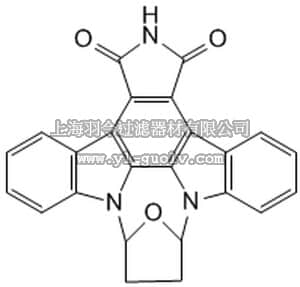 merck millipore,默克密理博,559402,SB 218078 - CAS 135897-06-2 - Calbiochem