


- 当前位置:首页 > >Merck Millipore > 生命科学研究
- 生命科学研究
-
-
merck millipore,默克密理博,04-540,Anti-phospho-p53 (Ser6) Antibody, clone Y179, rabbit monoclonal
产品名称:Anti-phospho-p53 (Ser6) Antibody, clone Y179, rabbit monoclonal
产品型号:04-540
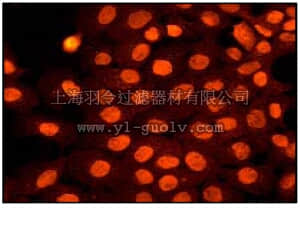
Detect phospho-p53 (Ser6) using this Anti-phospho-p53 (Ser6) Antibody, clone Y179 validated for use in WB, IC, IH & IP.
merck millipore,默克密理博,04-540,Anti-phospho-p53 (Ser6) Antibody, clone Y179, rabbit monoclonal
- 产品介绍
重要规格表
品种反应性 主要应用 宿主 格式 抗体类型 H IHC, WB, ICC Rb Culture Supernatant Monoclonal Antibody 描述 产品目录编号 04-540 描述 Anti-phospho-p53 (Ser6) Antibody, clone Y179, rabbit monoclonal Alternate Names - tumor protein p53
- Antigen NY-CO-13
- Phosphoprotein p53
- Tumor suppressor p53
- p53 antigen
- p53 transformation suppressor
- p53 tumor suppressor
- transformation-related protein 53
背景信息 The p53 gene is mutated in approximately half of all human cancers. It is involved in the cellular response to cytotoxic stresses, and together with p19ARF, induces expression of p21Cip1, to cause cell cycle arrest. In addition, p53 is able to induce apoptosis, both by transcriptional and non-transcriptional mechanisms. The amino-terminal 83 amino acids of p53 contain the transactivation domain, as well as the region involved in transcription-independent growth suppression. The carboxy-terminal region contains the DNA-binding domain, which is regulated by three phosphorylation events, and potentially by acetylation also. 产品信息 格式 Culture Supernatant 控制 - A431 Cell lysate
演示 Unpurified rabbit monoclonal IgG in buffer containing 50 mM Tris-Glycine (pH 7.4), 0.15 M NaCl, 40% Glycerol, 0.01% sodium azide and 0.05% BSA. 应用 应用 Detect phospho-p53 (Ser6) using this Anti-phospho-p53 (Ser6) Antibody, clone Y179 validated for use in WB, IC, IH & IP. 主要应用 - Immunohistochemistry
- Western Blotting
- Immunocytochemistry
应用说明 Immunohistochemistry: A 1:250-500 dilution of a previous lot was used in IH.
Immunocytochemistry: A 1:250-500 dilution of a previous lot was used in IC.
Immunoprecipitation: A 1:100 dilution of a previous lot was used in IP.生物信息 免疫原品种 KLH conjugated linear peptide corresponding to Phospho p53. 表位 Ser6 克隆 Y179 宿主 Rabbit 特异性 This antibody recognizes phospho-p53 (Ser6). 同种型 IgG 品种反应性 Human Species Reactivity Note Proven to react with human. Does not react with rat or mouse. 抗体类型 Monoclonal Antibody Entrez基因编号 - NP_000537.3
Entrez基因汇总 This gene encodes tumor protein p53, which responds to diverse cellular stresses to regulate target genes that induce cell cycle arrest, apoptosis, senescence, DNA repair, or changes in metabolism. p53 protein is expressed at low level in normal cells and at a high level in a variety of transformed cell lines, where it's believed to contribute to transformation and malignancy. p53 is a DNA-binding protein containing transcription activation, DNA-binding, and oligomerization domains. It is postulated to bind to a p53-binding site and activate expression of downstream genes that inhibit growth and/or invasion, and thus function as a tumor suppressor. Mutants of p53 that frequently occur in a number of different human cancers fail to bind the consensus DNA binding site, and hence cause the loss of tumor suppressor activity. Alterations of this gene occur not only as somatic mutations in human malignancies, but also as germline mutations in some cancer-prone families with Li-Fraumeni syndrome. Multiple p53 variants due to alternative promoters and multiple alternative splicing have been found. These variants encode distinct isoforms, which can regulate p53 transcriptional activity. [provided by RefSeq] 基因符号 - TP53
- P53
- TRP53
- p53
- LFS1
修改 - Phosphorylation
UniProt编号 - P04637
UniProt汇总 FUNCTION: SwissProt: P04637 # Acts as a tumor suppressor in many tumor types; induces growth arrest or apoptosis depending on the physiological circumstances and cell type. Involved in cell cycle regulation as a trans-activator that acts to negatively regulate cell division by controlling a set of genes required for this process. One of the activated genes is an inhibitor of cyclin-dependent kinases. Apoptosis induction seems to be mediated either by stimulation of BAX and FAS antigen expression, or by repression of Bcl-2 expression.
COFACTOR: Binds 1 zinc ion per subunit.
SIZE: 393 amino acids; 43653 Da
SUBUNIT: Interacts with AXIN1. Probably part of a complex consisting of TP53, HIPK2 and AXIN1 (By similarity). Binds DNA as a homotetramer. Interacts with histone acetyltransferases EP300 and methyltransferases HRMT1L2 and CARM1, and recruits them to promoters. In vitro, the interaction of TP53 with cancer- associated/HPV (E6) viral proteins leads to ubiquitination and degradation of TP53 giving a possible model for cell growth regulation. This complex formation requires an additional factor, E6-AP, which stably associates with TP53 in the presence of E6. C- terminus interacts with TAF1, when TAF1 is part of the TFIID complex. Interacts with ING4 and this interaction may be indirect. Found in a complex with CABLES1 and TP73. Interacts with HIPK1, HIPK2, and P53DINP1. Interacts with WWOX. May interacts with HCV core protein. Interacts with USP7 and SYVN1. Interacts with HSP90AB1 (By similarity). Interacts with BANP.
SUBCELLULAR LOCATION: Cytoplasm. Nucleus. Endoplasmic reticulum. Note=Interaction with BANP promotes nuclear localization.
DOMAIN: SwissProt: P04637 The nuclear export signal acts as a transcriptional repression domain.
PTM: Acetylated. Acetylation of Lys-382 by CREBBP enhances transcriptional activity. Deacetylation of Lys-382 by SIRT1 impairs its ability to induce proapoptotic program and modulate cell senescence. & Phosphorylation on Ser residues mediates transcriptional activation. Phosphorylated by HIPK1 (By similarity). Phosphorylated on Thr-18 by VRK1, which may prevent the interaction with MDM2. Phosphorylated on Thr-55 by TAF1, which promotes MDM2-mediated degradation. Phosphorylated on Ser-46 by HIPK2 upon UV irradiation. Phosphorylation on Ser-46 is required for acetylation by CREBBP. Phosphorylated on Ser-392 following UV but not gamma irradiation. Phosphorylated upon DNA damage, probably by ATM or ATR. Phosphorylated on Ser-15 upon ultraviolet irradiation; which is enhanced by interaction with BANP. & Dephosphorylated by PP2A. SV40 small T antigen inhibits the dephosphorylation by the AC form of PP2A. & May be O-glycosylated in the C-terminal basic region. Studied in EB-1 cell line. & Ubiquitinated by SYVN1, which leads to proteasomal degradation.
DISEASE: SwissProt: P04637 # TP53 is found in increased amounts in a wide variety of transformed cells. TP53 is frequently mutated or inactivated in about 60% of cancers. & Defects in TP53 are involved in esophageal squamous cell carcinoma (ESCC) [MIM:133239]. ESCC is a tumor of the esophagus. & Defects in TP53 are a cause of Li-Fraumeni syndrome (LFS) [MIM:151623]. LFS is an autosomal dominant familial cancer syndrome that in its classic form is defined by the existence of both a proband with a sarcoma and two other first-degree relatives with a cancer by age 45 years. In these families the affected relatives develop a diverse set of malignancies at unusually early ages. The spectrum of cancers in LFS includes breast carcinomas, soft-tissue sarcomas, brain tumors, osteosarcoma, leukemia and adreno-cortical carcinoma. Other possible component tumors of LFS are melanoma, gonadal cell tumors and carcinomas of the lung, pancreas and prostate. & Defects in TP53 may be associated with nasopharyngeal carcinoma [MIM:161550]; also known as nasopharyngeal cancer. & Defects in TP53 are found in Barrett metaplasia; also known as Barrett esophagus. It is a condition in which the normally stratified squamous epithelium of the lower esophagus is replaced by a metaplastic columnar epithelium. The condition develops as a complication in approximately 10% of patients with chronic gastroesophageal reflux disease and predisposes to the development of esophageal adenocarcinoma. & Defects in TP53 are involved in head and neck squamous cell carcinomas (HNSCC) [MIM:275355]. & Defects in TP53 are involved in oral squamous cell carcinoma (OSCC). Cigarette smoke is a prime mutagenic agent in cancer of the aerodigestive tract. & Defects in TP53 are a cause of lung cancer [MIM:211980]. & Defects in TP53 are a cause of choroid plexus papilloma [MIM:260500]. Choroid plexus papilloma is a slow-growing benign tumor of the choroid plexus that often invades the leptomeninges. In children it is usually in a lateral ventricle but in adults it is more often in the fourth ventricle. Hydrocephalus is common, either from obstruction or from tumor secretion of cerebrospinal fluid. If it undergoes malignant transformation it is called a choroid plexus carcinoma. Primary choroid plexus tumors are rare and usually occur in early childhood. & Defects in TP53 are a cause of one form of hereditary adrenocortical carcinoma (ADCC) [MIM:202300]. ADCC is a rare childhood tumor, representing about 0.4% of childhood tumors, with a high incidence of associated tumors. ADCC occurs with increased frequency in patients with the Beckwith-Wiedemann syndrome [MIM:130650] and is a component tumor in Li-Fraumeni syndrome [MIM:151623].
SIMILARITY: Belongs to the p53 family.产品使用声明 质量保证 Routinely evaluated by western blot on untreated and Calyculin / Okadaic Acid treated A431 cell lysate.
Western Blot Analysis: A 1:5,000 dilution of this lot was used to detect p53 phosphorylated on Ser6 in Calyculin / Okadaic Acid treated A431 cell lysate使用声明 - Unless otherwise stated in our catalog or other company documentation accompanying the product(s), our products are intended for research use only and are not to be used for any other purpose, which includes but is not limited to, unauthorized commercial uses, in vitro diagnostic uses, ex vivo or in vivo therapeutic uses or any type of consumption or application to humans or animals.
储存和货运信息 存储条件 Stable for 1 year at -20ºC from date of receipt.
Handling Recommendations: Upon receipt, and prior to removing the cap, centrifuge the vial and gently mix the solution. Aliquot into microcentrifuge tubes and store at -20°C. Avoid repeated freeze/thaw cycles, which may damage IgG and affect product performance. Note: Variability in freezer temperatures below -20°C may cause glycerol containing solutions to become frozen during storage.包装信息 数量 100 µL
上一件merck millipore产品:merck millipore,默克密理博,567375,Smac-N7 Peptide, Cell-Permeable - Calbiochem
下一件merck millipore产品:merck millipore,默克密理博,S7151,OxyBlot™ Protein Standard
相关产品
 merck millipore,默克密理博,AB5519,Anti-Prodynorphin Antibody
 merck millipore,默克密理博,14-817M,Met (M1268T) Protein, active, 250 µg
merck millipore,默克密理博,CC12,Anti-Cyclin D1 (Ab-3) Mouse mAb (DCS-6)
merck millipore,默克密理博,AB740,Anti-Apolipoprotein A-I Antibody
 merck millipore,默克密理博,567375,Smac-N7 Peptide, Cell-Permeable - Calbiochem
 merck millipore,默克密理博,S7151,OxyBlot™ Protein Standard
 merck millipore,默克密理博,ACS505002,Amicon Pro Purification System with 50kDa Amicon Ultra-0.5 Device
 merck millipore,默克密理博,14-378,MKK4/SKK1 Protein, unactive, 50 µg
merck millipore,默克密理博,AB1056,Anti-Adenovirus Antibody
 merck millipore,默克密理博,MAB1914P,Anti-Laminin gamma 1 Antibody, clone A5