- 当前位置:首页 > >Merck Millipore > 生命科学研究
- 生命科学研究
-
-
merck millipore,默克密理博,FCMAB291F,Milli-Mark™Anti-Cytokeratin 5 Antibody, 6-FITC, clone D5/16B4
产品名称:Milli-Mark™Anti-Cytokeratin 5 Antibody, 6-FITC, clone D5/16B4
产品型号:FCMAB291F
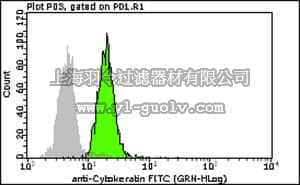
Milli-MarkAnti-Cytokeratin 5 Antibody, 6-FITC, clone D5/16B4 is an antibody against Cytokeratin 5 for use in FC.
merck millipore,默克密理博,FCMAB291F,Milli-Mark™Anti-Cytokeratin 5 Antibody, 6-FITC, clone D5/16B4
- 产品介绍
重要规格表
品种反应性 主要应用 宿主 格式 抗体类型 H FC M FITC Monoclonal Antibody 描述 产品目录编号 FCMAB291F 商名 - Milli-Mark
描述 Milli-Mark™Anti-Cytokeratin 5 Antibody, 6-FITC, clone D5/16B4 Alternate Names - keratin, type II cytoskeletal 5
- 58 kDa cytokeratin
- epidermolysis bullosa simplex
- Dowling-Meara/Kobner/Weber-Cockayne types
- keratin 5
- keratin 5 (epidermolysis bullosa simplex,Dowling-Meara/Kobner/Weber-Cockayne types)
背景信息 The cytokeratins are a family of intermediate filaments found in almost all epithelial cells. They are divided into four subclasses depending on their patterns of reactivity and electrophoretic characteristics and are also arranged I a numbered series of 20 or more acoring to molecular weight and isoelectric point (Quinlan et al. 1985). Types 5 and 6 of cytokeratin (CK5/6) are in high frequency in mesothelial cells, as opposed to cells of adenocarcinoma. CK5/6 has been shown to be a reliable marker for mesothelioma and squamous cell carcinoma of the lung and Bowen's disease. It does not react with pulmonary adenocarcinoma. 产品信息 格式 FITC 控制 - A431 cells
演示 Purified mouse monoclonal IgG1 conjugated to FITC in PBS buffer with 15mg/mL BSA and sodium azide at 0.1%. 应用 应用 Milli-MarkAnti-Cytokeratin 5 Antibody, 6-FITC, clone D5/16B4 is an antibody against Cytokeratin 5 for use in FC. 主要应用 - Flow Cytometry
生物信息 免疫原品种 Purified cytokeratin 5 (Wild, 1986) (Mischke, 1987). 克隆 D5/16B4 宿主 Mouse 特异性 Antibody recognizes Human Cytokeratin. 同种型 IgG1κ 品种反应性 Human Species Reactivity Note Tested and passed on Human. 抗体类型 Monoclonal Antibody Entrez基因编号 - NP_000415.2
Entrez基因汇总 The protein encoded by this gene is a member of the keratin gene family. The type II cytokeratins consist of basic or neutral proteins which are arranged in pairs of heterotypic keratin chains coexpressed during differentiation of simple and stratified epithelial tissues. This type II cytokeratin is specifically expressed in the basal layer of the epidermis with family member KRT14. Mutations in these genes have been associated with a complex of diseases termed epidermolysis bullosa simplex. The type II cytokeratins are clustered in a region of chromosome 12q12-q13. 基因符号 - CK-5
- KRT5
- K5
- EBS2
- DDD
- Keratin-5
- KRT5A
- Cytokeratin-5
- CK5
纯化方法 Protein A Purified UniProt编号 - P13647
UniProt汇总 SIZE: 590 amino acids; 62378 Da
SUBUNIT: Heterotetramer of two type I and two type II keratins. Keratin-5 associates with keratin-14. Interacts with TCHP.
DISEASE: SwissProt: P13647 # Defects in KRT5 are a cause of epidermolysis bullosa simplex (EBS) [MIM:131760, 131800, 131900, 131960]. Epidermolysis bullosa (EB) is a mendelian disorder that can be inherited in an autosomal dominant or recessive form and is characterized by blistering or erosion of the skin and mucous membranes as a result of mild trauma. The incidence at birth of all types of the disease is about 1:50,000. Three major clinical subgroups are: simplex (EBS), junctional (EBJ), and dystrophic (EBD). EBS is by far the most prevalent (65%) and it is characterized by blistering within the basal cell layer. Junctional and dystrophic EB are characterized by blistering in the plane of the lamina lucida of the basement membrane zone and below the dermal-epidermal basement membrane at the level of the anchoring fibrils, respectively. & Defects in KRT5 are a cause of epidermolysis bullosa simplex Dowling-Meara type (DM-EBS) [MIM:131760]. DM-EBS is the most severe of the simplex group and is characterized by generalized herpetiform blistering, milia formation, dystrophic nails, and mucous membrane involvement. & Defects in KRT5 are the cause of epidermolysis bullosa simplex with migratory circinate erythema [MIM:609352]. EBS with migratory circinate erythema is milder than the DM-EBS phenotype but involves an unusual migratory circinate erythema with multiple vesicles on the area affected by the erythema. The lesions, which appeared from birth primarily on the hands, feet, and legs but spared the nails, ocular epithelia, and mucosae, healed with brown pigmentation but no scarring. Electron microscopy findings were distinct from those seen in the DM-EBS, with no evidence of tonofilament clumping. & Defects in KRT5 are a cause of epidermolysis bullosa simplex Weber-Cockayne type (WC-EBS) [MIM:131800]. WC-EBS is characterized by blistering in palmar and plantar areas of the skin. & Defects in KRT5 are a cause of epidermolysis bullosa simplex Koebner type (K-EBS) [MIM:131900]. K-EBS is characterized by generalized blistering as the Dowling-Meara type; the phenotype however is less severe. & Defects in KRT5 are the cause of epidermolysis bullosa simplex with mottled pigmentation (MP-EBS) [MIM:131960]. MP-EBS is characterized by additional reticular hyperpigmentation. & Defects in KRT5 are the cause of Dowling-Degos disease (DDD) [MIM:179850]; also known as Dowling-Degos-Kitamura disease or reticulate acropigmentation of Kitamura. DDD is an autosomal dominant genodermatosis. Affected individuals develop a postpubertal reticulate hyperpigmentation that is progressive and disfiguring, and small hyperkeratotic dark brown papules that affect mainly the flexures and great skin folds. Patients usually show no abnormalities of the hair or nails.
SIMILARITY: SwissProt: P13647 ## Belongs to the intermediate filament family.
MISCELLANEOUS: There are two types of cytoskeletal and microfibrillar keratin: I (acidic; 40-55 kDa) and II (neutral to basic; 56-70 kDa).产品使用声明 质量保证 Evaluated by flow cytometry using A431 cells 使用声明 - Unless otherwise stated in our catalog or other company documentation accompanying the product(s), our products are intended for research use only and are not to be used for any other purpose, which includes but is not limited to, unauthorized commercial uses, in vitro diagnostic uses, ex vivo or in vivo therapeutic uses or any type of consumption or application to humans or animals.
储存和货运信息 存储条件 Maintain refrigerated at 2-8°C protected from light for up to 6 months from date of receipt. 包装信息 数量 100 tests
上一件merck millipore产品:merck millipore,默克密理博,AB9658,Anti-Tau phospho Serine 396 Antibody
下一件merck millipore产品:merck millipore,默克密理博,FCCH100178,FlowCellect™ Mitocaspase 3,7 Kit
相关产品
 merck millipore,默克密理博,545060,Pyridoxal, Hydrochloride - CAS 65-22-5 - Calbiochem
 merck millipore,默克密理博,14-700,NEK11 Protein, active, 10 µg
 merck millipore,默克密理博,MANMN4010,MultiScreen-MESH Filter Plate, 40 µm, clear, non-sterile
merck millipore,默克密理博,573462,Succinyl-Ala-Ala-Pro-Phe-p-nitroanilide - CAS 70967-97-4 - Calbiochem
 merck millipore,默克密理博,AB9658,Anti-Tau phospho Serine 396 Antibody
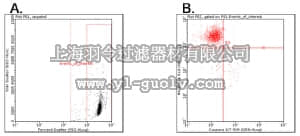 merck millipore,默克密理博,FCCH100178,FlowCellect™ Mitocaspase 3,7 Kit
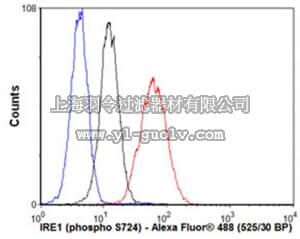 merck millipore,默克密理博,MABC742,Anti-phospho-IRE1 (Ser724), clone EPR5253, Rabbit Monoclonal Antibody
 merck millipore,默克密理博,MAB17002,Anti-Bcl-W Antibody, clone 16H12
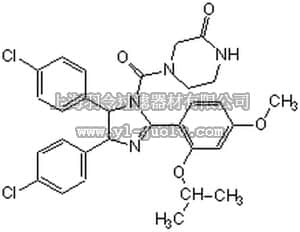 merck millipore,默克密理博,444151,InSolution™ Nutlin-3, Racemic - Calbiochem