


- 当前位置:首页 > >Merck Millipore > 生命科学研究
- 生命科学研究
-

-
merck millipore,默克密理博,CBL197,Anti-Cytokeratin 14 Antibody, clone LL002
产品名称:Anti-Cytokeratin 14 Antibody, clone LL002
产品型号:CBL197
Anti-Cytokeratin 14 Antibody, clone LL002 is an antibody against Cytokeratin 14 for use in WB, IH(P).
merck millipore,默克密理博,CBL197,Anti-Cytokeratin 14 Antibody, clone LL002
- 产品介绍
重要规格表
品种反应性 主要应用 宿主 格式 抗体类型 H WB M Purified Monoclonal Antibody 描述 产品目录编号 CBL197 品牌系列 Chemicon®
商名 - Chemicon
描述 Anti-Cytokeratin 14 Antibody, clone LL002 产品信息 格式 Purified 演示 The monoclonal is presented at a concentration of 100 μg/mL in phosphate buffered saline containing 10mM sodium azide and 1% bovine serum albumin. We recommend that each laboratory determine an optimum working titre for use in its particular application. 应用 应用 Anti-Cytokeratin 14 Antibody, clone LL002 is an antibody against Cytokeratin 14 for use in WB, IH(P). 主要应用 - Western Blotting
应用说明 Suitable for staining formalin fixed wax sections or frozen tissues. In order to obtain 100% consistency in staining it is considered essential to either microwave treat fixed tissue sections or alternatively use the more recently recommended high temperature antigen unmasking technique. Prior exposure of fixed tissues to enzyme (trypsin) digestion is deleterious to epitope expression. The fixative recommended for use with CBL 197 is neutral buffered formalin.
Western blotting
Optimal working dilutions must be determined by the end user.生物信息 免疫原品种 Thyroglobulin conjugated synthetic peptide of extreme carboxy terminus of human keratin 14 (last 15 residues) 克隆 LL002 宿主 Mouse 特异性 Cytokeratin 14, a type I intermediate filament, is one of the two cytokeratins that distinguish stratifying epithelial cell types from simple epithelial cell types. Thus, cytokeratin 14 is expressed by stratifying/keratinocyte cell types but not by simple epithelial cells.
FUSION PARTNER: NS1 myeloma cell line同种型 IgG3 品种反应性 Human 抗体类型 Monoclonal Antibody Entrez基因编号 - NM_000526.3
Entrez基因汇总 This gene encodes a member of the keratin family, the most diverse group of intermediate filaments. This gene product, a type I keratin, is usually found as a heterotetramer with two keratin 5 molecules, a type II keratin. Together they form the cytoskeleton of epithelial cells. Mutations in the genes for these keratins are associated with epidermolysis bullosa simplex. At least one pseudogene has been identified at 17p12-p11. 基因符号 - Keratin-14
- KRT14
- Cytokeratin-14
- NFJ
- CK-14
- CK14
- EBS3
- EBS4
- K14
UniProt编号 - P02533
UniProt汇总 SIZE: 472 amino acids; 51622 Da
SUBUNIT: Heterotetramer of two type I and two type II keratins. keratin-14 associates with keratin-5. Interacts with TRADD.
TISSUE SPECIFICITY: Detected in the basal layer, lowered within the more apically located layers specifically in the stratum spinosum, stratum granulosum but is not detected in stratum corneum. Strongly expressed in the outer root sheath of anagen follicles but not in the germinative matrix, inner root sheath or hair. Found in keratinocytes surrounding the club hair during telogen.
DISEASE: SwissProt: P02533 # Defects in KRT14 are a cause of epidermolysis bullosa simplex (EBS) [MIM:131760, 131800, 131900, 601001]. Epidermolysis bullosa (EB) is a mendelian disorder that can be inherited in an autosomal dominant or recessive form and is characterized by blistering or erosion of the skin and mucous membranes as a result of mild trauma. The incidence at birth of all types of the disease is about 1:50,000. Three major clinical subgroups are: simplex (EBS), junctional (EBJ), and dystrophic (EBD). EBS is by far the most prevalent (65%). Blistering occurs within the basal cell layer and is further divided into three subgroups. Junctional and dystrophic EB are characterized by blistering in the plane of the lamina lucida of the basement membrane zone and below the dermal- epidermal basement membrane at the level of the anchoring fibrils, respectively. & Defects in KRT14 are a cause of epidermolysis bullosa simplex Dowling-Meara type (DM-EBS) [MIM:131760]. DM-EBS is the most severe of the simplex group and is characterized by generalized herpetiform blistering, milia formation, dystrophic nails, and mucous membrane involvement. & Defects in KRT14 are a cause of epidermolysis bullosa simplex Weber-Cockayne type (WC-EBS) [MIM:131800]. WC-EBS is characterized by blistering in palmar and plantar areas of the skin. & Defects in KRT14 are a cause of epidermolysis bullosa simplex Koebner type (K-EBS) [MIM:131900]. K-EBS is characterized by generalized blistering as the Dowling-Meara type; the phenotype however is less severe. & Defects in KRT14 are the cause of Naegeli-Franceschetti- Jadassohn syndrome (NFJS) [MIM:161000]; also known as Naegeli syndrome. NFJS is a rare autosomal dominant form of ectodermal dysplasia. The cardinal features are absence of dermatoglyphics (fingerprints), reticular cutaneous hyperpigmentation (starting at about the age of 2 years without a preceding inflammatory stage), palmoplantar keratoderma, hypohidrosis with diminished sweat gland function and discomfort provoked by heat, nail dystrophy, and tooth enamel defects. & Defects in KRT14 are the cause of dermatopathia pigmentosa reticularis (DPR) [MIM:125595]. DPR is a rare ectodermal dysplasia characterized by lifelong persistant reticulate hyperpigmentation, noncicatricial alopecia, and nail dystrophy.
SIMILARITY: SwissProt: P02533 ## Belongs to the intermediate filament family.
MISCELLANEOUS: There are two types of cytoskeletal and microfibrillar keratin: I (acidic; 40-55 kDa) and II (neutral to basic; 56-70 kDa).产品使用声明 使用声明 - Unless otherwise stated in our catalog or other company documentation accompanying the product(s), our products are intended for research use only and are not to be used for any other purpose, which includes but is not limited to, unauthorized commercial uses, in vitro diagnostic uses, ex vivo or in vivo therapeutic uses or any type of consumption or application to humans or animals.
储存和货运信息 存储条件 For use within 1 month of purchase store at +4°C, for long term storage aliquot antibody into small volumes and store at -20°C. 包装信息 数量 100 µg
上一件merck millipore产品:merck millipore,默克密理博,MABE132,Anti-MyoD Antibody, clone 5F11
下一件merck millipore产品:merck millipore,默克密理博,MABC282,Anti-BAG3 Antibody, clone AC-1
相关产品
 merck millipore,默克密理博,SF-875,NANOG; Human, Cyanine 5, RNA Detection Probe,SmartFlare
merck millipore,默克密理博,CBL212-KC,Neurofilament 200 MS x HU (KC) MG
 merck millipore,默克密理博,14-479M,Rsk1/MAPKAP Kinase 1a Protein, active, Rat, 250 µg
 merck millipore,默克密理博,AB10533,Anti-LMX-1 Antibody
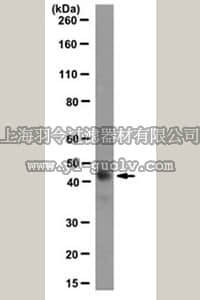 merck millipore,默克密理博,MABE132,Anti-MyoD Antibody, clone 5F11
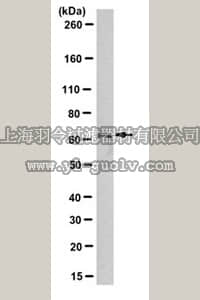 merck millipore,默克密理博,MABC282,Anti-BAG3 Antibody, clone AC-1
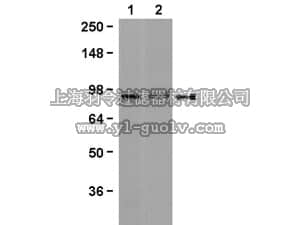 merck millipore,默克密理博,04-958,Anti-Beta Catenin Antibody, clone 7F7.2
%5BABT184_IHC(P)-ALL%5D.jpg "merck millipore,默克密理博,ABT184,Anti-SPTBN1 Antibody") merck millipore,默克密理博,ABT184,Anti-SPTBN1 Antibody
merck millipore,默克密理博,ABT184,Anti-SPTBN1 Antibody
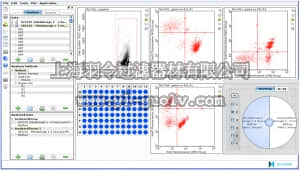 merck millipore,默克密理博,0500-5125,Guava Express Pro Software Module for guava easyCyte Systems