


- 当前位置:首页 > >Merck Millipore > 生命科学研究
- 生命科学研究
- 产品介绍
重要规格表
品种反应性 主要应用 宿主 格式 抗体类型 Ch, H, M, R, B, Ca, Xn WB, ICC Rb Affinity Purified Polyclonal Antibody 描述 产品目录编号 ABE40 描述 Anti-PABPC1/C3 Antibody Alternate Names - Poly(A)-binding protein 1
- Polyadenylate-binding protein 1
- PABP-1
背景信息 Poly(A)-binding proteins, cytoplasmic 1 (PABPC1), and cytoplasmic 3 (PABPC3) are RNA-binding proteins with important roles in post-translational control and metabolism of mRNA. Although both proteins bind to the poly(A) tail of mRNA, PABPC3 binds with a lower affinity than PABPC1. Studies have associated these proteins with tumorigenesis. Decreased expression of PABPC1 in esophageal cancer seems to associate with tumor development and poor prognosis after surgery. PABPC1 can shuttle through the nuclear membrane and is thought to associate with newly synthesized poly(A) transcripts. PABPC1 has also been linked to microRNA mediated silencing when in contact with GW182. PABPC3 is thought to be specific to human testis and controls RNA stability. 产品信息 格式 Affinity Purified 控制 - HeLa cell lysate
演示 Purified rabbit polyclonal in buffer containing 0.1 M Tris-Glycine (pH 7.4), 150 mM NaCl with 0.05% sodium azide. 应用 应用 Use Anti-PABPC1/C3 (Rabbit Polyclonal Antibody) validated in ICC, WB to detect PABPC1/C3 also known as Polyadenylate-binding protein 1, PABP-1. 主要应用 - Western Blotting
- Immunocytochemistry
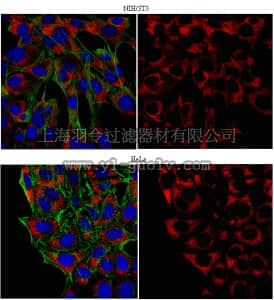
应用说明 Immunocytochemistry Analysis: 1:500 dilution from a representative lot detected PABPC1/C3 in NIH/3T3 and HeLa cells. 生物信息 免疫原品种 KLH-conjugated linear peptide corresponding to human PABPC1/C3. The immunogen sequence used is 100% identical to both PABPC1 and PABPC3. 浓缩 Please refer to the Certificate of Analysis for the lot-specific concentration. 宿主 Rabbit 品种反应性 ChickenHumanMouseRatBovineCanineXenopus Species Reactivity Note Demonstrated to react with Human and Mouse. Predicted to react with Rat, Bovine, Canine, Xenopus, and Chicken based on 100% sequence homology. 抗体类型 Polyclonal Antibody Entrez基因编号 - NP_002559
Entrez基因汇总 This gene encodes a poly(A) binding protein. The protein shuttles between the nucleus and cytoplasm and binds to the 3' poly(A) tail of eukaryotic messenger RNAs via RNA-recognition motifs. The binding of this protein to poly(A) promotes ribosome recruitment and translation initiation; it is also required for poly(A) shortening which is the first step in mRNA decay. The gene is part of a small gene family including three protein-coding genes and several pseudogenes. 基因符号 - PABPC2
- PABPC1
- PAB1
- PABP1
纯化方法 Affinity purified UniProt编号 - P11940
UniProt汇总 FUNCTION: Binds the poly(A) tail of mRNA. May be involved in cytoplasmic regulatory processes of mRNA metabolism such as pre-mRNA splicing. Its function in translational initiation regulation can either be enhanced by PAIP1 or repressed by PAIP2. Can probably bind to cytoplasmic RNA sequences other than poly(A) in vivo. May be involved in translationally coupled mRNA turnover. Implicated with other RNA-binding proteins in the cytoplasmic deadenylation/translational and decay interplay of the FOS mRNA mediated by the major coding-region determinant of instability (mCRD) domain.
SUBUNIT STRUCTURE: Component of a multi subunit autoregulatory ribonucleoprotein complex (ARC), at least composed of IGF2BP1, PABPC1 and CSDE1. Interacts with IGF2BP1. Part of a complex associated with the FOS mCRD domain and consisting of HNRPD, SYNCRIP, PAIP1 and CSDE1/UNR. Interacts with the PABPC1-interacting motif-1 (PAM1) and -2 (PAM2) of PAIP1 and PAIP2. Interacts with PAIP1 with a 1:1 stoichiometry and with PAIP2 with a 1:2 stoichiometry. The interaction with CSDE1 is direct and RNA-independent. Found in a mRNP complex with YBX2. Interacts with PAPD4/GLD2. Identified in the spliceosome C complex, at least composed of AQR, ASCC3L1, C19orf29, CDC40, CDC5L, CRNKL1, DDX23, DDX41, DDX48, DDX5, DGCR14, DHX35, DHX38, DHX8, EFTUD2, FRG1, GPATC1, HNRPA1, HNRPA2B1, HNRPA3, HNRPC, HNRPF, HNRPH1, HNRPK, HNRPM, HNRPR, HNRPU, KIAA1160, KIAA1604, LSM2, LSM3, MAGOH, MORG1, PABPC1, PLRG1, PNN, PPIE, PPIL1, PPIL3, PPWD1, PRPF19, PRPF4B, PRPF6, PRPF8, RALY, RBM22, RBM8A, RBMX, SART1, SF3A1, SF3A2, SF3A3, SF3B1, SF3B2, SF3B3, SFRS1, SKIV2L2, SNRPA1, SNRPB, SNRPB2, SNRPD1, SNRPD2, SNRPD3, SNRPE, SNRPF, SNRPG, SNW1, SRRM1, SRRM2, SYF2, SYNCRIP, TFIP11, THOC4, U2AF1, WDR57, XAB2 and ZCCHC8. Identified in a mRNP complex, at least composed of DHX9, DDX3X, ELAVL1, HNRNPU, IGF2BP1, ILF3, PABPC1, PCBP2, PTBP2, STAU1, STAU2, SYNCRIP and YBX1. Identified in a mRNP granule complex, at least composed of ACTB, ACTN4, DHX9, ERG, HNRNPA1, HNRNPA2B1, HNRNPAB, HNRNPD, HNRNPL, HNRNPR, HNRNPU, HSPA1, HSPA8, IGF2BP1, ILF2, ILF3, NCBP1, NCL, PABPC1, PABPC4, PABPN1, RPLP0, RPS3, RPS3A, RPS4X, RPS8, RPS9, SYNCRIP, TROVE2, YBX1 and untranslated mRNAs. Interacts with IGF2BP1 and NFX1. Interacts with PIWIL1 (By similarity).
SUBCELLULAR LOCATION: Cytoplasm. Nucleus. Note: Localized in cytoplasmic mRNP granules containing untranslated mRNAs. Shuttles between the cytoplasm and the nucleus.
TISSUE SPECIFICTY: Ubiquitous.
DOMAIN: The RNA-binding domains RRM1 and RRM2 and the C-terminus (last 138 amino acids) regions interact with the PABPC1-interacting motif-1 (PAM1) and -2 (PAM2) of PAIP1, respectively.
The RNA-binding domains RRM2 and RRM3 and the C-terminus (last 138 amino acids) regions interact with the PABPC1-interacting motif-1 (PAM1) and -2 (PAM2) of PAIP2, respectively.
PTM: Methylated by CARM1.
Arg-493 is dimethylated, probably to asymmetric dimethylarginine.
MISCELLANEOUS: Many viruses shutoff host mRNA translational machinery by inhibiting cellular PABPC1 activity using different mechanisms. Picornaviruses, caliciviruses or lentiviruses encode proteases that cleave PABPC1 at several defined sites in the proline-rich linker region between RRMs and the C-terminal domain. Rotaviruses, gammherpesviruses and bunyamwera virus relocalize PABPC1 from the cytoplasm to the nucleus thus altering its function. Many of these viruses translate their mRNA in a PABPC1-independent manner and are unaffected by host PABPC1 inhibition.
SEQUENCE SIMILARITIES: Belongs to the polyadenylate-binding protein type-1 family.
Contains 1 PABC domain.
Contains 4 RRM (RNA recognition motif) domains.
Caution Was termed (Ref.5) polyadenylate binding protein II.产品使用声明 质量保证 Evaluated by Western Blot in HeLa cell lysate.
Western Blot Analysis: 1 µg/mL of this antibody detected PABPC1/C3 on 10 µg of HeLa cell lysate.使用声明 - Unless otherwise stated in our catalog or other company documentation accompanying the product(s), our products are intended for research use only and are not to be used for any other purpose, which includes but is not limited to, unauthorized commercial uses, in vitro diagnostic uses, ex vivo or in vivo therapeutic uses or any type of consumption or application to humans or animals.
储存和货运信息 存储条件 Stable for 1 year at 2-8°C from date of receipt. 包装信息 数量 100 µg
上一件merck millipore产品:merck millipore,默克密理博,14-497,PKC η Protein, active, 10 µg
下一件merck millipore产品:merck millipore,默克密理博,654270,TNP-470 - CAS 129298-91-5 - Calbiochem
相关产品
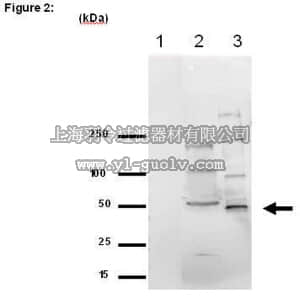 merck millipore,默克密理博,03-196,RIPAb+™ EED - RIP Validated Antibody and Primer Set
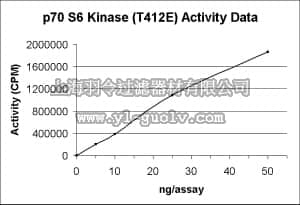 merck millipore,默克密理博,14-486,p70 S6 Kinase Protein, active, 10 µg
 merck millipore,默克密理博,AG817,HIV-1 gag, recombinant
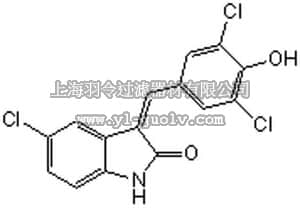 merck millipore,默克密理博,527455,PKR Inhibitor, Negative Control - CAS 852547-30-9 - Calbiochem
merck millipore,默克密理博,14-497,PKC η Protein, active, 10 µg
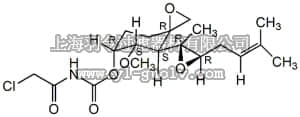 merck millipore,默克密理博,654270,TNP-470 - CAS 129298-91-5 - Calbiochem
 merck millipore,默克密理博,567715,N-SMase Inhibitor, GW4869 - CAS 6823-69-4 - Calbiochem
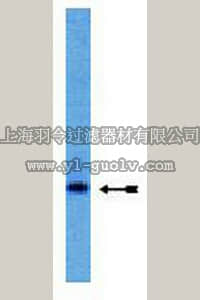 merck millipore,默克密理博,05-988,Anti-Pras40 Antibody, Clone 73P21
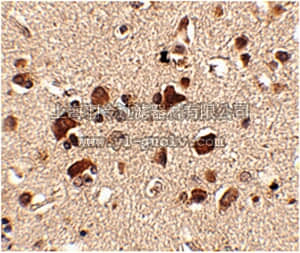 merck millipore,默克密理博,ABN350,Anti-Slitrk6 Antibody
 merck millipore,默克密理博,AP120A,Goat Anti-Human IgA Antibody, IgG, and IgM, Alkaline Phosphatase