


- 当前位置:首页 > >Merck Millipore > 生命科学研究
- 生命科学研究
-

-
merck millipore,默克密理博,ABE21,Anti-Smad4/DPC4 Antibody
产品名称:Anti-Smad4/DPC4 Antibody
产品型号:ABE21
Use Anti-Smad4/DPC4 Antibody (Rabbit Polyclonal Antibody) validated in WB, ICC to detect Smad4/DPC4 also known as Mothers against decapentaplegic homolog 4, SMAD 4, Smad4, hSMAD4.
merck millipore,默克密理博,ABE21,Anti-Smad4/DPC4 Antibody
- 产品介绍
重要规格表
品种反应性 主要应用 宿主 格式 抗体类型 Chp, H, M, R ICC, WB Rb Affinity Purified Polyclonal Antibody 描述 产品目录编号 ABE21 Replaces 04-1033 描述 Anti-Smad4/DPC4 Antibody Alternate Names - hSMAD4
- Mothers against decapentaplegic homolog 4
- MAD homolog 4
- Mothers against DPP homolog 4
- Deletion target in pancreatic carcinoma 4
- SMAD family member 4
- SMAD 4
- Smad4
背景信息 SMAD4 is a member of the Mothers Against Dpp (MAD)-related family of proteins. SMAD4 is functionally distinct among the SMAD family, and is required for the assembly and transcriptional activation of diverse, SMAD-DNA complexes. SMAD4 appears to be not regulated by phosphorylation, but acts as a common mediator of TGF-β, activin, and bone morphogenetic protein signaling responses. SMAD4 is frequently inactivated in pancreatic, biliary and colorectal tumors. 产品信息 格式 Affinity Purified 控制 - HepG2 cell lysate
演示 Purified rabbit polyclonal in buffer containing 0.1 M Tris-Glycine (pH 7.4), 150 mM NaCl with 0.05% sodium azide. 应用 应用 Use Anti-Smad4/DPC4 Antibody (Rabbit Polyclonal Antibody) validated in WB, ICC to detect Smad4/DPC4 also known as Mothers against decapentaplegic homolog 4, SMAD 4, Smad4, hSMAD4. 主要应用 - Immunocytochemistry
- Western Blotting
应用说明 Immunocytochemistry Analysis: 1:500 dilution from a representative lot detected Smad4 in NIH/3T3, HeLa, and A431 cells. 生物信息 免疫原品种 GST-tagged recombinant protein corresponding to human Smad4 at the SAD region. 表位 SAD region 浓缩 Please refer to the Certificate of Analysis for the lot-specific concentration. 宿主 Rabbit 特异性 This antibody recognizes Smad4 at the SAD region. 品种反应性 ChimpanzeeHumanMouseRat Species Reactivity Note Demonstrated to react with Human, Mouse, and Rat. Predicted to react with Chimpanzee based on 100% sequence homology. 抗体类型 Polyclonal Antibody Entrez基因编号 - NP_005350.1
Entrez基因汇总 This gene encodes a member of the Smad family of signal transduction proteins. Smad proteins are phosphorylated and activated by transmembrane serine-threonine receptor kinases in response to TGF-beta signaling. The product of this gene forms homomeric complexes and heteromeric complexes with other activated Smad proteins, which then accumulate in the nucleus and regulate the transcription of target genes. This protein binds to DNA and recognizes an 8-bp palindromic sequence (GTCTAGAC) called the Smad-binding element (SBE). The Smad proteins are subject to complex regulation by post-translational modifications. Mutations or deletions in this gene have been shown to result in pancreatic cancer, juvenile polyposis syndrome, and hereditary hemorrhagic telangiectasia syndrome. [provided by RefSeq]. 基因符号 - MADH4
- SMAD4
- DPC4
纯化方法 Affinity purified UniProt编号 - Q13485
UniProt汇总 FUNCTION: Common mediator of signal transduction by TGF-beta (transforming growth factor) superfamily; SMAD4 is the common SMAD (co-SMAD). Promotes binding of the SMAD2/SMAD4/FAST-1 complex to DNA and provides an activation function required for SMAD1 or SMAD2 to stimulate transcription. May act as a tumor suppressor.
SUBUNIT STRUCTURE: May form trimers with receptor-regulated SMAD (R-SMAD). Found in a ternary complex composed of SMAD4, STK11 and STK11IP. Interacts with ATF2, COPS5, DACH1, MSG1, SKI, STK11, STK11IP and TRIM33. Associates with ZNF423 or ZNF521 in response to BMP2 leading to activate transcription of BMP target genes. Interacts with USP9X.
SUBCELLULAR LOCATION: Cytoplasm. Nucleus. Note: Cytoplasmic in the absence of ligand. Migrates to the nucleus when complexed with R-SMAD.
PTM: Monoubiquitinated on Lys-519 by E3 ubiquitin-protein ligase TRIM33. Monoubiquitination hampers its ability to form a stable complex with activated SMAD2/3 resulting in inhibition of TGF-beta/BMP signaling cascade.
INVOLVEMENT IN DISEASE: Defects in SMAD4 are a cause of pancreatic carcinoma [MIM:260350].
Defects in SMAD4 are a cause of juvenile polyposis syndrome (JPS) [MIM:174900]; also known as juvenile intestinal polyposis (JIP). JPS is an autosomal dominant gastrointestinal hamartomatous polyposis syndrome in which patients are at risk for developing gastrointestinal cancers. The lesions are typified by a smooth histological appearance, predominant stroma, cystic spaces and lack of a smooth muscle core. Multiple juvenile polyps usually occur in a number of Mendelian disorders. Sometimes, these polyps occur without associated features as in JPS; here, polyps tend to occur in the large bowel and are associated with an increased risk of colon and other gastrointestinal cancers.
Defects in SMAD4 are a cause of juvenile polyposis/hereditary hemorrhagic telangiectasia syndrome (JP/HHT) [MIM:175050]. JP/HHT syndrome phenotype consists of the coexistence of juvenile polyposis (JIP) and hereditary hemorrhagic telangiectasia (HHT) [MIM:187300] in a single individual. JIP and HHT are autosomal dominant disorders with distinct and non-overlapping clinical features. The former, an inherited gastrointestinal malignancy predisposition, is caused by mutations in SMAD4 or BMPR1A, and the latter is a vascular malformation disorder caused by mutations in ENG or ACVRL1. All four genes encode proteins involved in the transforming-growth-factor-signaling pathway. Although there are reports of patients and families with phenotypes of both disorders combined, the genetic aetiology of this association is unknown.
Defects in SMAD4 may be a cause of colorectal cancer (CRC) [MIM:114500].
SEQUENCE SIMILARITIES: Belongs to the dwarfin/SMAD family.
Contains 1 MH1 (MAD homology 1) domain.
Contains 1 MH2 (MAD homology 2) domain.产品使用声明 质量保证 Evaluated by Western Blot in HepG2 cell lysate.
Western Blot Analysis: 0.1 µg/mL of this antibody detected Smad4 on 10 µg of HepG2 cell lysate.使用声明 - Unless otherwise stated in our catalog or other company documentation accompanying the product(s), our products are intended for research use only and are not to be used for any other purpose, which includes but is not limited to, unauthorized commercial uses, in vitro diagnostic uses, ex vivo or in vivo therapeutic uses or any type of consumption or application to humans or animals.
储存和货运信息 存储条件 Stable for 1 year at 2-8°C from date of receipt. 包装信息 数量 100 µg
上一件merck millipore产品:merck millipore,默克密理博,14-249,p38δ/SAPK4 Protein, active, 10 µg
下一件merck millipore产品:merck millipore,默克密理博,05-1246,Anti-O-GlcNAc Antibody, clone 1F5.D6(14)
相关产品
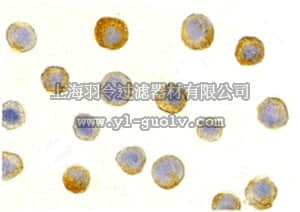 merck millipore,默克密理博,ABT333,Anti-IL-1RAcP Antibody
 merck millipore,默克密理博,DDAC00010-4P,Direct Detect Assay-free Cards - 200 Cards
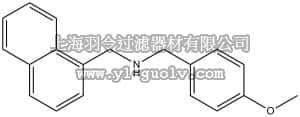 merck millipore,默克密理博,422689,Kir2.1 Inhibitor, ML133 - CAS 185669-79-8 - Calbiochem
 merck millipore,默克密理博,MCH100109,Muse MultiCaspase Assay Kit
 merck millipore,默克密理博,14-249,p38δ/SAPK4 Protein, active, 10 µg
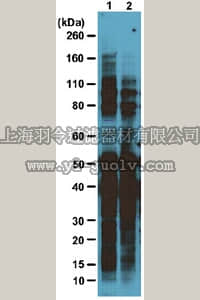 merck millipore,默克密理博,05-1246,Anti-O-GlcNAc Antibody, clone 1F5.D6(14)
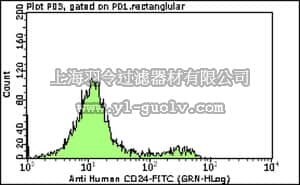 merck millipore,默克密理博,FCMAB188F,Milli-Mark™ Anti-CD24-FITC Antibody, clone SN3
merck millipore,默克密理博,14-720,FAK Protein, active, 10 µg
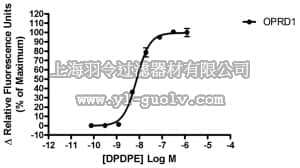 merck millipore,默克密理博,HTS100RTA,Ready-to-Assay™ delta Opioid Receptor Frozen Cells
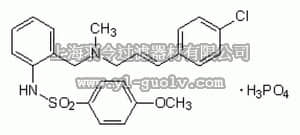 merck millipore,默克密理博,422709,KN-92 - CAS 1135280-28-2 - Calbiochem