


- 当前位置:首页 > >Merck Millipore > 生命科学研究
- 生命科学研究
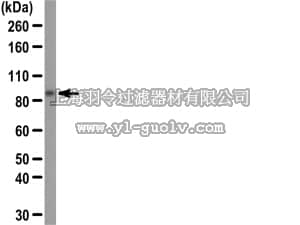
- 产品介绍
重要规格表
品种反应性 主要应用 宿主 格式 抗体类型 R, H, M, Xn, Ch WB Rb Affinity Purified Polyclonal Antibody 描述 产品目录编号 07-1653 Replaces 04-1002 描述 Anti-Beta Catenin Antibody 背景信息 Catenins are proteins found in complexes with cadherin cell adhesion molecules of animal cells. The first two catenins that were identified became known as α-catenin and β-catenin. α-catenin can bind to β-catenin and can also bind actin. β-catenin binds the cytoplasmic domain of some cadherins. When β-catenin was sequenced it was found to be a member of the armadillo family of proteins. These proteins have multiple copies of the so-called armadillo repeat domain which is specialized for protein-protein binding. An increase in β-catenin production has been noted in those people who have Basal Cell Carcinoma and leads to the increase in proliferation of related tumors. When β-catenin is not associated with cadherins and α-catenin, it can interact with other proteins such as Catenin Beta Interacting Protein 1 (ICAT) and adenomatosis polyposis coli (APC). Recent evidence suggests that β-catenin plays an important role in various aspects of liver biology including liver development (both embryonic and postnatal), liver regeneration following partial hepatectomy, HGF-induced hepatpomegaly, liver zonation, and pathogenesis of liver cancer 产品信息 格式 Affinity Purified 控制 - HEK293 lysate
演示 Purified rabbit polyclonal in buffer containing 0.1 M Tris-Glycine, (pH7.4), 150 mM NaCl, with 0.05% sodium azide. 应用 应用 Anti-Beta Catenin Antibody is an antibody against Beta Catenin for use in WB. 主要应用 - Western Blotting
生物信息 免疫原品种 KLH-conjugated synthetic linear peptide corresponding to beta catenin. 浓缩 Please refer to the Certificate of Analysis for the lot-specific concentration. 宿主 Rabbit 特异性 This antibody detects beta catenin regardless of phosphorylation state. 品种反应性 RatHumanMouseXenopusChicken Species Reactivity Note Tested on human. Predicted to cross-react with mouse, rat, xenopus and chicken based on sequence homology. 抗体类型 Polyclonal Antibody Entrez基因编号 - NP_001091679
Entrez基因汇总 Beta-catenin is an adherens junction protein. Adherens junctions (AJs; also called the zonula adherens) are critical for the establishment and maintenance of epithelial layers, such as those lining organ surfaces. AJs mediate adhesion between cells, communicate a signal that neighboring cells are present, and anchor the actin cytoskeleton. In serving these roles, AJs regulate normal cell growth and behavior. At several stages of embryogenesis, wound healing, and tumor cell metastasis, cells form and leave epithelia. This process, which involves the disruption and reestablishment of epithelial cell-cell contacts, may be regulated by the disassembly and assembly of AJs. AJs may also function in the transmission of the 'contact inhibition' signal, which instructs cells to stop dividing once an epithelial sheet is complete.[supplied by OMIM] 基因符号 - CTNNB
纯化方法 Affinity Purfied UniProt编号 - P35222
UniProt汇总 FUNCTION: Involved in the regulation of cell adhesion and in signal transduction through the Wnt pathway.
SUBUNIT STRUCTURE: Two separate pools are found in the cytoplasm: one is PSEN1/cadherin/catenin complex which anchors to the actin cytoskeleton. The other pool is part of a large complex containing AXIN1, AXIN2, APC, CSNK1A1 and GSK3B that promotes phosphorylation on N-terminal Ser and Thr residues and ubiquitination of CTNNB1 via BTRC and its subsequent degradation by the proteasome. Wnt-dependent activation of DVL antagonizes the action of GSK3B. When GSK3B activity is inhibited the complex dissociates, CTNNB1 is dephosphorylated and is no longer targeted for destruction. The stabilized protein translocates to the nucleus, where it binds TCF/LEF-1 family members, TBP, BCL9 and possibly also RUVBL1 and CHD8. Binds CTNNBIP and EP300. CTNNB1 forms a ternary complex with LEF1 and EP300 that is disrupted by CTNNBIP1 binding By similarity. Interacts with TAX1BP3 (via the PDZ domain); this interaction inhibits the transcriptional activity of CTNNB1 By similarity. Interacts with AJAP1, BAIAP1, CARM1, CTNNA3, CXADR and PCDH11Y. Binds SLC9A3R1. Interacts with GLIS2 and MUC1. Interacts with SLC30A9. Interacts with XIRP1 By similarity. Interacts with PTPRU (via the cytoplasmic juxtamembrane domain).
SUBCELLULAR LOCATION: Cytoplasm. Nucleus. Cytoplasm › cytoskeleton. Note= Cytoplasmic when it is unstabilized (high level of phosphorylation) or bound to CDH1. Translocates to the nucleus when it is stabilized (low level of phosphorylation). Interaction with GLIS2 and MUC1 promotes nuclear translocation.
TISSUE SPECIFICTY: Expressed in several hair follicle cell types: basal and peripheral matrix cells, and cells of the outer and inner root sheats. Expressed in colon.
PTM: Phosphorylation by GSK3B requires prior phosphorylation of Ser-45 by another kinase. Phosphorylation proceeds then from Thr-41 to Ser-37 and Ser-33.
EGF stimulates tyrosine phosphorylation. Phosphorylation on Tyr-654 decreases CDH1 binding and enhances TBP binding.
Ubiquitinated by a E3 ubiquitin ligase complex containing UBE2D1, SIAH1, CACYBP/SIP, SKP1A, APC and TBL1X Probable. Its ubiquitination leads to its subsequent proteasomal degradation.
INVOLVEMENT IN DISEASE: Activating mutations in CTNNB1 have oncogenic activity resulting in tumor development. Somatic mutations are found in various tumor types, including colon cancers, ovarian and prostate carcinomas, hepatoblastoma (HB), hepatocellular carcinoma (HCC). HBs are malignant embryonal tumors mainly affecting young children in the first three years of life.
Defects in CTNNB1 are a cause of pilomatrixoma (PTR) [MIM:132600]; a common benign skin tumor.
Defects in CTNNB1 are a cause of medulloblastoma (MDB) [MIM:155255]. MDB is a malignant, invasive embryonal tumor of the cerebellum with a preferential manifestation in children.
A chromosomal rearrangement involving CTNNB1 may be a cause of salivary gland pleiomorphic adenomas (PA) [181030]. Pleiomorphic adenomas are the most common benign epithelial tumors of the salivary gland. Translocation t(3;8)(p21;q12) with PLAG1.
SEQUENCE SIMILARITIES: Belongs to the beta-catenin family.
Contains 12 ARM repeats.产品使用声明 质量保证 Evaluated by western blot on HEK293 cell lysate.
Western Blot Analysis: 0.5-2 μg/mL of this antibody was used to detect beta catenin in HEK293 cell lysate.
使用声明 - Unless otherwise stated in our catalog or other company documentation accompanying the product(s), our products are intended for research use only and are not to be used for any other purpose, which includes but is not limited to, unauthorized commercial uses, in vitro diagnostic uses, ex vivo or in vivo therapeutic uses or any type of consumption or application to humans or animals.
储存和货运信息 存储条件 Stable for 1 year at 2-8ºC from date of receipt. 包装信息 数量 100 µg
上一件merck millipore产品:merck millipore,默克密理博,AB5164-50UL,Anti-Muscarinic Acetylcholine Receptor m1 Antibody
下一件merck millipore产品:merck millipore,默克密理博,437632,Lipid A, Salmonella minnesota Re 595 - Calbiochem
相关产品
 merck millipore,默克密理博,553015,Raf Kinase Inhibitor V - CAS 918505-84-7 - Calbiochem
 merck millipore,默克密理博,SF-1734,FOXL2; Human, Cyanine 5 RNA Detection Probe,SmartFlare
 merck millipore,默克密理博,40-050,MAGPIX Performance Verification Kit, 25 uses

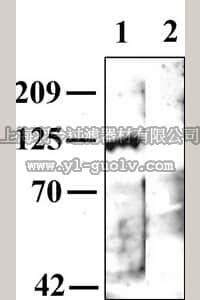 merck millipore,默克密理博,AB5164-50UL,Anti-Muscarinic Acetylcholine Receptor m1 Antibody
 merck millipore,默克密理博,437632,Lipid A, Salmonella minnesota Re 595 - Calbiochem
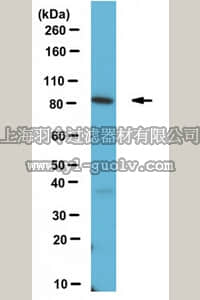 merck millipore,默克密理博,ABS314,Anti-APPL1 Antibody
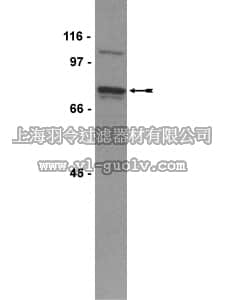 merck millipore,默克密理博,07-037,Anti-WAVE/Scar Antibody
 merck millipore,默克密理博,ST1627,Anti-RECK Rabbit pAb
 merck millipore,默克密理博,MAB16985F,Anti-MCAM Antibody, clone P1H12, FITC conjugated