


- 当前位置:首页 > >Merck Millipore > 生命科学研究
- 生命科学研究
-
-
merck millipore,默克密理博,05-1315,Anti-phospho (Ser10) acetyl (Lys14) Histone H3 Antibody, clone 10H10.2
产品名称:Anti-phospho (Ser10) acetyl (Lys14) Histone H3 Antibody, clone 10H10.2
产品型号:05-1315
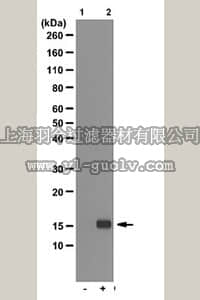
Use Anti-phospho (Ser10) acetyl (Lys14) Histone H3 Antibody, clone 10H10.2 (Mouse Monoclonal Antibody) validated in WB to detect phospho (Ser10) acetyl (Lys14) Histone H3 also known as H3S10PK14Ac.
merck millipore,默克密理博,05-1315,Anti-phospho (Ser10) acetyl (Lys14) Histone H3 Antibody, clone 10H10.2
- 产品介绍
- merck millipore,默克密理博,05-1315,Anti-phospho (Ser10) acetyl (Lys14) Histone H3 Antibody, clone 10H10.2
重要规格表
品种反应性 主要应用 宿主 格式 抗体类型 H WB M Purified Monoclonal Antibody 描述 产品目录编号 05-1315 描述 Anti-phospho (Ser10) acetyl (Lys14) Histone H3 Antibody, clone 10H10.2 Alternate Names - histone cluster 3, H3
- H3S10PK14Ac
- Histone H3 (phospho S10, acetyl K14)
- H3 histone family, member T
- histone 3, H3
背景信息 Histone H3 is one of the five main histone proteins involved in the structure of chromatin in eukaryotic cells. Featuring a main globular domain and a long N-terminal tail, H3 is involved with the structure of the nucleosomes of the 'beads on a string' structure. The N-terminal tail of histone H3 protrudes from the globular nucleosome core and can undergo several different types of epigenetic modifications that influence cellular processes. These modifications include the covalent attachment of methyl or acetyl groups to lysine and arginine amino acids and the phosphorylation of serine or threonine. The dual modification of histone H3 phosphorylated at serine 10 and acetylated at lysine 14 has been found at genomic sites with active transcription. 产品信息 格式 Purified 控制 - Colcemid treated and untreated HeLa acid extract
演示 Purified mouse monoclonal IgG1κ in buffer containing 0.1 M Tris-Glycine (pH 7.4, 150 mM NaCl) with 0.05% sodium azide. 应用 应用 Use Anti-phospho (Ser10) acetyl (Lys14) Histone H3 Antibody, clone 10H10.2 (Mouse Monoclonal Antibody) validated in WB to detect phospho (Ser10) acetyl (Lys14) Histone H3 also known as H3S10PK14Ac. 主要应用 - Western Blotting
应用说明 Peptide Block Analysis:
To demonstrate specificity, 0.5 µg/ml of this antibody was tested against blocking and control peptides incubated with 10 µg of Colcemid treated HeLa acid extract.
生物信息 免疫原品种 KLH-conjugated linear peptide corresponding to Histone H3 phosphorylated at Ser10 and acetylated at Lys14. 表位 Ser10 and Lys14 克隆 10H10.2 浓缩 Please refer to the Certificate of Analysis for the lot-specific concentration. 宿主 Mouse 特异性 This antibody recognizes Histone H3 phosphorylated at Ser10 and acetylated at Lys14. 同种型 IgG1κ 品种反应性 Human Species Reactivity Note Demonstrated to react with human. Broad species cross-reactivity expected. 抗体类型 Monoclonal Antibody Entrez基因编号 - NP_002098.1
Entrez基因汇总 Histones are basic nuclear proteins that are responsible for the nucleosome structure of the chromosomal fiber in eukaryotes. Two molecules of each of the four core histones (H2A, H2B, H3, and H4) form an octamer, around which approximately 146 bp of DNA is wrapped in repeating units, called nucleosomes. The linker histone, H1, interacts with linker DNA between cleosomes and functions in the compaction of chromatin into higher order structures. This gene contains introns and its mRNA is polyadenylated, unlike most histone genes. The protein encoded is a
replication-independent member of the histone H3 family. [provided by RefSeq].基因符号 - H3/t
- HIST3H3
- H3FT
- H3t
- H3T
- H3/g
- H3.4
修改 - Acetylation
- Phosphorylation
纯化方法 Protein G purfied UniProt编号 - P84243
UniProt汇总 FUNCTION: Variant histone H3 which replaces conventional H3 in a wide range of nucleosomes in active genes. Constitutes the predominant form of histone H3 in non-dividing cells and is incorporated into chromatin independently of DNA synthesis. Deposited at sites of nucleosomal displacement throughout transcribed genes, suggesting that it represents an epigenetic imprint of transcriptionally active chromatin. Nucleosomes wrap and compact DNA into chromatin, limiting DNA accessibility to the cellular machineries which require DNA as a template. Histones thereby play a central role in transcription regulation, DNA repair, DNA replication and chromosomal stability. DNA accessibility is regulated via a complex set of post-translational modifications of histones, also called histone code, and nucleosome remodeling.
SUBUNIT STRUCTURE: The nucleosome is a histone octamer containing two molecules each of H2A, H2B, H3 and H4 assembled in one H3-H4 heterotetramer and two H2A-H2B heterodimers. The octamer wraps approximately 147 bp of DNA. Interacts with HIRA, a chaperone required for its incorporation into nucleosomes.
SUBCELLULAR LOCATION: Nucleus.
DEVELOPMENTAL STAGE: Expressed throughout the cell cycle independently of DNA synthesis.
PTM: Acetylation is generally linked to gene activation. Acetylation on Lys-10 (H3K9ac) impairs methylation at Arg-9 (H3R8sme2). Acetylation on Lys-19 (H3K18ac) and Lys-24 (H3K24ac) favors methylation at Arg-18 (H3R17me).
Citrullination at Arg-9 (H3R8ci) and/or Arg-18 (H3R17ci) by PADI4 impairs methylation and represses transcription.
Asymmetric dimethylation at Arg-18 (H3R17me2a) by CARM1 is linked to gene activation. Symmetric dimethylation at Arg-9 (H3R8sme2) by PRMT5 is linked to gene repression. Asymmetric dimethylation at Arg-3 (H3R2me2a) by PRMT6 is linked to gene repression and is mutually exclusive with H3 Lys-5 methylation (H3K4me2 and H3K4me3). H3R2me2a is present at the 3' of genes regardless of their transcription state and is enriched on inactive promoters, while it is absent on active promoters.
Specifically enriched in modifications associated with active chromatin such as methylation at Lys-5 (H3K4me), Lys-37 and Lys-80. Methylation at Lys-5 (H3K4me) facilitates subsequent acetylation of H3 and H4. Methylation at Lys-80 (H3K79me) is associated with DNA double-strand break (DSB) responses and is a specific target for TP53BP1. Methylation at Lys-10 (H3K9me) and Lys-28 (H3K27me), which are linked to gene repression, are underrepresented. Methylation at Lys-10 (H3K9me) is a specific target for HP1 proteins (CBX1, CBX3 and CBX5) and prevents subsequent phosphorylation at Ser-11 (H3S10ph) and acetylation of H3 and H4. Methylation at Lys-5 (H3K4me) and Lys-80 (H3K79me) require preliminary monoubiquitination of H2B at 'Lys-120'. Methylation at Lys-10 (H3K9me) and Lys-28 (H3K27me) are enriched in inactive X chromosome chromatin.
Phosphorylated at Thr-4 (H3T3ph) by GSG2/haspin during prophase and dephosphorylated during anaphase. At centromeres, specifically phosphorylated at Thr-12 (H3T11ph) from prophase to early anaphase, probably DAPK3. Phosphorylation at Ser-11 (H3S10ph) by AURKB is crucial for chromosome condensation and cell-cycle progression during mitosis and meiosis. In addition phosphorylation at Ser-11 (H3S10ph) by RPS6KA4 and RPS6KA5 is important during interphase because it enables the transcription of genes following external stimulation, like mitogens, stress, growth factors or UV irradiation and result in the activation of genes, such as c-fos and c-jun. Phosphorylation at Ser-11 (H3S10ph), which is linked to gene activation, prevents methylation at Lys-10 (H3K9me) but facilitates acetylation of H3 and H4. Phosphorylation at Ser-11 (H3S10ph) by AURKB mediates the dissociation of HP1 proteins (CBX1, CBX3 and CBX5) from heterochromatin. Phosphorylation at Ser-11 (H3S10ph) is also an essential regulatory mechanism for neoplastic cell transformation. Phosphorylated at Ser-29 by MLTK isoform 1, RPS6KA5 or AURKB during mitosis or upon ultraviolet B irradiation. Phosphorylation on Ser-32 is specific to regions bordering centromeres in metaphase chromosomes.
Ubiquitinated By similarity.
SEQUENCE SIMILARITIES: Belongs to the histone H3 family.
SEQUENCE CAUTION: The sequence CAH73371.1 differs from that shown. Reason: Erroneous gene model prediction.产品使用声明 质量保证 Evaluated by Western Blot in Colcemid treated and untreated HeLa acid extract.
Western Blot Analysis: 0.001 µg/ml of this antibody detected Histone H3 on 10 µg of Colcemid treated and untreated HeLa acid extract.使用声明 - Unless otherwise stated in our catalog or other company documentation accompanying the product(s), our products are intended for research use only and are not to be used for any other purpose, which includes but is not limited to, unauthorized commercial uses, in vitro diagnostic uses, ex vivo or in vivo therapeutic uses or any type of consumption or application to humans or animals.
储存和货运信息 存储条件 Stable for 1 year at 2-8°C from date of receipt. 包装信息 数量 100 µg
上一件merck millipore产品:merck millipore,默克密理博,194933,AZOCOLL™ Substrate, >100 Mesh - CAS 53092-90-3 - Calbiochem
下一件merck millipore产品:merck millipore,默克密理博,MAB1620,Anti-Cytokeratin 5 Antibody, 6, clone D5/16B4
相关产品
 merck millipore,默克密理博,MAB3430-K,Anti-Desmin, clone DE-B-5 (1mg)
merck millipore,默克密理博,MAB5204,Anti-Agrin Antibody
merck millipore,默克密理博,S1-100ML,Human Serum, Normal
merck millipore,默克密理博,AB1597P,Anti-Vesicular Monoamine Transporter 1 Antibody
 merck millipore,默克密理博,194933,AZOCOLL™ Substrate, >100 Mesh - CAS 53092-90-3 - Calbiochem
 merck millipore,默克密理博,MAB1620,Anti-Cytokeratin 5 Antibody, 6, clone D5/16B4
 merck millipore,默克密理博,HTS184RTA,Ready-to-Assay™ CCK1 Cholesystokinin Receptor Frozen Cells
 merck millipore,默克密理博,6820,Xanthine - CAS 69-89-6 - Calbiochem
 merck millipore,默克密理博,ST1578,Anti-IMPDH2 Mouse mAb (1E12-B6)
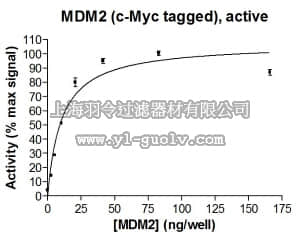 merck millipore,默克密理博,23-033,MDM2 (c-Myc tagged) Protein, active, 10 µg