


- 当前位置:首页 > >Merck Millipore > 生命科学研究
- 生命科学研究
-
-
merck millipore,默克密理博,04-1053,Anti-α-Synuclein (NT) Antibody, clone EP1646Y, rabbit monoclonal
产品名称:Anti-α-Synuclein (NT) Antibody, clone EP1646Y, rabbit monoclonal
产品型号:04-1053
Please note that this product will not be available for sale after March 15, 2015. Please select one of the other antibodies against this target. Detect α-Synuclein (N-term) using this Anti-α-Synucl More>>
merck millipore,默克密理博,04-1053,Anti-α-Synuclein (NT) Antibody, clone EP1646Y, rabbit monoclonal
- 产品介绍
重要规格表
品种反应性 主要应用 宿主 格式 抗体类型 R, H, M ICC, WB Rb Unpurified Monoclonal Antibody 描述 产品目录编号 04-1053 描述 Anti-α-Synuclein (NT) Antibody, clone EP1646Y, rabbit monoclonal Alternate Names - synuclein, alpha (non A4 component of amyloid precursor)
- Non-A beta component of AD amyloid
- Non-A4 component of amyloid precursor
- alpha-synuclein, isoform NACP140
- non A-beta component of AD amyloid
背景信息 α- and β-synuclein are related proteins that have been implicated in the development of Parkinson's disease and the related neurodegenerative condition known as dementia with Lewy bodies. The synucleins (there is a γ isoform as well) are small proteins, less than 140 amino acids, which may function in mictotubule assembly and organization. Synucleins with nitrated tyrosine residues are found in the hallmark lesions of Parkinson's and Lewy Body disease. It has been proposed that the formation of aggregates of nitrated proteins may be at least partly responsible for the cytoxicity of these neurodegenerative diseases. 产品信息 格式 Unpurified 控制 - Fetal brain lysate
演示 Rabbit Monoclonal in buffer containing 50 mM Tris-Glycine (pH 7.4), 0.15 M NaCl containing 40% Glycerol, 0.01% sodium azide and 0.05% BSA. 应用 应用 Please note that this product will not be available for sale after March 15, 2015. Please select one of the other antibodies against this target. Detect α-Synuclein (N-term) using this Anti-α-Synuclein (N-term) Antibody, clone EP1646Y, Rabbit validated for use in WB & IC. 主要应用 - Immunocytochemistry
- Western Blotting
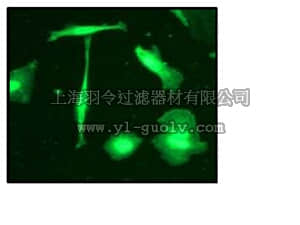
应用说明 Immunocytochemistry Analysis: A 1:50-100 dilution from a previous lot detected α-Synuclein in PC12 cells. 生物信息 免疫原品种 Synthetic peptide corresponding to residues on the N-terminus of human α-synuclein. 表位 N-terminus 克隆 EP1646Y 宿主 Rabbit 特异性 This antibody recognizes α-Synuclein at and around the N-terminus. 同种型 IgG 品种反应性 RatHumanMouse Species Reactivity Note Human, mouse, and rat. 抗体类型 Monoclonal Antibody Entrez基因编号 - NP_000336.1
Entrez基因汇总 Alpha-synuclein is a member of the synuclein family, which also includes beta- and gamma-synuclein. Synucleins are abundantly expressed in the brain and alpha- and beta-synuclein inhibit phospholipase D2 selectively. SNCA may serve to integrate presynaptic signaling and membrane trafficking. Defects in SNCA have been implicated in the pathogenesis of Parkinson disease. SNCA peptides are a major component of amyloid plaques in the brains of patients with Alzheimer's disease. Four alternatively spliced transcripts encoding two different isoforms have been identified for this gene. 基因符号 - alpha-synuclein
- MGC110988
- NACP
- OTTHUMP00000161559
- OTTHUMP00000161561
- PARK1
- PARK4
- PD1
纯化方法 Unpurified UniProt编号 - P37840
UniProt汇总 FUNCTION: May be involved in the regulation of dopamine release and transport. Soluble protein, normally localized primarily at the presynaptic region of axons, which can form filamentous aggregates that are the major non amyloid component of intracellular inclusions in several neurodegenerative diseases (synucleinopathies). Induces fibrillization of microtubule-associated protein tau. Reduces neuronal responsiveness to various apoptotic stimuli, leading to a decreased caspase-3 activation.
SUBUNIT STRUCTURE: Soluble monomer which can form filamentous aggregates. Interacts with UCHL1 By similarity. Interacts with phospholipase D and histones.
SUBCELLULAR LOCATION: Cytoplasm. Membrane. Nucleus. Note: Membrane-bound in dopaminergic neurons. Also found in the nucleus.
TISSUE SPECIFICITY: Expressed principally in brain but is also expressed in low concentrations in all tissues examined except in liver. Concentrated in presynaptic nerve terminals.
DOMAIN: The NAC domain is involved in the fibril formation. The middle region forms the core of the filaments. The C-terminus may regulate aggregation and determine the diameter of the filaments.
PTM: Phosphorylated, predominantly on serine residues. Phosphorylation by CK1 appears to occur on residues distinct from the residue phosphorylated by other kinases. Phosphorylation of Ser-129 is selective and extensive in synucleinopathy lesions. In vitro, phosphorylation at Ser-129 promoted insoluble fibril formation. Phosphorylated on Tyr-125 by a PTK2B-dependent pathway upon osmotic stress.
Hallmark lesions of neurodegenerative synucleinopathies contain alpha-synuclein that is modified by nitration of tyrosine residues and possibly by dityrosine cross-linking to generated stable oligomers.
Ubiquitinated. The predominant conjugate is the diubiquitinated form By similarity.
INVOLVEMENT IN DISEASE: Defects in SNCA are a cause of autosomal dominant Parkinson disease 1 (PARK1) [MIM:168601, 168600]. Parkinson disease (PD) is a complex, multifactorial disorder that typically manifests after the age of 50 years, although early-onset cases (before 50 years) are known. PD generally arises as a sporadic condition but is occasionally inherited as a simple mendelian trait. Although sporadic and familial PD are very similar, inherited forms of the disease usually begin at earlier ages and are associated with atypical clinical features. PD is characterized by bradykinesia, resting tremor, muscular rigidity and postural instability, as well as by a clinically significant response to treatment with levodopa. The pathology involves the loss of dopaminergic neurons in the substantia nigra and the presence of Lewy bodies (intraneuronal accumulations of aggregated proteins), in surviving neurons in various areas of the brain.
Defects in SNCA are the cause of Parkinson disease 4 (PARK4) [MIM:605543, 168600].
Defects in SNCA are the cause of Lewy body dementia (DLB) [MIM:127750]. DLB is a neurodegenerative disorder clinically characterized by dementia and parkinsonism, often with fluctuating cognitive function, visual hallucinations, falls, syncopal episodes, and sensitivity to neuroleptic medication. Presence of Lewy bodies are the only essential pathologic features.
Deposition of fibrillar amyloid proteins intraneuronally as neurofibrillary tangles is characteristic of Alzheimer disease (AD). SNCA is a minor protein found within these deposits, but a major non amyloid component.
Brain iron accumulation type 1 (NBIA1, also called Hallervorden-Spatz syndrome), a rare neuroaxonal dystrophy, is histologically characterized by axonal spheroids, iron deposition, Lewy body (LB)-like intraneuronal inclusions, glial inclusions and neurofibrillary tangles. SNCA is found in LB-like inclusions, glial inclusions and spheroids.
SEQUENCE SIMILARITIES: Belongs to the synuclein family.产品使用声明 质量保证 Evaluated by Western Blot on fetal brain cell lysates.
Western Blot Analysis: 1:50,000 dilution of this antibody was used to detect α-Synuclein in fetal brain cell lysate.使用声明 - Unless otherwise stated in our catalog or other company documentation accompanying the product(s), our products are intended for research use only and are not to be used for any other purpose, which includes but is not limited to, unauthorized commercial uses, in vitro diagnostic uses, ex vivo or in vivo therapeutic uses or any type of consumption or application to humans or animals.
储存和货运信息 存储条件 Stable for 1 year at -20ºC from date of receipt.
Handling Recommendations: Upon first thaw, and prior to removing the cap, centrifuge the vial and gently mix the solution. Aliquot into microcentrifuge tubes and store at -20°C. Avoid repeated freeze/thaw cycles, which may damage IgG and affect product performance. Note: Variability in freezer temperatures below -20°C may cause glycerol containing solutions to become frozen during storage.包装信息 数量 100 µL
上一件merck millipore产品:merck millipore,默克密理博,PC408,Anti-Green Fluorescent Protein (26-39) Rabbit pAb
下一件merck millipore产品:merck millipore,默克密理博,DR1045,Anti-GCLC Mouse mAb (3H1)
相关产品
 merck millipore,默克密理博,SF-1312,ABL2; Human, Cyanine 5 RNA Detection Probe,SmartFlare
 merck millipore,默克密理博,MAIPN0B50,MultiScreen-IP,0.45 µm,不透明,非无菌
 merck millipore,默克密理博,AP188P,Mouse Anti-Rabbit IgG Antibody, HRP conjugate, Species Adsorbed
merck millipore,默克密理博,MAB8705-K,Mouse Anti-Dengue Complex, clone D3-2H2-9-21 (1mg)
merck millipore,默克密理博,PC408,Anti-Green Fluorescent Protein (26-39) Rabbit pAb
 merck millipore,默克密理博,DR1045,Anti-GCLC Mouse mAb (3H1)
%5BABE558_IHC(P)-ALL%5D.jpg "merck millipore,默克密理博,ABE558,Anti-Ku70 Protein Antibody") merck millipore,默克密理博,ABE558,Anti-Ku70 Protein Antibody
merck millipore,默克密理博,ABE558,Anti-Ku70 Protein Antibody
 merck millipore,默克密理博,69830,Human Ig-Primer Set
merck millipore,默克密理博,SF-1282,KDR; Human, Cyanine 3 RNA Detection Probe,SmartFlare
 merck millipore,默克密理博,MAB10417,Anti-Tau Antibody, clone EP2456Y, rabbit monoclonal