


- 当前位置:首页 > >Merck Millipore > 生命科学研究
- 生命科学研究
-
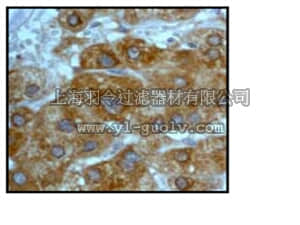
-
merck millipore,默克密理博,04-1006,Anti-HIF-1α Antibody, clone EP1215Y, rabbit monoclonal
产品名称:Anti-HIF-1α Antibody, clone EP1215Y, rabbit monoclonal
产品型号:04-1006
Please note that this product will not be available for sale after March 15, 2015. Please select one of the other antibodies against this target.
merck millipore,默克密理博,04-1006,Anti-HIF-1α Antibody, clone EP1215Y, rabbit monoclonal
- 产品介绍
重要规格表
品种反应性 主要应用 宿主 格式 抗体类型 R, H ICC, WB Rb Unpurified Monoclonal Antibody 描述 产品目录编号 04-1006 描述 Anti-HIF-1α Antibody, clone EP1215Y, rabbit monoclonal Alternate Names - member of PAS superfamily 1
- ARNT interacting protein
- ARNT-interacting protein
- Basic-helix-loop-helix-PAS protein MOP1
- HIF-1 alpha
- HIF1 alpha
- Member of PAS protein 1
- hypoxia inducible factor 1, alpha subunit (basic<br />helix-loop-helix transcription factor)
- hypoxia-inducible factor 1, alpha subunit
- hypoxia-inducible factor 1, alpha subunit (basic<br />helix-loop-helix transcription factor)
背景信息 Hypoxia, a condition of low tissue O2 concentration, plays an important role in normal physiological processes and tumor formation. Under hypoxic conditions mammalian cells up regulate the expression of hypoxic genes, including induction of angiogenesis and a switch to anaerobic metabolism, in order to survive. HIF-1 (Hypoxia Inducible Factor-1) is one of the key regulators of the transcriptional response to oxygen deprivation (1). HIF-1 is composed of two subunits, HIF-1αand HIF-1β also known as aryl hydrocarbon receptor nuclear translocator (ARNT)) that are members of the basic helix-loop-helix (bHLH) Per-Arnt-Sim (PAS) (bHLH-PAS) family of transcription factors. HIF-1 is essential for angiogenesis, embryonic development, and is associated with tumor progression, erythropoiesis, vascular development/remodeling, vasodilation, and glucose/energy metabolism. The over expression of HIF-1αhas been demonstrated in many common human cancers including prostate and breast, in which HIF-1α levels are associated with increase vascularitry and tumor progression. Besides physiological hypoxia, genetic abnormalities frequently detected in human cancers, such as loss of function mutations (Von Hippel-Lindau, p53, and PTEN), are associated with induction of HIF1 activity and expression of HIF-1-inducible genes (1). 产品信息 格式 Unpurified 控制 - Ramos + CoCl2 lysate
演示 Rabbit Monoclonal in buffer containing 50 mM Tris-Glycine (pH 7.4), 0.15 M NaCl containing 40% Glycerol, 0.01% sodium azide and 0.05% BSA. 应用 应用 Please note that this product will not be available for sale after March 15, 2015. Please select one of the other antibodies against this target. 主要应用 - Immunocytochemistry
- Western Blotting
应用说明 Immunohistochemistry Analysis: A 1:100-250 dilution from a previous lot detected HIF-1α in human liver carcinoma tissue.
Immunocytochemistry Analysis: A 1:100-250 dilution from a previous lot was used in IC.生物信息 免疫原品种 Synthetic peptide corresponding to residues near the C-terminus of human HIF-1α. 表位 C-terminus 克隆 EP1215Y 宿主 Rabbit 特异性 This antibody recognizes HIF-1α at and around the C-terminus. 同种型 IgG 品种反应性 RatHuman Species Reactivity Note Human and rat. 抗体类型 Monoclonal Antibody Entrez基因编号 - NM_001530.2
基因符号 - bHLHe78
- HIF-1alpha
- HIF1
- HIF1-ALPHA
- MOP1
- PASD8
纯化方法 Unpurified UniProt编号 - Q16665
UniProt汇总 FUNCTION: Functions as a master transcriptional regulator of the adaptive response to hypoxia. Under hypoxic conditions activates the transcription of over 40 genes, including, erythropoietin, glucose transporters, glycolytic enzymes, vascular endothelial growth factor, and other genes whose protein products increase oxygen delivery or facilitate metabolic adaptation to hypoxia. Plays an essential role in embryonic vascularization, tumor angiogenesis and pathophysiology of ischemic disease. Binds to core DNA sequence 5'-[AG]CGTG-3' within the hypoxia response element (HRE) of target gene promoters. Activation requires recruitment of transcriptional coactivators such as CREBPB and EP300. Activity is enhanced by interaction with both, NCOA1 or NCOA2. Interaction with redox regulatory protein APEX seems to activate CTAD and potentiates activation by NCOA1 and CREBBP.
SUBUNIT STRUCTURE: Interacts with the HIF1A beta/ARNT subunit; heterodimerization is required for DNA binding. Interacts with COPS5; the interaction increases the transcriptional activity of HIF1A through increased stability By similarity. Interacts with CREBBP and EP300 (via TAZ-type 1 domains). Interacts with NCOA1, NCOA2, APEX and HSP90. Interacts (hydroxylated within the ODD domain) with VHLL (via beta domain); the interaction, leads to polyubiquitination and subsequent HIF1A proteasomal degradation. During hypoxia, sumoylated HIF1A also binds VHL; the interaction promotes the ubiquitination of HIF1A. Interacts with SENP1; the interaction desumoylates HIF1A resulting in stabilization and activation of transcription. Interacts (Via the ODD domain) with ARD1A; the interaction appears not to acetylate HIF1A nor have any affect on protein stability, during hypoxia. Interacts with RWDD3; the interaction enhances HIF1A sumoylation. Interacts with TSGA10 By similarity.
SUBCELLULAR LOCATION: Cytoplasm. Nucleus. Note: Cytoplasmic in normoxia, nuclear translocation in response to hypoxia. Colocalizes with SUMO1 in the nucleus, under hypoxia.
TISSUE SPECIFICITY: Expressed in most tissues with highest levels in kidney and heart. Overexpressed in the majority of common human cancers and their metastases, due to the presence of intratumoral hypoxia and as a result of mutations in genes encoding oncoproteins and tumor suppressors.
INDUCTION: Under reduced oxygen tension. Induced also by various receptor-mediated factors such as growth factors, cytokines, and circulatory factors such as PDGF, EGF FGF-2 FGF-2 IGF-2, TGF-1 beta, HGF, TNF alpha, IL-1 beta, angiotensin-2 and thrombin. However, this induction is less intense than that stimulated by hypoxia.
DOMAIN: Contains two independent C-terminal transactivation domains, NTAD and CTAD, which function synergistically. Their transcriptional activity is repressed by an intervening inhibitory domain (ID).
PTM: In normoxia, is hydroxylated on Pro-402 and Pro-564 in the oxygen-dependent degradation domain (ODD) by EGLN1/PHD1 and EGLN2/PHD2. EGLN3/PHD3 has also been shown to hydroxylate Pro-564. The hydroxylated prolines promote interaction with VHL, initiating rapid ubiquitination and subsequent proteasomal degradation. Under hypoxia, proline hydroxylation is impaired and ubiquitination is attenuated, resulting in stabilization.
In normoxia, is hydroxylated on Asn-803 by HIF1AN, thus abrogating interaction with CREBBP and EP300 and preventing transcriptional activation. This hydroxylation is inhibited by the Cu/Zn-chelator, Clioquinol.
S-nitrosylation of Cys-800 may be responsible for increased recruitment of p300 coactivator necessary for transcriptional activity of HIF-1 complex.
Requires phosphorylation for DNA-binding.
Sumoylated; by SUMO1 under hypoxia. Sumoylation is enhanced through interaction with RWDD3. Desumoylation by SENP1 leads to increased HIF1A stability and transriptional activity By similarity.
Ubiquitinated; in normoxia, following hydroxylation and interaction with VHL. Lys-532 appears to be the principal site of ubiquitination. Clioquinol, the Cu/Zn-chelator, inhibits ubiquitination through preventing hydroxylation at Asn-803.
The iron and 2-oxoglutarate dependent 3-hydroxylation of asparagine is (S) stereospecific within HIF CTAD domains.
SEQUENCE SIMILARITIES: Contains 1 basic helix-loop-helix (bHLH) domain.
Contains 1 PAC (PAS-associated C-terminal) domain.
Contains 2 PAS (PER-ARNT-SIM) domains.产品使用声明 质量保证 Evaluated by Western Blot on Ramos + CoCl2 lysates.
Western Blot Analysis: A 1:2,000 dilution of this antibody was used to detect HIF-1α in Ramos + CoCl2 lysate.使用声明 - Unless otherwise stated in our catalog or other company documentation accompanying the product(s), our products are intended for research use only and are not to be used for any other purpose, which includes but is not limited to, unauthorized commercial uses, in vitro diagnostic uses, ex vivo or in vivo therapeutic uses or any type of consumption or application to humans or animals.
储存和货运信息 存储条件 Stable for 1 year at -20ºC from date of receipt. Handling Recommendations: Upon first thaw, and prior to removing the cap, centrifuge the vial and gently mix the solution. Aliquot into microcentrifuge tubes and store at -20°C. Avoid repeated freeze/thaw cycles, which may damage IgG and affect product performance. Note: Variability in freezer temperatures below -20°C may cause glycerol containing solutions to become frozen during storage. 包装信息 数量 100 µL
上一件merck millipore产品:merck millipore,默克密理博,AB1598P,Anti-Vesicular Monoamine Transporter 2 Antibody
下一件merck millipore产品:merck millipore,默克密理博,MAB8256,Anti-Influenza A Antibody, H1N1 Antigen, clone 9B3.2
 merck millipore,默克密理博,AB1870,Anti-Osteopontin Antibody
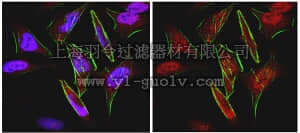 merck millipore,默克密理博,ABD71,Anti-FOXC1 Antibody
 merck millipore,默克密理博,MAB1330,Anti-Collagen Type II Antibody, clone COLL-II
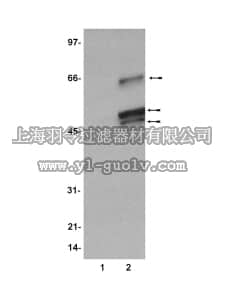 merck millipore,默克密理博,07-209,Anti-phospho-SHC (Tyr239) Antibody
merck millipore,默克密理博,AB1598P,Anti-Vesicular Monoamine Transporter 2 Antibody
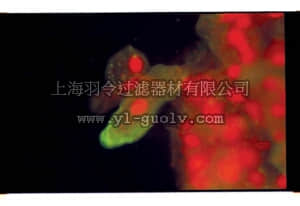 merck millipore,默克密理博,MAB8256,Anti-Influenza A Antibody, H1N1 Antigen, clone 9B3.2
merck millipore,默克密理博,MAB1243,Anti-Cortisol Antibody, 3-CMO, clone F4P1A3
merck millipore,默克密理博,AP506P,Goat Anti-Human Ig λ chain Antibody, HRP conjugate
 merck millipore,默克密理博,MAB10754,Anti-Caspase-8 (active form p18 subunit) Antibody, clone 2B12.1
 merck millipore,默克密理博,MAB5266,Anti-Neurofilament 200 kDa Antibody, clone N52