- 当前位置:首页 > >Merck Millipore > 生命科学研究
- 生命科学研究
-
-
merck millipore,默克密理博,MABE284,Anti-MSH2 Antibody, clone FE11
产品名称:Anti-MSH2 Antibody, clone FE11
产品型号:MABE284
Anti-MSH2 Antibody, clone FE11 is a Mouse Monoclonal Antibody for detection of MSH2 also known as DNA mismatch repair protein Msh2, hMSH2, MutS protein homolog 2 & has been validated in WB & IHC.
merck millipore,默克密理博,MABE284,Anti-MSH2 Antibody, clone FE11
- 产品介绍
重要规格表
品种反应性 主要应用 宿主 格式 抗体类型 H IHC, WB M Purified Monoclonal Antibody 描述 产品目录编号 MABE284 描述 Anti-MSH2 Antibody, clone FE11 Alternate Names - MutS protein homolog 2
- DNA mismatch repair protein Msh2
- hMSH2
背景信息 MSH2 is a ubiquitously expressed nuclear protein that is involved in DNA repair processes. MSH2 is active as a heterodimer of MutS alpha and beta subunits that bind DNA at mismatched strands. The MutS alpha subunit binds to single base mismatches and dinucleotide insertion-deletion loops, whereas MutS beta detects longer insertion-deletion loops. Bound MutS subunits then form complexes with MutL alpha dimers, to coordinate downstream DNA-mismatch–repair processes. Abnormal expression of MSH2 has been linked to hereditary non-polyposis colorectal cancer type 1 and Muir-Torre syndrome. 产品信息 格式 Purified 控制 - SW-480 cell lysate
演示 Purified mouse monoclonal IgG1κ in buffer containing 0.1 M Tris-Glycine (pH 7.4), 150 mM NaCl with 0.05% sodium azide. 应用 应用 Anti-MSH2 Antibody, clone FE11 is a Mouse Monoclonal Antibody for detection of MSH2 also known as DNA mismatch repair protein Msh2, hMSH2, MutS protein homolog 2 & has been validated in WB & IHC. 主要应用 - Immunohistochemistry
- Western Blotting
应用说明 Immunohistochemistry Analysis: A representative lot from an independent laboratory detected SW-480 in human normal colonic tissue and in human adenocarcinoma tissue (Thibodeau, S. N., et al. (1996). 56(21):4836-4840.). 生物信息 免疫原品种 Recombinant protein corresponding to the C-terminus of human MSH2. 表位 C-terminus 克隆 FE11 浓缩 Please refer to the Certificate of Analysis for the lot-specific concentration. 宿主 Mouse 特异性 This antibody recognizes the C-terminus of MSH2. 同种型 IgG1κ 品种反应性 Human Species Reactivity Note Demonstrated to react with Human. 抗体类型 Monoclonal Antibody Entrez基因编号 - NP_000242
Entrez基因汇总 MSH2 was identified as a locus frequently mutated in hereditary nonpolyposis colon cancer (HNPCC). When cloned, it was discovered to be a human homolog of the E. coli mismatch repair gene mutS, consistent with the characteristic alterations in microsatellite sequences (RER+ phenotype) found in HNPCC. 基因符号 - MSH2
纯化方法 Protein G purified UniProt编号 - P43246
UniProt汇总 FUNCTION: Component of the post-replicative DNA mismatch repair system (MMR). Forms two different heterodimers: MutS alpha (MSH2-MSH6 heterodimer) and MutS beta (MSH2-MSH3 heterodimer) which binds to DNA mismatches thereby initiating DNA repair. When bound, heterodimers bend the DNA helix and shields approximately 20 base pairs. MutS alpha recognizes single base mismatches and dinucleotide insertion-deletion loops (IDL) in the DNA. MutS beta recognizes larger insertion-deletion loops up to 13 nucleotides long. After mismatch binding, MutS alpha or beta forms a ternary complex with the MutL alpha heterodimer, which is thought to be responsible for directing the downstream MMR events, including strand discrimination, excision, and resynthesis. ATP binding and hydrolysis play a pivotal role in mismatch repair functions. The ATPase activity associated with MutS alpha regulates binding similar to a molecular switch: mismatched DNA provokes ADP-->ATP exchange, resulting in a discernible conformational transition that converts MutS alpha into a sliding clamp capable of hydrolysis-independent diffusion along the DNA backbone. This transition is crucial for mismatch repair. MutS alpha may also play a role in DNA homologous recombination repair. In melanocytes may modulate both UV-B-induced cell cycle regulation and apoptosis.
SUBUNIT STRUCTURE: Heterodimer consisting of MSH2-MSH6 (MutS alpha) or MSH2-MSH3 (MutS beta). Both heterodimer form a ternary complex with MutL alpha (MLH1-PMS1). Interacts with EXO1. Part of the BRCA1-associated genome surveillance complex (BASC), which contains BRCA1, MSH2, MSH6, MLH1, ATM, BLM, PMS2 and the RAD50-MRE11-NBS1 protein complex. This association could be a dynamic process changing throughout the cell cycle and within subnuclear domains. Interacts with ATR. Interacts with SLX4/BTBD12; this interaction is direct and links MutS beta to SLX4, a subunit of different structure-specific endonucleases. Interacts with SMARCAD1.
SUBCELLULAR LOCATION: Nucleus.
TISSUE SPECIFICITY: Phosphorylated by PRKCZ, which may prevent MutS alpha degradation by the ubiquitin-proteasome pathway. Phosphorylated upon DNA damage, probably by ATM or ATR.
INVOLVEMENT IN DISEASE: Defects in MSH2 are the cause of hereditary non-polyposis colorectal cancer type 1 (HNPCC1). Mutations in more than one gene locus can be involved alone or in combination in the production of the HNPCC phenotype (also called Lynch syndrome). Most families with clinically recognized HNPCC have mutations in either MLH1 or MSH2 genes. HNPCC is an autosomal, dominantly inherited disease associated with marked increase in cancer susceptibility. It is characterized by a familial predisposition to early onset colorectal carcinoma (CRC) and extra-colonic cancers of the gastrointestinal, urological and female reproductive tracts. HNPCC is reported to be the most common form of inherited colorectal cancer in the Western world. Cancers in HNPCC originate within benign neoplastic polyps termed adenomas. Clinically, HNPCC is often divided into two subgroups. Type I: hereditary predisposition to colorectal cancer, a young age of onset, and carcinoma observed in the proximal colon. Type II: patients have an increased risk for cancers in certain tissues such as the uterus, ovary, breast, stomach, small intestine, skin, and larynx in addition to the colon. Diagnosis of classical HNPCC is based on the Amsterdam criteria: 3 or more relatives affected by colorectal cancer, one a first degree relative of the other two; 2 or more generation affected; 1 or more colorectal cancers presenting before 50 years of age; exclusion of hereditary polyposis syndromes. The term "suspected HNPCC" or "incomplete HNPCC" can be used to describe families who do not or only partially fulfill the Amsterdam criteria, but in whom a genetic basis for colon cancer is strongly suspected. MSH2 mutations may predispose to hematological malignancies and multiple cafe-au-lait spots. Defects in MSH2 are a cause of Muir-Torre syndrome (MRTES). Rare autosomal dominant disorder characterized by sebaceous neoplasms and visceral malignancy. Defects in MSH2 are a cause of susceptibility to endometrial cancer (ENDMC). Defects in MSH2 are a cause of hereditary non-polyposis colorectal cancer type 8 (HNPCC8). HNPCC is a disease associated with marked increase in cancer susceptibility. It is characterized by a familial predisposition to early-onset colorectal carcinoma (CRC) and extra-colonic tumors of the gastrointestinal, urological and female reproductive tracts. HNPCC is reported to be the most common form of inherited colorectal cancer in the Western world. Clinically, HNPCC is often divided into two subgroups. Type I is characterized by hereditary predisposition to colorectal cancer, a young age of onset, and carcinoma observed in the proximal colon. Type II is characterized by increased risk for cancers in certain tissues such as the uterus, ovary, breast, stomach, small intestine, skin, and larynx in addition to the colon. Diagnosis of classical HNPCC is based on the Amsterdam criteria: 3 or more relatives affected by colorectal cancer, one a first degree relative of the other two; 2 or more generation affected; 1 or more colorectal cancers presenting before 50 years of age; exclusion of hereditary polyposis syndromes. The term 'suspected HNPCC' or 'incomplete HNPCC' can be used to describe families who do not or only partially fulfill the Amsterdam criteria, but in whom a genetic basis for colon cancer is strongly suspected. Note=HNPCC8 results from heterozygous deletion of 3-prime exons of EPCAM and intergenic regions directly upstream of MSH2, resulting in transcriptional read-through and epigenetic silencing of MSH2 in tissues expressing EPCAM.
SEQUENCE SIMILARITIES: Belongs to the DNA mismatch repair mutS family.
SEQUENCE CAUTION: The sequence AAC27930.1 differs from that shown. Reason: Frameshift at position 417. The frameshift is caused by a single nucleotide deletion which is found in a HNPCC kindred.产品使用声明 质量保证 Evaluated by Western Blot in SW-480 cell lysate.
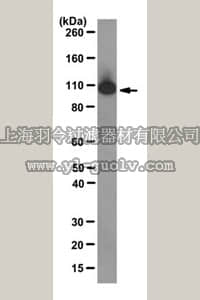
Western Blot Analysis: 1 µg/mL of this antibody detected MSH2 in 10 µg of SW-480 cell lysate.
使用声明 - Unless otherwise stated in our catalog or other company documentation accompanying the product(s), our products are intended for research use only and are not to be used for any other purpose, which includes but is not limited to, unauthorized commercial uses, in vitro diagnostic uses, ex vivo or in vivo therapeutic uses or any type of consumption or application to humans or animals.
储存和货运信息 存储条件 Stable for 1 year at 2-8°C from date of receipt. 包装信息 数量 100 µg
上一件merck millipore产品:merck millipore,默克密理博,20-104,Malachite Green Additive
下一件merck millipore产品:merck millipore,默克密理博,361527,PhosphoDetect™ Anti-GSK3β (pSer⁹) Mouse mAb (2D3)
相关产品
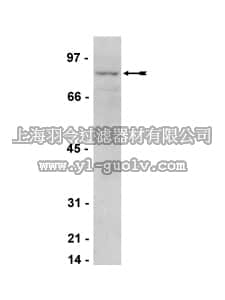 merck millipore,默克密理博,07-580,Anti-IKKε Antibody
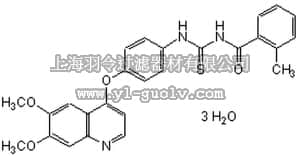 merck millipore,默克密理博,521234,PDGFR Tyrosine Kinase Inhibitor V - CAS 347155-76-4 - Calbiochem
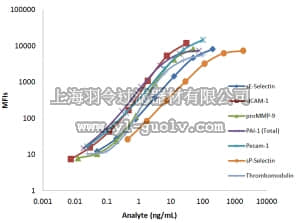
 merck millipore,默克密理博,70953,Rosetta™ Competent Cells - Novagen
 merck millipore,默克密理博,20-104,Malachite Green Additive
merck millipore,默克密理博,361527,PhosphoDetect™ Anti-GSK3β (pSer⁹) Mouse mAb (2D3)
 merck millipore,默克密理博,557354,ROS Inhibitor, YCG063 - CAS 330997-95-0 - Calbiochem
 merck millipore,默克密理博,16-662,Magna ChIP™ Protein G Magnetic Beads
 merck millipore,默克密理博,03-176,RIPAb+™ FXR1 - RIP Validated Antibody and Primer Set