


- 当前位置:首页 > >Merck Millipore > 生命科学研究
- 生命科学研究
-
-
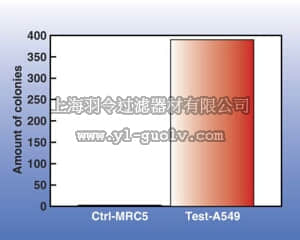
merck millipore,默克密理博,ECM570,Cell Transformation Detection Assay
产品名称:Cell Transformation Detection Assay
产品型号:ECM570
The Cell Transformation Detection Assay is an anchorage-independent growth assay in soft agar, which is considered the most stringent assay for detecting malignant transformation of cells.
merck millipore,默克密理博,ECM570,Cell Transformation Detection Assay
- 产品介绍
重要规格表
描述 产品目录编号 ECM570 品牌系列 Chemicon®
商名 - Chemicon
描述 Cell Transformation Detection Assay 概述 CHEMICON®'s Cell Transformation Detection Assay is an anchorage-independent growth assay in soft agar, which is considered the most stringent assay for detecting malignant transformation of cells. For this assay, cells (pre-treated with carcinogens or carcinogen inhibitors) are cultured with appropriate controls in soft agar medium for 21-28 days. Following this incubation period, formed colonies can either be analyzed morphologically using our cell stain solution or quantified with the cell quantification solution. 产品信息 部件 - Cell Quantification Solution (Part No. 90318). One vial containing 2 mL of cell quantification solution.
- Agarose powder (Part No. 90316). One bottle containing 2g of noble agar powder.
- Cell Stain Solution (Part No. 90317). Four vials containing 5mg each of cell stain powder.
应用 应用 The Cell Transformation Detection Assay is an anchorage-independent growth assay in soft agar, which is considered the most stringent assay for detecting malignant transformation of cells. 应用说明 Neoplastic cell transformation results from the accumulation of genetic mutations that permit uncontrolled proliferation and independence from normal homeostatic regulation. Cell changes manifested by escape from control mechanisms, increased growth potential, alterations in cell surface, karyotypic abnormalities, morphological and biochemical deviations, and other attributes conferring the ability to invade, metastasize and kill.
Carcinogenesis is a complex multistep, multifactorial process 1,2. Experimental carcinogenesis proceeds through at least three distinct stages, in which the first two phases can be used to verify whether the agent of interest acts as an initiator or a promoter. 'Initiation' is the first step and is considered to involve a genotoxic event in which the carcinogen interacts with target cells to affect DNA. This initiating mutation may give the initiated cell the growth advantage needed in the second stage of promotion. In contrast to its neighbors, the initiated cell can escape the cellular regulatory mechanisms. There are four types of initiators: 1) chemical carcinogens (e.g. MNNG, DMBA), 2) physical carcinogens (e.g. X-irradiation, ultraviolet B light), 3) viral agents (e.g. v-Ras) and 4) proto-oncogene activation/tumor suppressor gene loss. 'Promotion' is the second step and is associated with a number of subcellular events that are generally nongenotoxic and is responsible for the conversion or clonal expansion of initiated cells to a cancer. Tumor promoters could either be external or internal stimuli. Only initiated cells are stimulated to grow 3. However, tumor initiation and promotion together produce relatively benign growths. It is the third step, malignant conversion or progression, in which these growths become malignant. This process is generally slow and occurs over a long period of time. 'Malignant conversion', like initiation, requires genetic alteration. Here cellular growth is further deregulated thus proceeds uncontrolled. Progression is probably the most complex of the three stages, because both acquired genetic and phenotypic changes occur, and the cellular expansion is rapid. As the tumor progresses, sensitivity to dietary compounds, inhibitors of growth and enhancers of differentiation gradually disappear until the tumor becomes progressively more autonomous and controllable only by more drastic intervention 4.
Several procedures for evaluating the cell transforming potential of chemicals have been described 5,6,7. In vitro cellular transformation detection assays are semi-quantitative and measure the morphological transformation of cell colonies induced by chemicals 8,9,10. This transformation is associated with certain phenotypic changes such as loss of contact inhibition (cells can grow over one another) and anchorage independence (cells form colonies in soft agar) 11,12. Anchorage independence can be described in the light of primary fibroblasts and many fibroblastic cell lines (e.g. BALB/c3T3, NIH-3T3, etc.) that must attach to a solid surface before they can divide. They fail to grow when suspended in a viscous fluid or gel (e.g. agar or agarose), however when these cell lines are transformed, they are able to grow in a viscous fluid or gel and become anchorage-independent. The process by which these phenotypic changes occur, is assumed to be closely related to the process of in vivo carcinogenesis. Cells derived from transformed colonies after passaging in culture are capable of tumor formation when inoculated in a suitable host animal 8,13.
In general there is reasonably good correlation between in vitro transformation and in vivo carcinogenesis, although the correlation varies depending on the system being studied. These systems are believed to be reasonably good predictors of in vivo activity, and positive results are viewed as potential indications of in vivo carcinogenesis.
CHEMICONâ's Cell Transformation Detection Assay (Catalog number ECM570) is a valuable tool for the morphological and quantitative detection of in vitro malignant transformation of cells induced by certain test compounds. This assay also allows screening of substances that inhibit malignant cell transformation.生物信息 品种反应性 Vertebrates 产品使用声明 使用声明 - Unless otherwise stated in our catalog or other company documentation accompanying the product(s), our products are intended for research use only and are not to be used for any other purpose, which includes but is not limited to, unauthorized commercial uses, in vitro diagnostic uses, ex vivo or in vivo therapeutic uses or any type of consumption or application to humans or animals.
储存和货运信息 存储条件 When stored at 2-8º C, the agar and cell stain powder are stable up to the expiration date. Cell stain quantification solution should be stored at -20º C up to expiration date. Discard any remaining reagents after the expiration date. 包装信息 数量 1 kit 包装 kit
上一件merck millipore产品:merck millipore,默克密理博,QIA87,Cytochrome c Release Apoptosis Assay Kit
下一件merck millipore产品:merck millipore,默克密理博,SF-1211,PARK2; Human, Cyanine 5 RNA Detection Probe,SmartFlare
相关产品
 merck millipore,默克密理博,AB15614-50UL,Anti-CNGA3 Antibody
 merck millipore,默克密理博,CP53,Anti-ICAM-1 (Ab-2) Mouse mAb (W-CAM-1)
 merck millipore,默克密理博,0500-4130,GuavaSuite Software Modules for Guava easyCyte HT Systems
 merck millipore,默克密理博,ABS1064,Anti-Hypusine Antibody Antibody
 merck millipore,默克密理博,QIA87,Cytochrome c Release Apoptosis Assay Kit
 merck millipore,默克密理博,SF-1211,PARK2; Human, Cyanine 5 RNA Detection Probe,SmartFlare
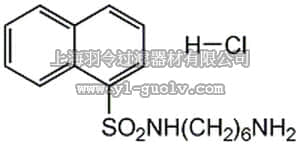 merck millipore,默克密理博,681625,W-5, Hydrochloride - CAS 61714-25-8 - Calbiochem
merck millipore,默克密理博,SF-2939,CD26; Human, Cyanine 5 RNA Detection Probe,SmartFlare
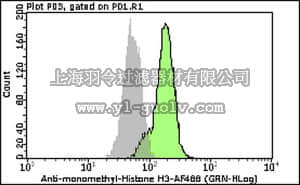
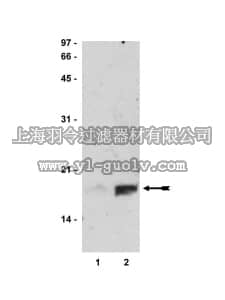 merck millipore,默克密理博,06-911,Anti-acetyl-Histone H3 (Lys14) Antibody