


- 当前位置:首页 > >Merck Millipore > 生命科学研究
- 生命科学研究
- 产品介绍
重要规格表
主要应用 Entrez基因编号 Uni Prot编号 Cell Function Assay NM_183079.2, NM_000311.3, NM_001080121.1, NM_001080122.1, NM_001080123.1 P04156 描述 产品目录编号 AG210 品牌系列 Chemicon®
商名 - Chemicon
描述 Prion Protein, recombinant 概述 Histidine-tagged full-length mature part of bovine PrP (25-244) is expressed in E. Coli BL21, solubilized from inclusion bodies in 6 M guanidine-HCl, and purified by Ni(II)-nitriloacetate agarose chromatography followed by reversed-phase HPLC (C4 column) Alternate Names - CD230
- PrP
背景信息 Prion diseases or transmissible spongiform encephalopathies are neurodegenerative diseases that affect both humans and animals (Prusiner 1998). All prion diseases share the same molecular pathogenic mechanism that involves conversion of normal cellular prion protein (PrPc) into a form that is insoluble in non ionic detergent and partially resistant to proteases (PrPSc) (Pan et al. 1993). Both PrPSc and PrPc are encoded within a single exon of a chromosomal gene as a protein of ~ 250 amino acids (Basler et al. 1986). Many mammalian PrPs have a 22 amino acid N-terminal signal sequence (Hope et al. 1986; Turk et al. 1988) and 23 amino acid C-terminal signal sequence encoding for attachment of a glycosylphosphatidylinositol anchor (Stahl et al. 1987, 1990). The mature protein of 209 amino acids contains one disulfide bond (Turk et al. 1988) and has two sites of asparagine-linked glycosylation (Endo et al. 1989; Oesch et al. 1995). 产品信息 演示 Liquid in 10 mM sodium acetate buffer, pH 4.0, containing 0.01% sodium azide. 应用 主要应用 - Cell Function Assay
应用说明 Antigen in standard immunochemical detection of BSE.
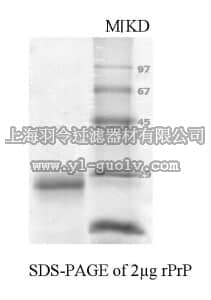
Optimal working dilution must be determined by the end user.生物信息 纯度 The PrPc appears as a single band of about 27 kD by SDS-PAGE (>95% of total protein. 品种 Bovine Entrez基因编号 - NM_183079.2
- NM_000311.3
- NM_001080121.1
- NM_001080122.1
- NM_001080123.1
Entrez基因汇总 The protein encoded by this gene is a membrane glycosylphosphatidylinositol-anchored glycoprotein that tends to aggregate into rod-like structures. The encoded protein contains a highly unstable region of five tandem octapeptide repeats. This gene is found on chromosome 20, approximately 20 kbp upstream of a gene which encodes a biochemically and structurally similar protein to the one encoded by this gene. Mutations in the repeat region as well as elsewhere in this gene have been associated with Creutzfeldt-Jakob disease, fatal familial insomnia, Gerstmann-Straussler disease, Huntington disease-like 1, and kuru. Alternative splicing results in multiple transcript variants encoding the same protein. 基因符号 - PRP
- PRNP
- ASCR
- PrP27-30
- GSS
- CD230
- CJD
- PRIP
- PrP
- PrPc
- PrP33-35C
- MGC26679
UniProt编号 - P04156
UniProt汇总 FUNCTION: SwissProt: P04156 # The physiological function of PrP is not known.
SIZE: 253 amino acids; 27661 Da
SUBUNIT: PrP has a tendency to aggregate yielding polymers called rods.
SUBCELLULAR LOCATION: Cell membrane; Lipid-anchor, GPI-anchor.
PTM: The glycosylation pattern (the amount of mono-, di- and non- glycosylated forms or glycoforms) seems to differ in normal and CJD prion.
DISEASE: SwissProt: P04156 # PrP is found in high quantity in the brain of humans and animals infected with neurodegenerative diseases known as transmissible spongiform encephalopathies or prion diseases, like: Creutzfeldt-Jakob disease (CJD), fatal familial insomnia (FFI), Gerstmann-Straussler disease (GSD), Huntington disease-like 1 (HDL1) and kuru in humans; scrapie in sheep and goat; bovine spongiform encephalopathy (BSE) in cattle; transmissible mink encephalopathy (TME); chronic wasting disease (CWD) of mule deer and elk; feline spongiform encephalopathy (FSE) in cats and exotic ungulate encephalopathy (EUE) in nyala and greater kudu. The prion diseases illustrate three manifestations of CNS degeneration: (1) infectious (2) sporadic and (3) dominantly inherited forms. TME, CWD, BSE, FSE, EUE are all thought to occur after consumption of prion-infected foodstuffs. & Defects in PRNP are the cause of Creutzfeldt-Jakob disease (CJD) [MIM:123400]. CJD occurs primarily as a sporadic disorder (1 per million), while 10-15% are familial. Accidental transmission of CJD to humans appears to be iatrogenic (contaminated human growth hormone (HGH), corneal transplantation, electroencephalographic electrode implantation, etc.). Epidemiologic studies have failed to implicate the ingestion of infected annimal meat in the pathogenesis of CJD in human. The triad of microscopic features that characterize the prion diseases consists of (1) spongiform degeneration of neurons, (2) severe astrocytic gliosis that often appears to be out of proportion to the degree of nerve cell loss, and (3) amyloid plaque formation. CJD is characterized by progressive dementia and myoclonic seizures, affecting adults in mid-life. Some patients present sleep disorders, abnormalities of high cortical function, cerebellar and corticospinal disturbances. The disease ends in death after a 3-12 months illness. & Defects in PRNP are the cause of fatal familial insomnia (FFI) [MIM:600072]. FFI is an autosomal dominant disorder and is characterized by neuronal degeneration limited to selected thalamic nuclei and progressive insomnia. & Defects in PRNP are the cause of Gerstmann-Straussler disease (GSD) [MIM:137440]. GSD is a heterogeneous disorder and was defined as a spinocerebellar ataxia with dementia and plaquelike deposits. GSD incidence is less than 2 per 100 million live births. & Defects in PRNP are the cause of Huntington disease-like 1 (HDL1) [MIM:603218]. HDL1 is an autosomal dominant, early onset neurodegenerative disorder with prominent psychiatric features. & Defects in PRNP are the cause of kuru [MIM:245300]. Kuru is transmitted during ritualistic cannibalism, among natives of the New Guinea highlands. Patients exhibit various movement disorders like cerebellar abnormalities, rigidity of the limbs, and clonus. Emotional lability is present, and dementia is conspicuously absent. Death usually occurs from 3 to 12 month after onset. & Defects in PRNP are the cause of prion disease with protracted course [MIM:606688]; an autosomal dominant presenile dementia with a rapidly progressive and protracted clinical course. The dementia was characterized clinically by frontotemporal features, including early personality changes. Some patients had memory loss, several showed aggressiveness, hyperorality and verbal stereotypy, others had parkinsonian symptoms.SIMILARITY:SwissProt: P04156 ## Belongs to the prion family.产品使用声明 使用声明 - Unless otherwise stated in our catalog or other company documentation accompanying the product(s), our products are intended for research use only and are not to be used for any other purpose, which includes but is not limited to, unauthorized commercial uses, in vitro diagnostic uses, ex vivo or in vivo therapeutic uses or any type of consumption or application to humans or animals.
储存和货运信息 存储条件 Maintain at -20°C in undiluted aliquots for up to 6 months after date of receipt. Avoid repeated freeze/thaw cycles. 包装信息 数量 50 µg
上一件merck millipore产品:merck millipore,默克密理博,MABN150,Anti-TAR DNA binding protein-43 Antibody, clone TAR5 2H4
下一件merck millipore产品:merck millipore,默克密理博,SF-2886,SSTR2; Human, Cyanine 3 RNA Detection Probe,SmartFlare
 merck millipore,默克密理博,ABT185,Anti-Spectrin beta chain Antibody, erythrocyte
 merck millipore,默克密理博,567152,β-Sitosterol - CAS 83-46-5 - Calbiochem
 merck millipore,默克密理博,CBL490,Anti-Integrin αV Antibody, clone 13C2
 merck millipore,默克密理博,71577,pTriEx™-7 Ek/LIC Vector Kit - Novagen
 merck millipore,默克密理博,MABN150,Anti-TAR DNA binding protein-43 Antibody, clone TAR5 2H4
 merck millipore,默克密理博,SF-2886,SSTR2; Human, Cyanine 3 RNA Detection Probe,SmartFlare
merck millipore,默克密理博,SF-1350,CASC5; Human, Cyanine 5 RNA Detection Probe,SmartFlare
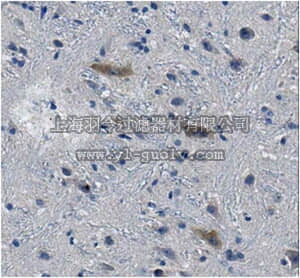 merck millipore,默克密理博,MABN653,Anti-Nalcn Antibody, clone N185/7
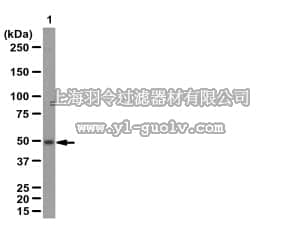 merck millipore,默克密理博,AB2237,Anti-PAX6 Antibody
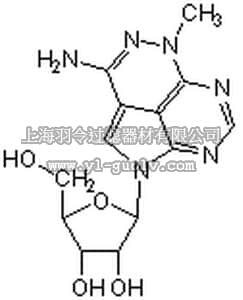 merck millipore,默克密理博,124012,Akt Inhibitor V, Triciribine - CAS 35943-35-2 - Calbiochem