


- 当前位置:首页 > >Merck Millipore > 生命科学研究
- 生命科学研究
-
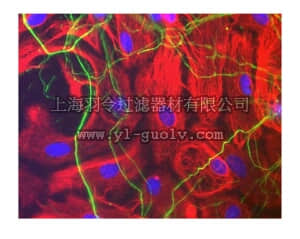
-
merck millipore,默克密理博,15-209,Neurofilament Antibodies Investigator Antibody Mini-Pack
产品名称:Neurofilament Antibodies Investigator Antibody Mini-Pack
产品型号:15-209
This Antibody pack contains Anti-Neurofilament H & M Antibody, Anti-Neurofilament H Antibody, Anti-Neurofilament L Antibody.
merck millipore,默克密理博,15-209,Neurofilament Antibodies Investigator Antibody Mini-Pack
- 产品介绍
描述 产品目录编号 15-209 描述 Neurofilament Antibodies Investigator Antibody Mini-Pack 概述 Neurofilaments are a type of intermediate filament that serve as major elements of the cytoskeleton supporting the axon cytoplasm. They are the most abundant fibrillar components of the axon, being on average 3-10 times more frequent than axonal microtubules. Neurofilaments (10nm in dia.) are built from three intertwined protofibrils which are themselves composed of two tetrameric protofilament complexs of monomeric proteins. The neurofilament triplet proteins (68/70, 160, and 200 kDa) occur in both the central and peripheral nervous system and are usually neuron specific. The 68/70 kDa NF-L protein can self-assemble into a filamentous structure, however the 160 kDa NF-M and 200 kDa NF-H proteins require the presence of the 68/70 kDa NF-L protein to co-assemble. Neuromas, ganglioneuromas, gangliogliomas, ganglioneuroblastomas and neuroblastomas stain positively for neurofilaments. Although typically restricted to neurons, neurofilaments have been detected in paragangliomas and adrenal and extra-adrenal pheochromocytomas. Carcinoids, neuroendocrine carcinomas of the skin, and oat cell carcinomas of the lung also express neurofilaments.
Investigator Mini-packs contain smaller qauntities of related antibodies within a specific research area of Neuroscience. The investigator Mini-pack for Neurofilament Antibodies includes monoclonal and polyclonal antibodies against the heavy medium and light chains.背景信息 Pathway Investigator Antibody MiniPack:
Each Pathway Explorer Antibody Minipack contains three related antibodies as part of a signaling cascade or a combination of total and phosphorylated forms of key signaling targets. Each of the three antibodies are 30% the original pack size. Full size versions of each of the Pathway Explorer antibodies are available for sale individually under the same catalog number with the removal of “SP” off of each one (e.g. 05-591SP can be ordered as 05-591).
Neurofilament 70 kDa, clone DA2:
Neurofilaments are a type of intermediate filament that serve as major elements of the cytoskeleton supporting the axon cytoplasm. They are the most abundant fibrillar components of the axon, being on average 3-10 times more frequent than axonal microtubules. Neurofilaments (10nm in dia.) are built from three intertwined protofibrils which are themselves composed of two tetrameric protofilament complexs of monomeric proteins. The neurofilament triplet proteins (68/70, 160, and 200 kDa) occur in both the central and peripheral nervous system and are usually neuron specific. The 68/70 kDa NF-L protein can self-assemble into a filamentous structure, however the 160 kDa NF-M and 200 kDa NF-H proteins require the presence of the 68/70 kDa NF-L protein to co-assemble. Neuromas, ganglioneuromas, gangliogliomas, ganglioneuroblastomas and neuroblastomas stain positively for neurofilaments. Although typically restricted to neurons, neurofilaments have been detected in paragangliomas and adrenal and extra-adrenal pheochromocytomas. Carcinoids, neuroendocrine carcinomas of the skin, and oat cell carcinomas of the lung also express neurofilaments.
Neurofilament, Heavy:
Neurofilaments are a type of intermediate filament that serve as major elements of the cytoskeleton supporting the axon cytoplasm. They are the most abundant fibrillar components of the axon, being on average 3-10 times more frequent than axonal microtubules. Neurofilaments (10nm in dia.) are built from three intertwined protofibrils which are themselves composed of two tetrameric protofilament complexs of monomeric proteins. The neurofilament triplet proteins (68/70, 160, and 200 kDa) occur in both the central and peripheral nervous system and are usually neuron specific. The 68/70 kDa NF-L protein can self-assemble into a filamentous structure, however the 160 kDa NF-M and 200 kDa NF-H proteins require the presence of the 68/70 kDa NF-L protein to co-assemble. Neuromas, ganglioneuromas, gangliogliomas, ganglioneuroblastomas and neuroblastomas stain positively for neurofilaments. Although typically restricted to neurons, neurofilaments have been detected in paragangliomas and adrenal and extra-adrenal pheochromocytomas. Carcinoids, neuroendocrine carcinomas of the skin, and oat cell carcinomas of the lung also express neurofilaments.
* See full size versions for corresponding references.产品信息 部件 - MAB1615SP Anti-Neurofilament L; 90μL
- MAB1592SP Anti-Neurofilament H & M; 30μL
- AB5539SP Anti-Neurofilament H; 30 μL
演示 3 individual tubes containing either Anti-Neurofilament, Heavy; Anti-Neurofilament H & M, phosphorylated, clone NP1; or Anti-Neurofilament 70 kDa, clone DA2 性质 Each vial is 30% the size of the parent catalog number 应用 应用 This Antibody pack contains Anti-Neurofilament H & M Antibody, Anti-Neurofilament H Antibody, Anti-Neurofilament L Antibody. 生物信息 交叉反应性 Varies. See individual Data Sheets 基因符号 - KIAA0845
- NEFL
- CMT1F
- NF-L
- NF68
- CMT2E
- NFL
UniProt编号 - P12036
UniProt汇总 FUNCTION: Neurofilaments usually contain three intermediate filament proteins: L, M, and H which are involved in the maintenance of neuronal caliber. NF-H has an important function in mature axons that is not subserved by the two smaller NF proteins.
PTM: There are a number of repeats of the tripeptide K-S-P, NFH is phosphorylated on a number of the serines in this motif. It is thought that phosphorylation of NFH results in the formation of interfilament cross bridges that are important in the maintenance of axonal caliber.
PTM: Phosphorylation seems to play a major role in the functioning of the larger neurofilament polypeptides (NF-M and NF-H), the levels of phosphorylation being altered developmentally and coincident with a change in the neurofilament function.
DISEASE: Defects in NEFH are a cause of susceptibility to amyotrophic lateral sclerosis (ALS) [MIM:105400]. ALS is a neurodegenerative disorder affecting upper and lower motor neurons, and resulting in fatal paralysis. Sensory abnormalities are absent. Death usually occurs within 2 to 5 years. The etiology is likely to be multifactorial, involving both genetic and environmental factors.
SIMILARITY: Belongs to the intermediate filament family.产品使用声明 质量保证 Individual targets are routinely evaluated by Immunohistochemistry and western blot. 使用声明 - Unless otherwise stated in our catalog or other company documentation accompanying the product(s), our products are intended for research use only and are not to be used for any other purpose, which includes but is not limited to, unauthorized commercial uses, in vitro diagnostic uses, ex vivo or in vivo therapeutic uses or any type of consumption or application to humans or animals.
储存和货运信息 存储条件 Varies. See individual Data Sheets. 包装信息 数量 3 vials/Pk
上一件merck millipore产品:merck millipore,默克密理博,AP106B,Rabbit Anti-Goat IgG Antibody, biotin conjugate
下一件merck millipore产品:merck millipore,默克密理博,69663,pET-17b DNA - Novagen
相关产品
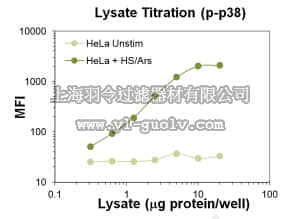
 merck millipore,默克密理博,05-743,Anti-Cdc25A Antibody, clone DCS120
 merck millipore,默克密理博,MAB3424,Anti-BrdU Antibody, clone AH4H7-1 / 131-14871
 merck millipore,默克密理博,218829,Caspase-3 Substrate IX, Fluorogenic - Calbiochem
merck millipore,默克密理博,AP106B,Rabbit Anti-Goat IgG Antibody, biotin conjugate
 merck millipore,默克密理博,69663,pET-17b DNA - Novagen
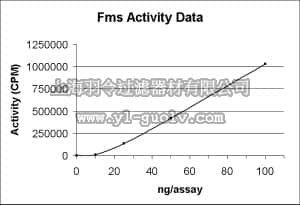 merck millipore,默克密理博,14-551,Fms Protein, active, 10 µg
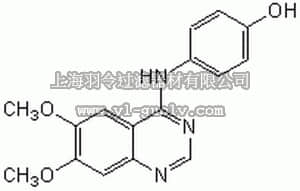 merck millipore,默克密理博,420101,JAK3 Inhibitor I - CAS 202475-60-3 - Calbiochem
 merck millipore,默克密理博,70666,Ni-NTA His•Bind Resin
 merck millipore,默克密理博,69453,HMS174(DE3) Competent Cells - Novagen