


- 当前位置:首页 > >Merck Millipore > 生命科学研究
- 生命科学研究
-
-
merck millipore,默克密理博,04-372,Anti-Lck/p56 Antibody, clone Y123, rabbit monoclonal
产品名称:Anti-Lck/p56 Antibody, clone Y123, rabbit monoclonal
产品型号:04-372
Please note that this product will not be available for sale after March 15, 2015. Please select one of the other antibodies against this target. Less<<
merck millipore,默克密理博,04-372,Anti-Lck/p56 Antibody, clone Y123, rabbit monoclonal
- 产品介绍
重要规格表
品种反应性 主要应用 宿主 格式 抗体类型 H FC, WB, ICC Rb Unpurified Monoclonal Antibody 描述 产品目录编号 04-372 描述 Anti-Lck/p56 Antibody, clone Y123, rabbit monoclonal Alternate Names - Proto-oncogene Lck
- lymphocyte-specific protein tyrosine kinase
- Leukocyte C-terminal Src kinase
- Lymphocyte cell-specific protein-tyrosine kinase
- T cell-specific protein-tyrosine kinase
- p56(LSTRA) protein-tyrosine kinase
- proto-oncogene tyrosine-protein kinase LCK
- T-lymphocyte specific protein tyrosine kinase p56lck
- tyrosine-protein kinase Lck
- Protein YT16
背景信息 The human T-cell or lymphocyte specific gene Lck/p56 is a member of the Src family of non-receptors tyrosine kinase. Mostly expressed in T cells, Lck has been shown to be critical for the normal development of T lymphocytes (1). Additionally, the N-terminal region of the tyrosine kinase Lck interacts with the cytoplasmic domains of CD4 and CD8 (2). Autophosphorylation at Tyr-394 appears to be required for maximum catalytic activity (3) but it can also be suppressed by phosphorylation of the carboxyl-terminal tyrosine Tyr-505 (4). 产品信息 格式 Unpurified 控制 - Jurkat cell lysate
演示 Rabbit Monoclonal in buffer containing glycerol, BSA, and sodium azide. 应用 应用 Please note that this product will not be available for sale after March 15, 2015. Please select one of the other antibodies against this target. 主要应用 - Flow Cytometry
- Western Blotting
- Immunocytochemistry
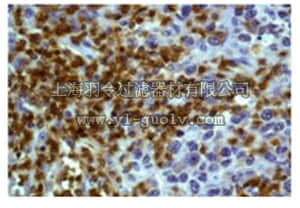
应用说明 Immunohistochemistry Analysis: A 1:250-500 dilution from a representative lot was used in human lymphoma tissue.
Immunocytochemistry Analysis: A 1:100 dilution from a representative lot was used in IC.
Flow Cytometry Analysis: A 1:20 dilution from a representative lot was used in FC.
Immunoprecipitation Analysis: A 1:200 dilution from a representative lot was used in IP.生物信息 免疫原品种 Synthetic peptide corresponding to residues before the SH3 domain of human Lck/p56. 表位 Unknown 克隆 Y123 宿主 Rabbit 特异性 This antibody does not cross-react with other SRC family members. 同种型 IgG 品种反应性 Human Species Reactivity Note Demonstrated to react with Human. 抗体类型 Monoclonal Antibody Entrez基因编号 - P06239
基因符号 - EC 2.7.10
- LSK
- EC 2.7.10.2
- OTTHUMP00000008640
- OTTHUMP00000008740
- OTTHUMP00000228508
- YT16
- p56lck
- pp58lck
- p56-LCK
纯化方法 Unpurified UniProt编号 - P06239
UniProt汇总 FUNCTION: Non-receptor tyrosine-protein kinase that plays an essential role in the selection and maturation of developing T-cells in the thymus and in the function of mature T-cells. Plays a key role in T-cell antigen receptor (TCR)-linked signal transduction pathways. Constitutively associated with the cytoplasmic portions of the CD4 and CD8 surface receptors. Association of the TCR with a peptide antigen-bound MHC complex facilitates the interaction of CD4 and CD8 with MHC class II and class I molecules, respectively, thereby recruiting the associated LCK protein to the vicinity of the TCR/CD3 complex. LCK then phosphorylates tyrosines residues within the immunoreceptor tyrosine-based activation motifs (ITAM) of the cytoplasmic tails of the TCR-gamma chains and CD3 subunits, initiating the TCR/CD3 signaling pathway. Once stimulated, the TCR recruits the tyrosine kinase ZAP70, that becomes phosphorylated and activated by LCK. Following this, a large number of signaling molecules are recruited, ultimately leading to lymphokine production. LCK also contributes to signaling by other receptor molecules. Associates directly with the cytoplasmic tail of CD2, which leads to hyperphosphorylation and activation of LCK. Also plays a role in the IL2 receptor-linked signaling pathway that controls the T-cell proliferative response. Binding of IL2 to its receptor results in increased activity of LCK. Is expressed at all stages of thymocyte development and is required for the regulation of maturation events that are governed by both pre-TCR and mature alpha beta TCR. Phosphorylates other substrates including RUNX3, PTK2B/PYK2, the microtubule-associated protein MAPT, RHOH or TYROBP.
CATALYTIC ACTIVITY: ATP + a [protein]-L-tyrosine = ADP + a [protein]-L-tyrosine phosphate.
ENZYME REGULATION: The relative activities of the inhibitory tyrosine-protein kinase CSK and the activating tyrosine-protein phosphatase PTPRC/CD45 determine the level of LCK activity. These interactions allow rapid and efficient activation of LCK in response to TCR stimulation.
SUBUNIT STRUCTURE: Binds to the cytoplasmic domain of cell surface receptors, such as AXL, CD2, CD4, CD5, CD8, CD44, CD45 and CD122. Also binds to effector molecules, such as PI4K, VAV1, RASA1, FYB and to other protein kinases including CDK1, RAF1, ZAP70 and SYK. Binds to phosphatidylinositol 3'-kinase (PI3K) from T-lymphocytes through its SH3 domain and to the tyrosine phosphorylated form of KHDRBS1/p70 through its SH2 domain. Binds to HIV-1 Nef through its SH3 domain. This interaction inhibits its tyrosine-kinase activity. Interacts with SQSTM1. Interacts with phosphorylated LIME1. Interacts with CBLB and PTPRH. Interacts with RUNX3. Forms a signaling complex with EPHA1, PTK2B AND PI3-KINASE; upon activation by EFNA1 which may regulate T-lymphocyte migration. Associates with ZAP70 and RHOH; these interactions allow LCK-mediated RHOH and CD3 subunit phosphorylation in the presence of functional ZAP70.
SUBCELLULAR LOCATION: Cytoplasm. Cell membrane; Lipid-anchor; Cytoplasmic side. Note: Present in lipid rafts in an unactive form.
TISSUE SPECIFICITY: Expressed specifically in lymphoid cells.
DOMAIN: The SH2 domain mediates interaction with SQSTM1. Interaction is regulated by Ser-59 phosphorylation.
PTM: Autophosphorylated on Tyr-394, increasing enzymatic activity. Phosphorylated on Tyr-505 by CSK, decreasing activity. Dephosphorylated by PTPRC/CD45.
Myristoylation is required prior to palmitoylation By similarity.
Palmitoylation regulates subcellular location By similarity.
INVOLVEMENT IN DISEASE: Note=A chromosomal aberration involving LCK is found in leukemias. Translocation t(1;7)(p34;q34) with TCRB.
SEQUENCE SIMILARITIES: Belongs to the protein kinase superfamily. Tyr protein kinase family. SRC subfamily.
Contains 1 protein kinase domain.
Contains 1 SH2 domain.
Contains 1 SH3 domain.
MASS SPECTROMETRY: Molecular mass is 57869.42 Da from positions 2 - 509. Determined by MALDI.
SEQUENCE CAUTION: The sequence CAI22320.1 differs from that shown. Reason: Erroneous initiation. Translation N-terminally extended.
The sequence CAI22321.1 differs from that shown. Reason: Erroneous initiation. Translation N-terminally extended.产品使用声明 质量保证 Evaluated by Western Blot in Jurkat cell lysate
WesternBlot Analysis: A 1:1,000 dilution of this antibody detected Lck/p56 in Jurkat cell lysate.使用声明 - Unless otherwise stated in our catalog or other company documentation accompanying the product(s), our products are intended for research use only and are not to be used for any other purpose, which includes but is not limited to, unauthorized commercial uses, in vitro diagnostic uses, ex vivo or in vivo therapeutic uses or any type of consumption or application to humans or animals.
储存和货运信息 存储条件 Stable for 1 year at -20ºC from date of receipt.
Handling Recommendations: Upon first thaw, and prior to removing cap, centrifuge the vial and gently mix the solution. Aliquot into microcentrifuge tubes and store at -20ºC. Avoid freeze/thaw cycles, which may damage IgG and affect product performance.
Note: Variability in freezer temperatures below -20°C may cause glycerol containing solutions to become frozen during storage. Note: Variability in freezer temperatures below -20°C may cause glycerol containing solutions to become frozen during storage.包装信息 数量 100 µL
上一件merck millipore产品:merck millipore,默克密理博,648462,TRITON X-100 Detergent - CAS 9002-93-1 - Calbiochem
下一件merck millipore产品:merck millipore,默克密理博,382181,HDAC Inhibitor XXIV, OSU-HDAC-44 - Calbiochem
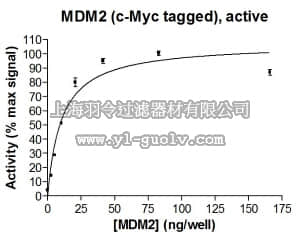 merck millipore,默克密理博,23-033M,MDM2 (c-Myc tagged) Protein, active, 250 µg
 merck millipore,默克密理博,ZTSCXS096,ZipTip 微量层析柱,具有 0.6 µL 强阳离子交换树脂
 merck millipore,默克密理博,SF-1354,CCND2; Human, Cyanine 5 RNA Detection Probe,SmartFlare
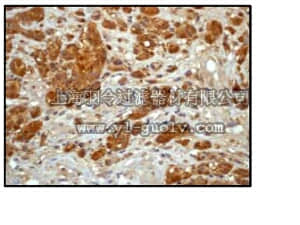 merck millipore,默克密理博,04-1054,Anti-S100-β (CT) Antibody, clone EP1576Y, rabbit monoclonal
 merck millipore,默克密理博,648462,TRITON X-100 Detergent - CAS 9002-93-1 - Calbiochem
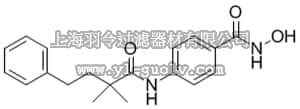 merck millipore,默克密理博,382181,HDAC Inhibitor XXIV, OSU-HDAC-44 - Calbiochem
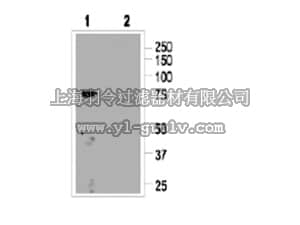 merck millipore,默克密理博,AB15614-50UL,Anti-CNGA3 Antibody
 merck millipore,默克密理博,CP53,Anti-ICAM-1 (Ab-2) Mouse mAb (W-CAM-1)
 merck millipore,默克密理博,0500-4130,GuavaSuite Software Modules for Guava easyCyte HT Systems
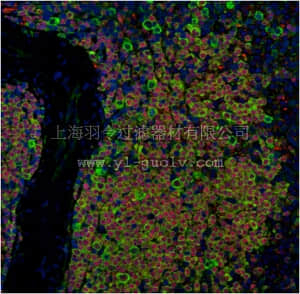 merck millipore,默克密理博,ABS1064,Anti-Hypusine Antibody Antibody